

How to Become a Powerlifter: Your Path From First Squat to First Meet
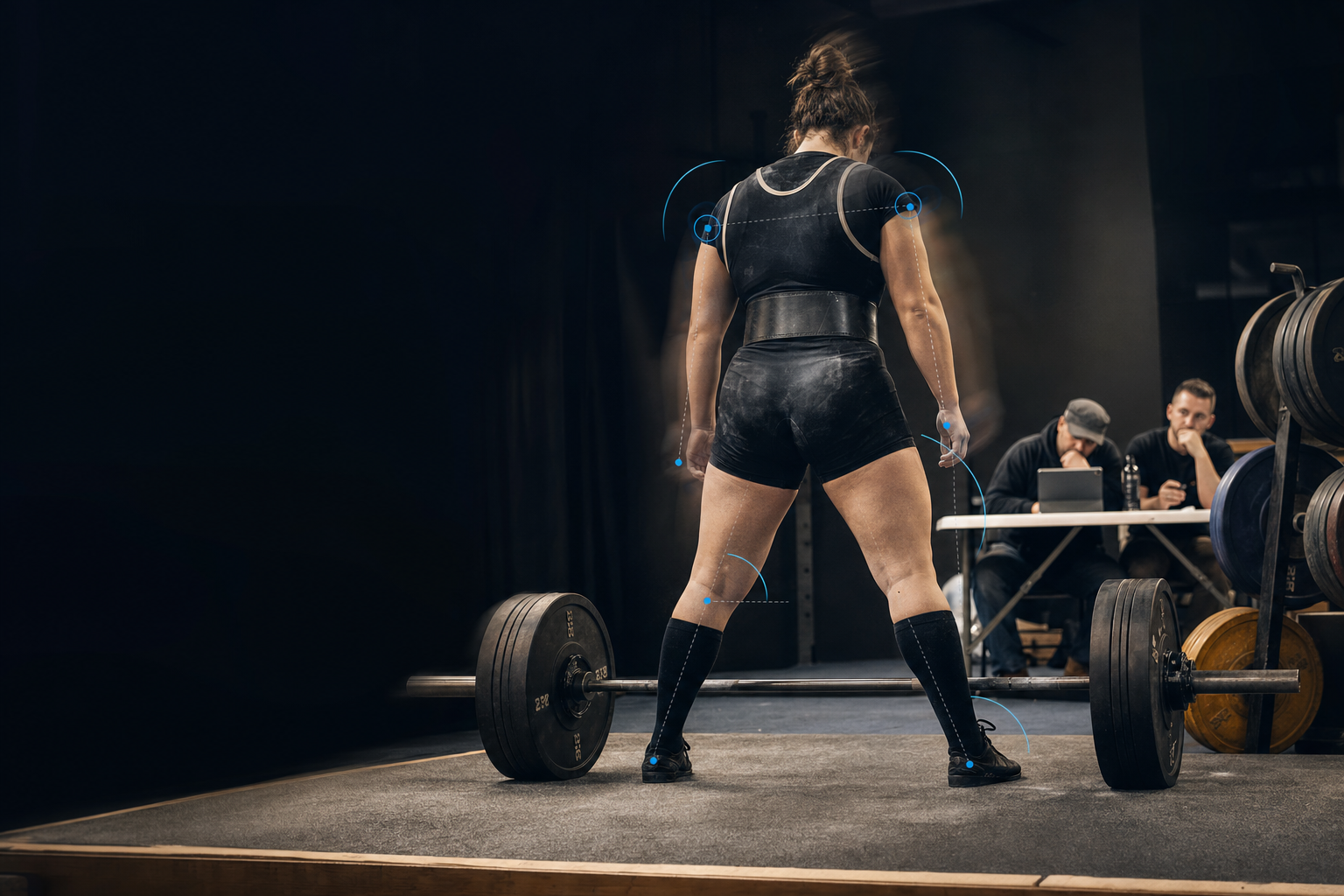
You have been training the squat, bench press, and deadlift for a while. Now you want to know what it actually takes to compete. Becoming a powerlifter, in the competitive sense, means picking a federation, learning the weigh-in and meet-day rules, and building toward a date on the calendar. This guide walks through that path. It covers the training base you need first, how to choose a federation and weight class, what actually happens at weigh-in and on the platform, and a realistic timeline for your first meet.
Training vs. Competing: What "Becoming a Powerlifter" Actually Means
Plenty of people train the three lifts and never compete. That is training, not competing. A powerlifter, in the competitive sense, is someone who registers for a sanctioned meet, weighs in, and puts a total on the board in front of referees. The lifts do not change. The rules and the stakes around them do.
That distinction matters because it changes what you should be preparing for. Training on your own, you can chase a personal best on any day that feels good. Competing means you pick your numbers ahead of time, commit to them at weigh-in, and perform on a fixed schedule in front of judges. It rewards consistency and planning more than it rewards a single great day in the gym.
If you have not started training yet, start there first. How to Start Powerlifting covers the three lifts, a beginner training frequency, and a sample first eight weeks. Everything below assumes you already have a training habit and want to know what competing adds on top of it.
Build a Training Base First
You do not need years of training to enter a first meet, but you do need consistency. Current guidance on building strength calls for structured training roughly 2 to 3 days a week with progressive increases in load over time, not sporadic max-effort attempts. That base, built over a few months, is what makes a first meet safer to step into and more worth entering.
A base means your squat, bench press, and deadlift have each been trained on a repeatable schedule long enough that adding weight is normal, not a surprise. It does not mean you need an enormous total. Meets group lifters by weight class, not by how much they already lift, so there is no minimum total required to register. How you divide those three lifts across your training week also shapes how much volume each one can absorb; see our guide tostructuring a powerlifting split .
If you are not already running a structured program, a structured strength and conditioning program is a reasonable place to start before you set a meet date. Coaches choosing between apps to run that program day to day can start with our roundup of coaching and tracking software built for lifters.
Pick a Federation
Federation choice shapes almost everything else about your first meet: what gear is allowed, whether you get tested for banned substances, and how meets in your area are run. Two federations are the most common entry point for first-time US lifters.
USA Powerlifting (USAPL) is a fully drug-tested federation. Every sanctioned meet tests a minimum share of competitors, and anyone setting an open American record is tested. USAPL also uses one standard competition barbell and a single national rulebook across all of its meets, regardless of where the meet is held.
USPA (United States Powerlifting Association) runs both tested and untested divisions, but most of its meets are untested. Its rulebook also allows more flexibility in equipment and lift variations than USAPL. That flexibility is part of why many first-time competitors start with USPA meets, though either federation is a legitimate way to compete.
Neither federation is the objectively correct choice. Pick based on whether you want a tested environment, what meets are actually running near you, and which ruleset your training gym already follows. Many gyms with a powerlifting team already lean toward one federation, which makes that the practical default for a first meet.
| Federation | Drug testing | Equipment rules |
|---|---|---|
| USA Powerlifting (USAPL) | Fully tested; a minimum share of competitors tested at every sanctioned meet | One standard competition barbell |
| USPA | Mostly untested, with a separate tested division available | More flexible equipment and lift-variation rules |
Find Your Weight Class
Powerlifting weight classes are set in kilograms. Under USA Powerlifting's current rulebook, you compete in the lightest class whose limit sits at or above your weigh-in bodyweight, and you must weigh at or under your declared class at weigh-in. If you show up over, you either move up a class or withdraw.
You do not need to pick a class months in advance. Most first-timers train normally, weigh in close to meet day, and let their morning weight decide the class rather than cutting water weight to hit a number. That approach also keeps your training normal in the weeks before the meet instead of adding a weight-cut variable to a first competition.
Understand the Lifts and Commands
Every lifter gets three attempts on each lift, and only the best successful attempt on each lift counts toward the total. Referees judge each attempt against a fixed standard, not a subjective read.
Each lift has its own commands, and it is worth practicing them before meet day. The current rulebook sets the exact command sequence for each lift: on the squat, wait for the "Squat" command before descending and the "Rack" command once you finish. On the bench press, wait for "Start" before pressing, "Press" once the bar is motionless on your chest, and "Rack" once you lock out. On the deadlift, there is no start command. You lift on your own timing and wait for "Down" once the bar is under control at the top.
Referees are checking specific standards on each lift, not general impressions. Those depth and lockout standards are also set in the rulebook: on the squat, hip crease below the top of the knee at the bottom. On the bench press, a visible pause with the bar motionless on your chest before the press command. On the deadlift, full lockout with knees straight and shoulders back. Missing any one of those standards on a given attempt gets it ruled no good, even if the weight moved.
Once the bar is loaded for your attempt, you get 60 seconds to begin. You will also submit rack heights for squat and bench during weigh-in, so know those numbers going in.
Between attempts, you can go up in weight or hold the same weight if you missed. You can never go down once you have opened, so open with a weight you are confident you can complete.
What to Bring and How Weigh-In Works
Registration for a first meet usually means signing up with the federation and the specific meet, then showing up during your assigned weigh-in window. Bring a photo ID and your membership card, and wear something you can step on and off a scale in quickly, since other lifters are waiting their turn.
At weigh-in you submit your first-attempt opener for each lift in kilograms, converted from pounds if that is how you train. Kilo plates load in 2.5kg increments. Round to the nearest one. For example, a 160lb opener becomes 70kg or 72.5kg, not an exact conversion.
Your opener is recorded at weigh-in. USA Powerlifting still lets you adjust it up to a few minutes before your flight actually starts, so a late change of plan is not a disaster. Check your own federation's timing rule if you are competing elsewhere. Second and third attempts are decided live during the meet itself, based on how your first attempt goes.
Your gear (singlet, an approved t-shirt, knee sleeves, belt) gets inspected before you lift, so bring only what is on your federation's approved-gear list. Pack lifting shoes, wrist wraps, chalk, and enough food to eat between disciplines. A full meet day runs longer than a normal training session. Lifters who stop fueling partway through tend to fade on their last lift.
What Meet Day Actually Looks Like
Lifters are grouped into flights. A flight is a small group who squat, bench, and deadlift together in a fixed rotation. That structure means you will know roughly when each of your attempts is coming well before you are called. Between your own attempts, most lifters warm up in a separate area timed to their flight's progress rather than sitting still the whole day.
Bring a handler or training partner if you can. Someone who can load your attempts on your handling card, hand you chalk, and keep you on schedule between the warm-up room and the platform takes real pressure off a first meet. If nobody can come with you, ask the meet's volunteer coordinator or another lifter in your flight before the day starts.
Meets typically end with awards and, if applicable, drug testing. USA Powerlifting notifies selected athletes after the last lift and asks them to stay until testing selections are announced, rather than leaving right after your last attempt. Confirm the same-day testing procedure for your own federation if it differs. Keep this in mind when you plan a ride home.
A Realistic First-Meet Timeline
A reasonable first target is a meet roughly 10 to 12 weeks out. That gives enough time to run a structured training block and finish with a short taper, without rushing a body that has not adapted to competition-style attempts yet. Progressive, staged training guidance supports building up in stages rather than jumping straight to max-effort attempts in your final weeks.
Treat your first meet as a data point, not a test you can fail. The goal is three good lifts on the day and a total you can build on, not a personal record at all costs. Lifters who open conservatively and finish with three makes almost always leave more satisfied than lifters who miss a heavy third attempt chasing a number.
How Greater Fits Into Meet Prep
Getting ready for a first meet is easier with a program you can actually follow and adjust along the way. Greater lets a coach assign a lead-up program, track which sessions actually happened, and review lift videos for form before meet day, all in one place.
If you are working with a coach, or you are a coach getting a lifter ready for a first meet, dedicated coaching software built for individual coaches is made for exactly this kind of lead-up. If you do not have a coach yet, our guide toonline strength coaching covers what it is and how to choose one for meet prep.
Getting a lifter ready for their first meet?
Greater brings program building, video review, and progress tracking into one place for coaches and trainers.
See how Greater worksFor a closer look at the training principles behind that path, see our guide on how powerlifters train.
Many lifters make this path shorter by working with a coach instead of managing every variable alone. Our guide to online powerlifting coaches covers what to expect and how to choose one.
Some lifters who reach this stage want to coach others through the same path. If that is you, our guide to powerlifting coach certification walks through the credentialing options and what each one actually requires.
Frequently asked questions
Do you need a coach to compete in your first powerlifting meet?
No. Plenty of lifters enter a first meet without a coach. A coach helps with programming and technique feedback in the weeks before, and with attempt selection on the day, but it is not a requirement to register or compete.
Is USAPL or USPA better for a first meet?
Neither is objectively better. USAPL is fully drug tested and uses one standard barbell across meets. USPA runs mostly untested divisions with more flexible equipment rules and a separate tested division available. Choose based on what meets run near you and whether a tested environment matters to you.
How do powerlifters train differently once they start competing?
The three lifts stay the same, but training usually shifts toward a specific meet date: a base-building block, then a shorter phase that narrows in on the exact bar weights you plan to open with, rather than open-ended progression with no target day.
What do you wear to a powerlifting meet?
Most first-timers compete raw, which limits gear to a singlet, an approved t-shirt or base layer, socks, shoes, a belt, wrist wraps, and knee sleeves. Your federation's approved-gear list is checked before you lift, so confirm what is allowed before meet day.
How much does it cost to enter a first powerlifting meet?
Entry fees vary by federation, meet size, and how early you register, and are posted on each meet's own registration page. Budget for the entry fee itself plus any optional coach or handler fee if you are bringing someone on the platform with you.