

How to Build an Athletic Strength and Conditioning Program (Free Weekly Template)
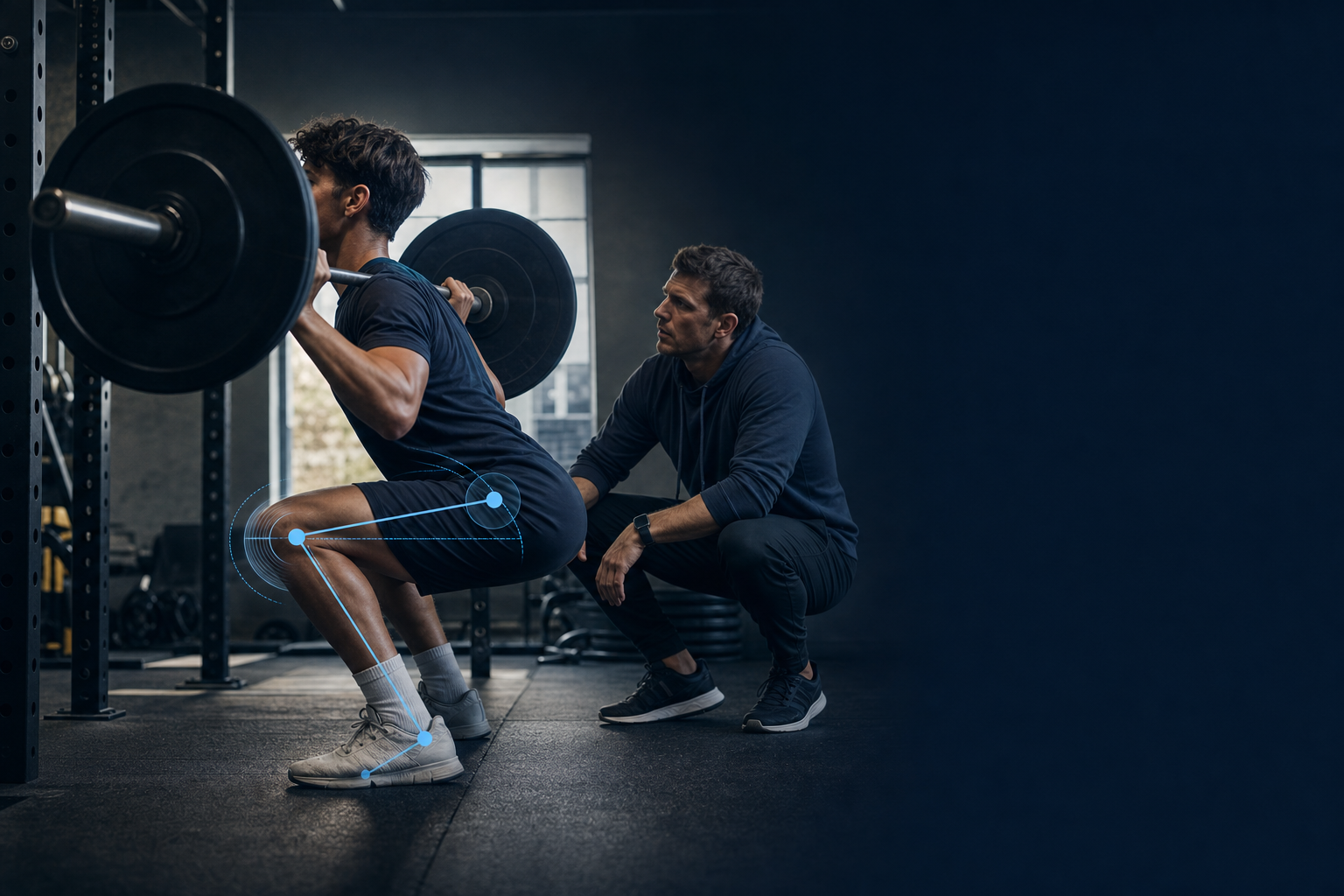
Buying a generic training plan is easy. Building one that fits your athletes, your season, and the equipment you actually have is the hard part. That is the difference between a printout and a program.
This guide walks through how to build an athletic strength and conditioning program from scratch. You get the method that coaches use, a phase-by-phase plan for the year, and a weekly template you can run this week. No certification required to follow it, though the operational notes assume you are coaching more than one athlete.
One note before the plan. This is general training guidance for healthy athletes. It is not medical advice. Send any pain, injury, or return-to-play question to a physician or physical therapist.
What an athletic strength and conditioning program is
An athletic strength and conditioning program is a structured, progressive plan that builds strength, power, speed, and conditioning across a training year. It is organized into phases, adjusted to the demands of the sport, and scaled to each athlete's training age and calendar.
The key word is progressive. A real program changes over time on purpose. It does not run the same three lifts at the same weight every week. It moves an athlete from a base of general fitness toward the specific qualities their sport rewards, then holds those qualities through the competitive season.
The second key word is athletic. The goal is not a bigger bench press for its own sake. The goal is an athlete who sprints, jumps, cuts, and absorbs contact better, and who holds up across a season.
Start with a needs analysis, not exercises
The first decision in building a program is not which exercises to use. It is understanding what you are training for. This step is called a needs analysis, and it sits at the front of the design process for a reason.
The established program-design sequence starts with a needs analysis, then moves to exercise selection, training frequency, exercise order, load and repetitions, and volume. Skip the analysis and every later decision is a guess.
A needs analysis answers four questions. What does the sport demand, in terms of the energy systems, movements, and common injury sites? Who is the athlete, including their training age, experience, and injury history? What does the calendar look like, from off-season through competition? And what equipment and time do you actually have?
Write the answers down before you write a single set. A soccer team with two dumbbells and 30 minutes needs a different program than a football team with a full weight room and 60 minutes. The needs analysis is what makes the program yours.
The components every athletic program includes
Most sports need the same building blocks in different proportions. Sort your training into these five components and you will not leave a gap.
Strength. The base under everything else. Compound lifts like squats, hinges, presses, and pulls build the force an athlete can produce. Athletes who want to chase pure strength as the main goal, not just one piece of a broader program, can start with how to start powerlifting.
Power. Strength expressed fast. Jumps, throws, Olympic-lift variations, and loaded jumps turn strength into the explosiveness that shows up on the field.
Speed and conditioning. Sprint work and energy-system training matched to the sport. A distance runner and a lineman need very different conditioning.
Mobility and movement quality. Enough range of motion and control to train hard and move well. This is warm-up and prep work, not a separate hour.
Injury-risk reduction. Well-designed strength work lowers injury risk. A large meta-analysis of injury-prevention trials found that strength training reduced sports injuries to less than a third. It reduces risk. It does not prevent injury or guarantee anything, so keep the wording honest with athletes and parents.
That injury-risk component overlaps with sport-specific prevention work. For knee-heavy sports, pair the general program with a structured ACL injury prevention program built around landing and cutting mechanics.
How to periodize the training year
Periodization sounds academic, but the idea is simple. It is periodization, the planned sequencing of training so that hard general work comes early and sport-specific sharpness peaks when it counts. You cannot hold peak strength, peak power, and peak conditioning all year. So you build them in an order.
The year breaks into phases. The preparatory period of a training year comes first and builds a broad physical base. Then training narrows toward the sport as the season approaches, holds through competition, and eases off afterward to recover.
| Phase | Main goal | Typical timing | Volume and intensity | Key focus |
|---|---|---|---|---|
| Off-season (preparatory) | Build a broad base | Right after the season ends | Higher volume, moderate intensity | General strength, work capacity, fixing weak points |
| Pre-season | Turn base into sport-specific fitness | 6 to 8 weeks before competition | Volume drops, intensity rises | Power, speed, sport conditioning |
| In-season | Maintain and stay fresh | During competition | Low volume, keep intensity | Hold strength and power, protect games |
| Transition | Recover and reset | Right after the season | Low, unstructured | Rest, address nagging issues, light activity |
You do not need a 12-month spreadsheet to periodize. Even a simple two-phase block, a base phase followed by a power phase, is periodization. The point is that the program moves with a plan instead of staying flat.
The seven decisions that shape every program
Once you know the phase and the athlete, seven decisions build the actual training. This is the same design sequence the field's reference text uses. Work through them in order.
Needs analysis. Already covered. The demands of the sport and the athlete, done before anything else.
Exercise selection. Pick movements that match the demands and the equipment. Favor compound lifts that train multiple joints at once.
Training frequency. How many sessions per week. Three is the sweet spot for most in-season and general athletes. Off-season can support four.
Exercise order. Explosive and technical work first, when the athlete is fresh. Big compound lifts next. Smaller assistance work last.
Load and repetitions. Heavier loads and lower reps for strength. Moderate loads and moderate reps for muscle and base building. Fast, lighter work for power.
Volume. Total sets and reps across the week. Higher in the off-season, lower in-season so training never competes with games.
Progression. The rule for how the program advances week to week. Covered in its own section below, because most self-run programs get this wrong.
A ready-to-run weekly template
Here is a three-day week you can run as-is. It fits a general athlete in the off-season or pre-season. Day A is lower-body strength. Day B is upper-body strength. Day C is power and athletic work. Leave at least one rest day between sessions.
| Session | Warm-up | Main work | Supplemental | Finisher |
|---|---|---|---|---|
| Day A: Lower strength | Dynamic warm-up, 8 to 10 min | Squat pattern, 3 to 4 sets | Hinge, single-leg work, core | Short conditioning or carries |
| Day B: Upper strength | Dynamic warm-up, 8 to 10 min | Press, 3 to 4 sets; Pull, 3 to 4 sets | Rows, shoulder and arm work, core | Optional conditioning |
| Day C: Power and athletic | Movement prep and sprints | Jumps and throws, then a fast compound lift | Loaded jumps or Olympic-lift variation | Sport-specific conditioning |
Scale it to your calendar. In-season, drop Day C or turn it into a light maintenance session and keep the two strength days short. If you have a fourth day in the off-season, split the lower and upper strength work across two days each and add volume.
Want to see this template applied to a real sport across a full block? The 8-week offseason basketball strength program is this same structure filled in week by week, with jump and landing work built in.
Copy the table into a shared doc or print it for the weight room. A template only works if athletes can see it and follow it without you standing next to them.
How to progress the program, and when to deload
Progression is what separates a program from a workout. The plan is simple: add a small amount of work when an athlete earns it, hold when they are grinding, and back off when the signals say to.
Add load when an athlete completes every prescribed set and rep with clean form and a rep or two left in the tank. On the main lifts, that often means a small jump each week for a few weeks. Progress the number of sets, the reps, or the load. You do not need to change all three at once.
Hold or repeat a week when form starts to slip or the last set turns into a fight. There is no prize for adding weight the week an athlete is buried under school, travel, and a heavy practice load.
Plan a deload every third or fourth week. Cut the volume by roughly a third and keep the movements. A deload is not lost time. It is when the body actually absorbs the training and comes back stronger.
Adjusting for young athletes and in-season weeks
Young athletes can and should strength train, with adjustments. The evidence is clear that supervised, well-designed resistance training is safe and effective for young athletes. Keep an adult coaching every session. Prioritize technique over load on every lift. Start light and progress slowly. When in doubt, dumbbells and bodyweight beat a loaded barbell.
In-season, the program shifts from building to maintaining. Cut the volume. Keep the intensity so strength does not fade. Never let a lift compete with a game. Schedule the harder session on the lightest practice day, and keep the session before a game short and easy.
For an athlete coming back from a serious injury, the return runs through the medical team, not this template. A prehab and return-to-training approach is a separate track that a physical therapist should lead.
Common mistakes when building a program
Most failed programs fail the same handful of ways. Avoid these and you are ahead of most self-run setups.
Skipping the needs analysis. Copying a program from a pro athlete or a magazine, with no thought to your sport, athletes, or equipment.
Program hopping. Switching plans every two weeks chasing novelty. Progress comes from repeating and progressing a plan, not from variety.
Maxing out every week. Testing strength instead of building it. Most weeks should leave reps in reserve, not end in a grind.
Ignoring conditioning and mobility. Building a strong athlete who gasses out in the fourth quarter or cannot get into position.
No tracking. If you do not know who trained and what they lifted, you cannot progress anyone or spot who is falling behind.
Running the program across a team
Building the program is the easy part. The hard part is operational. You have to assign it, see who actually did it, and keep form honest across a whole roster without cloning yourself. College programs formalize this further with dedicated strength staff; see howcollege strength and conditioning programs are typically built and staffed .
This is where most team programs break down. The plan lives in a coach's head or a stack of paper, and by week three nobody knows who is on track. Tools built for running team training and athlete tracking solve the visibility problem. You assign the program once, athletes log their sessions, and you see completion at a glance instead of chasing it.
Greater adds one more layer that paper cannot. An athlete can record a lift on a phone, and Greater's AI analysis flags movement patterns worth a closer look, so you can spend your attention on the athletes who need it. That keeps coaching quality steady even when the group is large.
Run your program with every athlete tracked
Assign a strength and conditioning program once, see who completed each session, and let Greater's AI flag movement worth a second look from a phone video.
Try Greater freeFor a sport-specific application of this template, see our soccer leg workout guide. It adapts the same structure to the deceleration and change-of-direction demands of soccer.
Athletes who want a narrower focus than a full template can move to our vertical jump program, a 10-week plan built around jump testing and eccentric strength.
Coaches who want a more objective way to know when to push or pull back a session should look at velocity based training, which uses bar speed instead of guesswork.
Frequently asked questions
What is an athletic strength and conditioning program?
It is a structured, progressive plan that develops strength, power, speed, and conditioning across a training year. It is organized into phases, matched to the demands of a sport, and scaled to each athlete's experience and schedule. The goal is a more capable, more durable athlete, not just bigger lifts.
How do I write a strength and conditioning program from scratch?
Start with a needs analysis: the demands of the sport, the athlete, the calendar, and your equipment. Then choose a phase for the time of year, select compound exercises, set a frequency of about three days a week, order the work from explosive to assistance, pick loads and reps for your goal, and set a progression rule. Write it down before the first session.
How many days a week should athletes train?
Three days a week is the sweet spot for most athletes, in-season and out. It leaves room for practice, skill work, and recovery. The off-season can support a fourth day. Every session should have at least one rest day after it.
How long until athletes see results?
Beginners often feel stronger and more coordinated within four to six weeks, mostly from better movement and coordination. Visible, durable strength gains build over a full training block of eight to twelve weeks or more. Consistency matters far more than any single hard session.
Can young athletes safely follow a strength program?
Yes, with qualified supervision, technique-first coaching, and gradual progression. The research consensus supports supervised resistance training for youth as safe and effective. Keep an adult coaching every session, start light, and prioritize form over load.
Do I need a certified strength and conditioning coach?
You can build and run a sound general program using the method in this guide. A certified coach adds value for advanced athletes, complex periodization, and returning from injury. For any pain, injury, or return-to-play question, involve a physician or physical therapist regardless of certification.