Powerlifting Coach Certification: What It Takes (And Whether You Need It)
What "powerlifting coach certification" actually means
"Powerlifting coach certification" usually means one specific thing. USA Powerlifting runs a Coaching Certification and Educational Course program open to any member age 18 or older. USA Powerlifting's certification program breaks that into three levels: Club, National, and International. Each level authorizes a coach to handle lifters at a higher tier of competition than the last.
That is different from a general strength and conditioning certification like the CSCS or NASM-CPT. Those are not specific to powerlifting, and neither requires federation membership. A coach can hold one, both, or neither, and still call themselves a powerlifting coach. This guide covers both paths. The tiered federation program is what most people mean when they search this term, so that is where we start.
Powerlifting is a judged sport. A squat only counts if the hips drop below the knee. A bench press needs a visible pause and a clear press command. A deadlift has to lock out at the knees and hips at the same time. A coach's job includes knowing those standards well enough to stop a lifter from training or attempting something a judge will red-light. That is a large part of what the certification actually tests.
Who actually pursues this certification
Four groups usually end up here. Personal trainers who already have general clients and want a credential specific to powerlifting programming and meet prep. Experienced lifters who have competed for years and want to formalize coaching they are already doing informally for training partners. Gym owners who run a barbell club and want a recognized coach on staff, partly for credibility and partly for the liability coverage that comes with certification. And newer coaches trying to break into the sport who want a structured starting point instead of piecing together rules from forums and YouTube.
If you recognize yourself in one of those groups, the rest of this guide walks through exactly what each level requires, what it costs, and how it compares to the general strength and conditioning certifications you may already be considering.
One thing all four groups have in common: none of them need to guess at the rules anymore once they are certified. The written exam and practical portion exist specifically so a coach's read on a lift matches what a judge on the platform will actually call.
The three USA Powerlifting coaching levels, compared
Each level targets a different point in a lifter's career, and each one gates the next. You cannot skip from Club straight to International, and there is currently no path to International at all. Here is how the three compare.
| Level | Who it's for | Key prerequisite | Course format |
|---|---|---|---|
| Club Coach | Novice through local and state-level lifters, club team coaching | USA Powerlifting membership, age 18+, and the Coaching Fundamentals course | One-day course (8-9 hours), in-person or online, written exam |
| National Coach | State through regional and national-level lifters, collegiate team coaching | 1+ year as a Club Coach, plus having coached or handled a lifter at a Regional meet or higher | Live instructor session, one meet-day handling session at a National meet, written exam |
| International Coach | National through international and pro-level lifters and teams | Must have served as an assistant coach on a national team competing abroad | Not currently offered |
USA Powerlifting's course-prerequisites page lists the International level as not currently offered. Realistically, the path today runs through Club, then National, with real meet experience required at each step up. There is no way to buy your way past that experience requirement. National Coach specifically requires having coached or handled a lifter at a Regional meet or higher, which means you need at least one athlete competing before you can move up.
What the Club Coach course actually covers
The Club level is where every coach starts, so it helps to know what the one day actually covers. The course curriculum includes basic anatomy and physiology, the biomechanics of the squat, bench press, and deadlift, a review of USA Powerlifting's technical rules, and the methodology behind meet preparation and strength training.
The course itself runs eight to nine hours in one day, with both in-person and online formats available. Experienced coaches and staff teach it, and participants demonstrate the lifts themselves. In some formats, participants also coach and critique each other during the practical portion, which mirrors the actual job: watching a lift and calling what needs to change. A written exam closes out the day, and course materials include the technical rulebook and an online curriculum the Coaching Committee updates as rules change.
A certificate is not automatic. USA Powerlifting issues it only after you pass the written exam and complete SafeSport training and a background check. National and International courses add another logistics layer: they only run at select National-level meets, and USA Powerlifting requires a minimum of 12 confirmed participants before a course runs at all. If you are aiming for National, plan around a specific meet on the calendar, not a date of your own choosing.
Cost and time, in plain numbers
The federation spreads its pricing across a few different pages. Here is what it actually costs, checked directly against USA Powerlifting's current course schedule.
| Item | Cost |
|---|---|
| USA Powerlifting membership (required for any course) | $75 per year |
| Coaching Fundamentals course (required before Club Coach, available on demand) | $150 |
| Level 1, Club Certification course | $495 |
| Level 2, National Certification course | $495 |
The Coaching Fundamentals course is not optional background reading. USA Powerlifting lists it as a required prerequisite before you can sit for the Club Certification course, alongside membership and having attended at least one USA Powerlifting meet. Add it up and reaching Club Coach costs $720 in your first year: $75 for membership, $150 for Fundamentals, and $495 for the Club course itself.
Registrations are non-exchangeable and non-transferable. Courses are also canceled outright if a class roster does not fill by the registration deadline. Plan for the possibility of a reschedule rather than a fixed date.
If you plan to coach at USA Powerlifting meets, factor in one more cost: general liability insurance built for certified coaches runs $55 a year for one million dollars of coverage. That policy only covers powerlifting-specific coaching activity tied to your certification, not general fitness training or coaching another sport, so a personal trainer policy is still worth keeping if you train clients outside powerlifting.
Do you actually need a certification to coach powerlifting?
No rule stops you from coaching powerlifting without a USA Powerlifting certification. It is not a legal license. Plenty of coaches in this sport are self-taught lifters who learned by competing, reading, and coaching training partners long before any federation was involved.
What certification actually buys you is narrower than permission to coach. It gives you a rules-literate foundation in a sport with judged technical standards. Depth, lockout, and the press command are decided by a judge on the platform, not by feel, and a certified coach has been tested against that standard instead of picking it up secondhand.
It also gives you two concrete, verifiable things a self-taught coach does not have by default: recognized meet-day handling privileges, and access to coach-specific liability coverage instead of relying only on a general personal-training policy. Both matter more once you are coaching people other than yourself, and especially once you are standing at the platform on someone else's meet day.
Treat certification as a credibility and structure decision, not a requirement. If you already coach lifters informally and want the rules foundation and the verifiable credential, it is a reasonable next step. If you are years away from coaching anyone but yourself, it can wait.
Powerlifting-specific credential vs. general strength and conditioning certifications
If you are also weighing a general strength and conditioning credential, the two paths serve different purposes. USA Powerlifting's coaching certification is sport- and federation-specific. It does not require a degree, and it is built around meet rules and athlete handling, not general program design.
The CSCS, issued by the National Strength and Conditioning Association, requires a bachelor's degree and a current CPR/AED certification. It covers program design, testing, and evaluation across sports broadly, not powerlifting specifically, and the exam costs $340 for NSCA members and $475 for non-members. CSCS holders also recertify every three years through continuing education credits, an ongoing commitment worth factoring in before you commit to either path.
The NASM-CPT, issued by the National Academy of Sports Medicine, has a lower bar to start: a high school diploma or GED plus current CPR/AED certification. Its exam runs 120 questions over two hours, with a passing score of 70 or better. It is a general personal-training credential, not a powerlifting-specific one.
A practical way to choose: get the USA Powerlifting credential to handle athletes at its meets. Get the CSCS or NASM-CPT for general program-design work outside a specific federation. The three are not mutually exclusive. Coaches who work across settings, a gym floor and a powerlifting platform, often end up holding more than one, since each one covers ground the others do not.
Running a coaching practice once you're certified
Certification answers the credentials question. It does not answer what your Tuesday looks like once you actually have clients. That part is the same loop covered in a repeatable programming system and in how lifters evaluate an online coach: write the program, watch the lifts, adjust the next block, repeat.
The certification teaches you what a good squat, bench, and deadlift look like under the rules. It does not give you a system for tracking twenty lifters through a training block or catching a stalled lift before it becomes a missed attempt. It will not keep your notes on one athlete's technique attached to the actual video you reviewed. That is the operational side nobody's course covers, and it is where a coach's day-to-day tooling starts to matter as much as the credential on the wall.
Run that loop in Greater
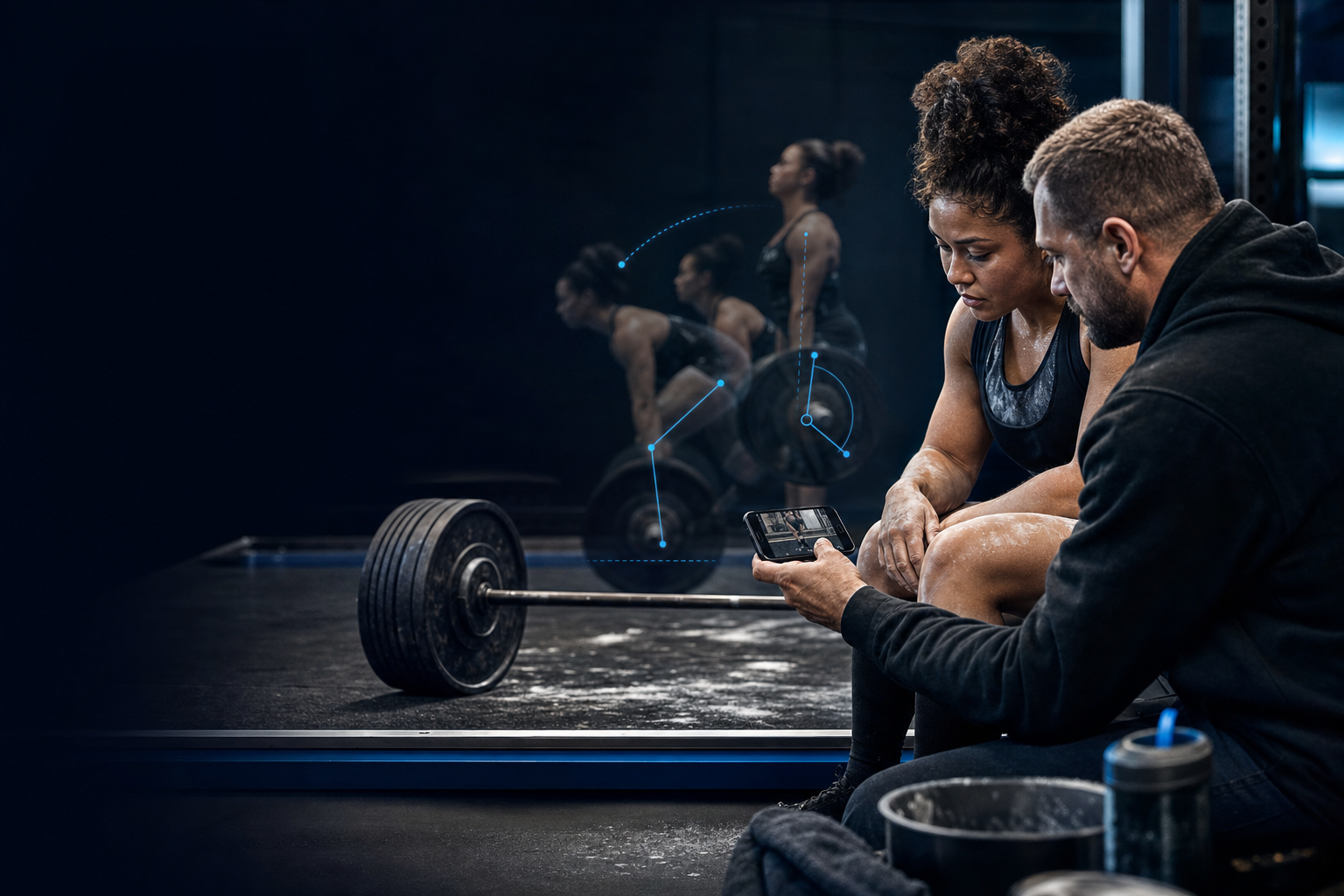
Program each lifter's block, get an AI first pass on their recorded lifts, and keep your coaching notes attached to the rep they're about, all in one place.
Try it free- If you are still deciding whether to compete before you coach, start with our guide to starting powerlifting.
- If you already coach and want to see the programming side in detail, we broke down a 12-week periodized training plan.
Coaches who work across strength sports often want more than one credential. If you also train strongman athletes, our guide to strongman coach certification covers what World Strongman's coaching credential requires and how to evaluate it.
Frequently asked questions
Do you need a certification to coach powerlifting?
No. It is not a legal requirement, and many powerlifting coaches are self-taught lifters with no federation credential. Certification adds a rules-literate foundation and a verifiable credential, which matters more once you are coaching people other than yourself or handling lifters at meets.
What's the difference between USA Powerlifting's Club, National, and International coach levels?
Club Coach covers novice through state-level lifters and requires no prior coaching experience, just membership, age 18+, and the Coaching Fundamentals course. National Coach covers state through national-level lifters and collegiate teams, and requires at least a year as a Club Coach plus meet experience at the Regional level or higher. International Coach covers national and pro-level teams and requires having served as an assistant coach on a national team abroad. USA Powerlifting currently lists the International course as not offered.
How much does USA Powerlifting coach certification cost?
Budget $75 a year for USA Powerlifting membership, which every course requires, plus $150 for the Coaching Fundamentals course, required before Club certification, and $495 for the Level 1 Club Certification course itself. That is $720 in year one to reach Club Coach. The Level 2 National course is also $495 but adds a meet-day handling session and requires prior Club-level experience. Coach-specific liability insurance is a separate optional cost, $55 a year for $1,000,000 of coverage.
Is a CSCS or NASM-CPT enough to coach powerlifting?
They are valid general training credentials, but neither is powerlifting-specific and neither covers USA Powerlifting's technical rules or meet-day handling. A coach who only holds a CSCS or NASM-CPT can still train lifters well, but would need the federation's own certification to handle athletes at its meets.
How long does it take to get certified?
The Club level itself is a single day, 8 to 9 hours, plus a written exam at the end. The Coaching Fundamentals course is self-paced and available on demand. The National level takes longer in practice, since it requires a full year as a Club Coach first and only runs at select National meets.
Can you get certified without competing yourself?
USA Powerlifting's published prerequisites for the Club level require membership, age 18 or older, the Coaching Fundamentals course, and having attended at least one USA Powerlifting meet. Competing yourself is not listed as a requirement, but attending a meet is.