

How to Start Powerlifting: A Beginner's Guide
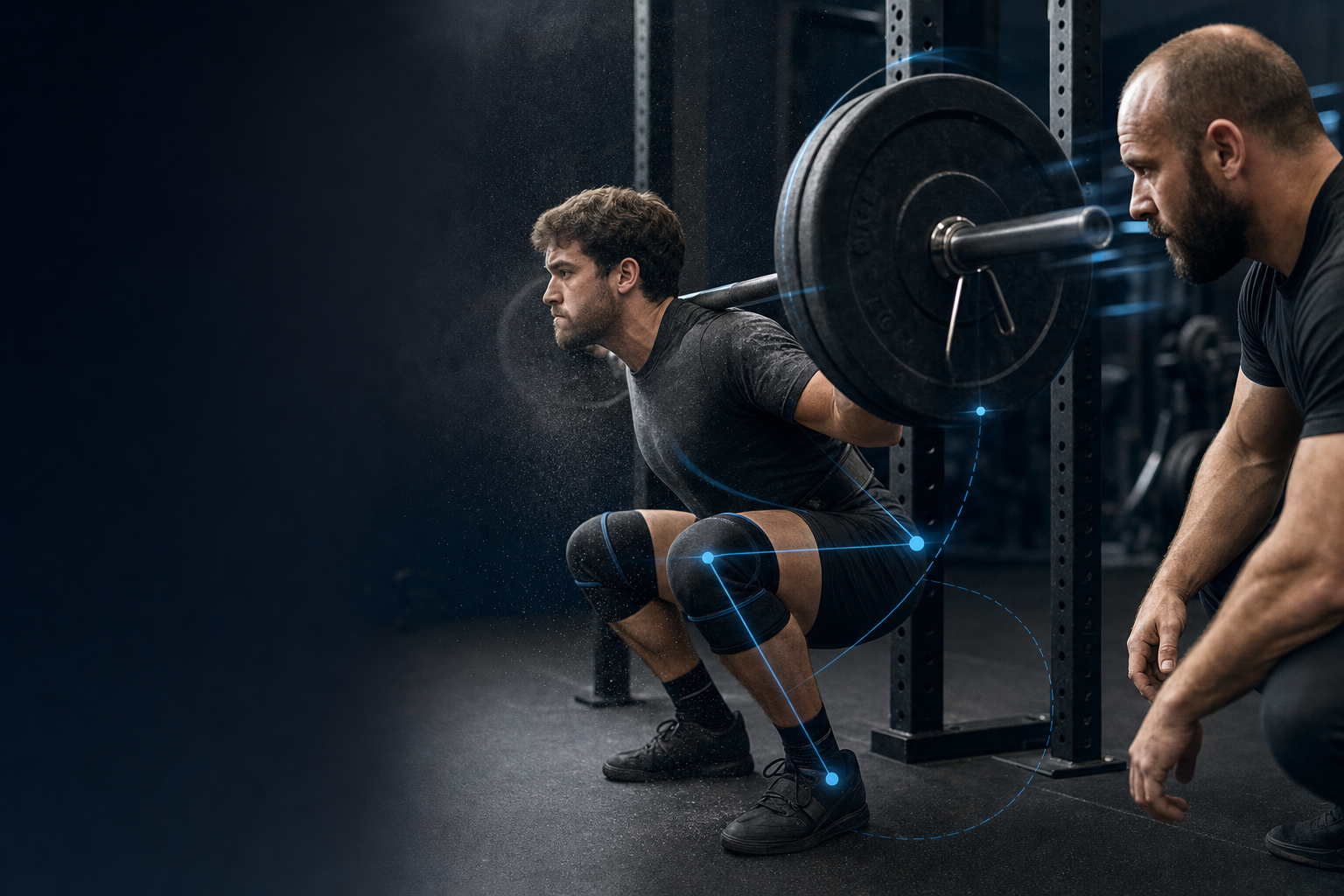
Powerlifting is a strength sport built around three lifts: the squat, the bench press, and the deadlift. You do not need a gym full of machines to start. You need a barbell, a plan, and a way to track your numbers over time. This guide covers what the sport actually is, how often to train as a beginner, a sample first eight weeks, and what to expect if you ever step on a competition platform.
What Powerlifting Actually Is
A powerlifting meet has one job: find your heaviest successful squat, bench press, and deadlift, then add them together. Each competitor gets three attempts on each lift, and the best successful attempt on each lift counts toward the total. Referees judge every attempt and call it good or no good based on whether you met the depth, lockout, and control standards for that lift.
That structure matters even if you never compete. It tells you what to train for: not how a movement looks, but how much weight you can move once, under control, through a full range of motion. Everything else in your training, accessory work, conditioning, mobility, exists to make those three lifts go up safely.
Raw vs. Equipped: What You'll See at a Meet
Most new lifters compete raw, which limits gear to a singlet, shirt, shoes, socks, a belt, wrist wraps, and knee sleeves. Equipped divisions allow supportive suits and shirts that change how the lift feels and how much weight is possible. If you are just getting started, train and compete raw first. It teaches the lift honestly before any gear changes the movement, and almost every beginner program, including the one below, assumes raw training.
Learning the Three Lifts
You will hear a lot of cues in your first weeks. Three matter more than the rest.
Squat: brace your torso like you're about to take a punch, then sit down between your hips, not just back into them. Depth is not optional. A squat that stops short of the standard doesn't count in competition, so practice hitting real depth from your very first session instead of adding that range of motion later.
Bench press: keep your shoulder blades pulled together and pinned to the bench for the whole lift. Lower the bar to your chest under control, pause, then press it back up in a straight line. Bouncing the bar off your chest is not a shortcut. It's a missed rep waiting to happen once the weight gets heavy.
Deadlift: the bar starts on the floor, over the middle of your foot. Take the slack out of the bar before you pull, keep it close to your shins the entire way up, and finish by standing tall, not by leaning back. Most beginner deadlift problems come from starting with the hips too low or too high, not from a lack of strength.
How Often to Train When You're New
New lifters do not need a complicated schedule. Current resistance training guidance for building strength calls for at least two sessions per week, with two to three working sets per lift at 80 percent of your one-rep max or higher, done through a full range of motion. Beginners respond to this kind of simple, consistent loading without needing complex periodization right away.
That's the whole secret in your first months: show up, add small amounts of weight when a session feels solid, and keep your technique the same every rep. Resist the urge to chase a heavier top single every week. The lifters who progress fastest early on are the ones who protect their form, not the ones who grind out ugly reps for a bigger number. Once that consistency is in place, the next decision is how to split your training days across the week; see our guide tostructuring a powerlifting split .
For a broader weekly structure once you're combining powerlifting-style strength work with general conditioning, see our guide to building an athletic strength and conditioning program.
A Sample First 8 Weeks
This is a starting template, not a fixed prescription. A real coach adjusts it to your body, your recovery, and your schedule. But it's a reasonable place to begin if you're training on your own for the first time.
| Day | Focus | Working sets x reps |
|---|---|---|
| Day 1 | Squat + bench press | 3x5 squat, 3x5 bench |
| Day 2 | Rest or light conditioning | Optional walk or bike, easy effort |
| Day 3 | Deadlift + bench press | 1x5 deadlift, 3x5 bench |
| Day 4 | Rest | - |
| Day 5 | Squat + bench press | 3x5 squat, 3x5 bench |
| Day 6-7 | Rest | - |
Add a small amount of weight to each lift every session as long as your technique holds up, roughly 5 pounds on the squat and deadlift, and 2.5 to 5 pounds on the bench press. When a weight starts breaking down your form for two sessions in a row, hold there for a week before pushing again instead of forcing it through. Once you are past this first block, a longer structured plan, our12-week powerlifting training plan , gives you a clearer path toward a first meet.
Common Mistakes New Lifters Make
Skipping warm-up sets. Jumping straight to your working weight is how a cold body turns a routine lift into a strain. Work up in stages.
Chasing a number instead of a pattern. A personal record with bad form isn't progress, it's a loan against next week's session.
Ignoring the deadlift. It's the lift new lifters practice least because it's the most fatiguing. Skipping it just means it stays your weakest lift the longest.
Never tracking numbers. If you don't write down what you lifted last time, you're guessing at progress instead of measuring it.
What to Expect at Your First Session
Walk in expecting to feel awkward for a few weeks. That's normal. Your first session should be about learning the setup for each lift at a light weight, not testing a max. Do a few warm-up sets with just the bar, then add small jumps until the working sets in the table above start to feel like real effort but not a grind.
Write down what you lifted every single session, even the light ones. That log becomes the only reliable answer to "am I actually getting stronger," and it's the first thing a coach will ask to see if you ever bring one in to review your progress.
Nutrition Basics for New Lifters
You don't need a strict diet to start powerlifting, but protein intake matters more here than in most general fitness. Sports nutrition research puts the useful range for people doing regular resistance training at 1.4 to 2.0 grams of protein per kilogram of body weight per day. For a 70 kg (about 154 lb) lifter, that's roughly 100 to 140 grams a day, spread across meals rather than eaten all at once.
Beyond that, eat enough total food to support your training and recovery. New lifters who chronically undereat tend to stall faster than their programming would predict, and it often gets blamed on the program instead of the plate.
Weight Classes and Whether You'll Ever Compete
You do not need to compete to call yourself a powerlifter. But it helps to know the structure exists: USA Powerlifting runs 12 women's weight classes and 12 men's weight classes, from the lightest classes up to unlimited super-heavyweight divisions. If your total ever climbs high enough that you're curious, your first local meet is usually closer than it feels, and you're only ever compared to lifters near your own bodyweight. For the path from your first squat to your first meet, see how to become a powerlifter.
Finding a Coach or Community
The fastest way to stall as a new lifter is training alone with no feedback on your form. A coach who can watch your squat depth, your bar path, and your bracing catches problems long before they show up as a plateau or an injury. That doesn't have to mean an expensive in-person coach. Recording your own lifts and reviewing them, or sending them to someone who knows what to look for, closes most of that gap.
If you're a coach or trainer evaluating software to run lifters through a program like this one, our comparison of the best personal training software platforms breaks down what to look for.
Coaching powerlifters or general strength athletes?
Greater brings program building, video review, and progress tracking into one place for coaches and trainers.
See how Greater worksOnce the basics click, the next question is how the training actually changes over time. Our guide on how powerlifters train covers the principles behind a real program.
If you would rather have someone else build and adjust that first program, see our guide to choosing an online powerlifting coach.
If you stick with the sport long enough, coaching often follows for some lifters. See our guide to powerlifting coach certification for what the credentialing path looks like once you get there.
Frequently asked questions
Do I need special shoes or equipment to start powerlifting?
No. A flat, stable shoe and comfortable clothes are enough to begin. A belt and wrist wraps help later as your loads increase, but they are not required to learn the three lifts.
How is powerlifting different from bodybuilding?
Powerlifting trains for how much weight you can lift once, in the squat, bench press, and deadlift. Bodybuilding trains for muscle size and shape using a wider range of exercises and rep ranges. The two can overlap, but they're judged on different things.
Can a beginner compete in their first year?
Yes. Most local meets welcome first-time competitors, and USA Powerlifting's weight classes mean you're only compared to lifters near your own bodyweight, not the strongest person in the room.
What's the difference between raw and equipped powerlifting?
Raw competition limits gear to a singlet, shirt, shoes, socks, a belt, wrist wraps, and knee sleeves. Equipped competition allows supportive suits and shirts that change how much weight is possible. Most new lifters start and stay raw.
How much should I be able to lift before entering a meet?
There's no minimum. Meets group lifters by weight class and experience, not by how much they lift. Many first-time competitors enter specifically to get a baseline total to build from.
How long before I see real progress?
Most new lifters see meaningful strength gains within 8 to 12 weeks of consistent training, twice a week or more, with steady small increases in weight. Progress slows after that first phase, which is normal, not a sign anything's wrong.