

Online Strength Coaching: What It Is and How to Choose a Coach
What online strength coaching actually is
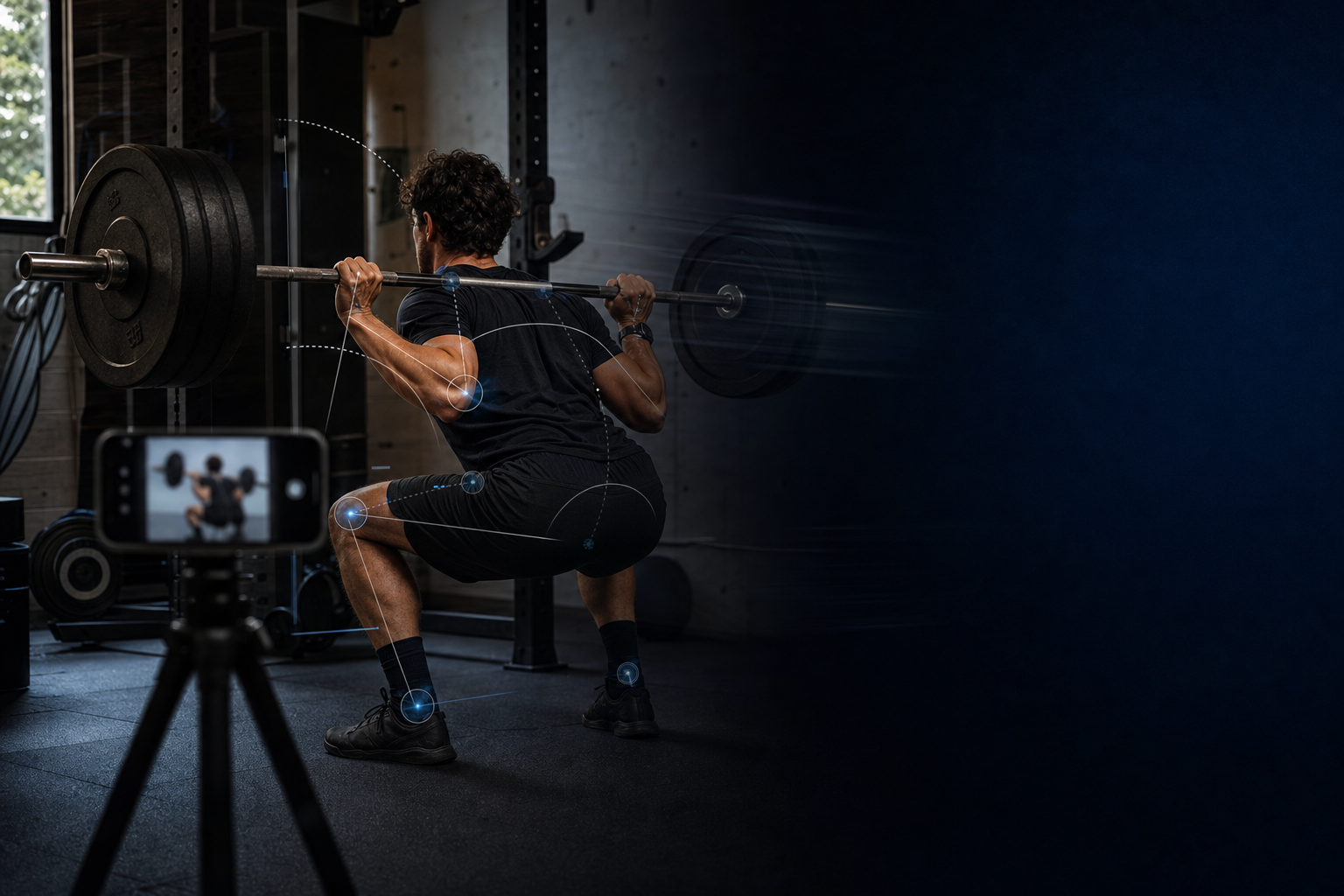
Online strength coaching is a remote coaching relationship built around one loop. A coach writes your program. You train and record your working sets. The coach reviews the video, adjusts the plan, and sends the next block. That loop repeats every week.
That definition rules out two things people often call online coaching. A static PDF program is not coaching. Nobody watches how the bar moves. Nobody changes your plan when a lift stalls. A training app by itself is not coaching either. It can log your sets and store your videos. No person is looking at your specific lift and making a call.
The coaching part is the human judgment applied to your training, session by session. Everything else, the app, the spreadsheet, the video platform, is the plumbing that carries that judgment to you.
Does online coaching actually work as well as in-person coaching?
Coaching yourself off a program you found online is normal. Most lifters start that way. The real question is whether supervision, in the gym or over video, changes your results enough to pay for it.
A systematic review and meta-analysis of 12 studies and more than 500 lifters compared supervised resistance training to fully unsupervised training. Supervised training produced a moderate advantage for strength outcomes. It made almost no difference to body composition results in the same review. If your goal is getting stronger, supervision gives you a real, measurable edge over training alone. If your goal is body composition, supervision by itself will not replace diet and consistency.
Remote, video-based coaching holds up too. A study comparing three remote training formats tracked how consistently people trained over a 10-week program. A supervised, livestreamed group kept a 93.3% adherence rate. A group that trained from recorded video with no live feedback held 86%. A group that received only a written program, with no video and no check-ins, dropped to 74%. The pattern holds: the more feedback and accountability built into the loop, the more consistently people train.
Neither result requires a coach standing next to the rack. It requires a coach who is actually watching, reviewing, and responding. That is the bar an online coach has to clear, not the format.
For context, the baseline the CDC sets for any adult is at least two days a week of muscle-strengthening activity covering the major muscle groups. An online strength coach is not solving whether you train. It is solving how well you train once you are already showing up.
One more piece of context matters here. Both studies above compared supervision to no supervision. They did not test whether an in-person coach beats a remote one when both are actually paying attention. That comparison barely exists in the research yet. The honest read is that the format, in person or over video, is a smaller factor than whether the coach reviews your training and adjusts it.
Where online coaching has real limits
A fair guide names the tradeoffs, not just the upside. Online coaching has real limits worth knowing before you sign up.
- A coach reviewing your video cannot physically correct your setup mid-set the way someone standing next to you can. Feedback arrives after the set, not during it.
- The quality of the coaching depends on the quality of your footage. A coach working from a shaky, badly angled phone video is working with less than a coach standing in the room.
- You do the filming. If you skip recording a session, or only send your best set instead of your worst, your coach is adjusting your plan around an incomplete picture.
- Nobody is there to spot you. For near-maximal attempts, you still need a spotter or safety setup in the room with you, coach or no coach.
None of this makes online coaching worse than in-person coaching. It makes it a different set of responsibilities split between you and the coach. A coach who is upfront about that split, instead of pretending video review replaces a spotter, is one worth trusting.
What a good online strength coach actually does, week to week
Here is what the loop looks like when it is run well. Most of the value sits in these five steps, not in the app a coach happens to use.
- Intake and assessment. A real conversation about training history, current numbers, injury history, equipment access, and goals before a single set gets written.
- Program design. A block built around your actual schedule and your actual equipment, close to what we cover in structuring your own training week, then adjusted from there based on your video.
- Video review. You send your working sets. The coach reviews them against the plan and against how you actually moved, not just whether the bar went up.
- Communication. A channel for questions between sessions. A coach who only talks to you once a month is not running a feedback loop.
- Adjustment. The plan changes based on what shows up in your videos and what you report, not on a fixed template that never moves no matter what happens.
Ask a prospective coach to walk you through this loop before you hire them. How they answer tells you more than their transformation photos. A coach who can name a specific review day, a specific communication channel, and a specific example of a plan they changed because of what a lifter sent in is describing a real process. A coach who answers in generalities, "I check in regularly" or "I adjust as needed", may not have a process at all.
Group coaching vs. one-on-one coaching
Most online strength coaching falls into one of two setups, and it is worth knowing which one you are buying before you compare prices.
- Group or template coaching. You get a shared program, often built around a training style or a specific meet cycle, with review happening in batches or in a shared channel. This usually costs less. It works well once you already know your lifts and mainly need programming plus periodic checks.
- One-on-one coaching. The program is built around you specifically and adjusted set by set based on your video. This usually costs more, because it takes more of the coach's time per lifter. It tends to matter more for beginners still building technique, lifters coming back from injury, or anyone prepping a specific meet.
Neither setup is wrong. The mismatch that causes problems is paying one-on-one prices for what is actually a group template, or expecting individualized weekly adjustments from a program that was never built to give them. Ask directly which one you are getting before you commit.
Credentials worth checking
Anyone can call themselves an online strength coach. Nothing stops it. Two credentials are worth actually verifying before you hand over your training and your money: the CSCS, issued by the National Strength and Conditioning Association, and the NASM-CPT, issued by the National Academy of Sports Medicine. A coach who can describe how a repeatable programming system should work is usually already running one of these.
The details below on exam format and eligibility come straight from each certifying body's own certification page, linked above.
| Credential | What it verifies |
|---|---|
| CSCS (NSCA) | Exercise science, program design, testing and evaluation, with an explicit focus on reducing injury risk. Requires a bachelor's degree to sit for the exam. NCCA-accredited since 1993. |
| NASM-CPT | Anatomy, biomechanics, program design, and coaching methodology, through a 120-question proctored exam. Requires a high school diploma or GED plus current CPR/AED certification. |
Red flags and green flags
Use this before you hand over a credit card.
- Green flag: asks about your training history and equipment before writing anything.
- Green flag: wants video of your current lifts before making any promises about your numbers.
- Green flag: can describe their video review turnaround time in specific terms, not "whenever I get to it."
- Green flag: is upfront about what they are not, such as a physical therapist or a nutritionist, and refers out when a problem is outside their scope.
- Red flag: never asks to see you lift before writing a program.
- Red flag: promises a specific number added to your total by a specific date.
- Red flag: only communicates on a fixed monthly call with no way to ask questions in between.
- Red flag: every lifter on their roster runs the exact same template.
What the coaching loop looks like with the right tools
The loop above works regardless of software. But the tools a coach uses decide how much of their time goes to actually coaching, versus chasing videos across text messages, a spreadsheet, and three different apps.
A workable setup needs four things in one place: a way to build and assign the program, a way to record and send working sets without a separate upload step, a fast first pass on that video so the coach's attention goes to the reps that actually need it, and a message thread attached to the specific set, not a separate DM.
See how the loop works in Greater
Program the block, get an AI first pass on every recorded set in under 60 seconds, and keep coaching notes attached to the rep they're about.
Try it freeGetting started: a short checklist before you hire someone
You do not need to have this fully figured out before you reach out to a coach. You do need enough of it figured out that you can tell a real process from a vague one.
- Watch two or three of your own recent lifts and note what you would want a coach to catch.
- Ask how video review turnaround works and get a specific answer, not "fast."
- Ask what happens when a lift stalls for two weeks in a row.
- Ask for the coach's credential and check it against the issuing body's own site.
- Ask what the monthly cost includes: programming only, or programming plus video review and messaging.
- Start with a short trial period before committing to a long contract.
- If you're brand new to the sport, read our beginner's guide to starting powerlifting first so you walk in knowing the basics.
- If you want to see how coaches evaluate the tools for running this loop, we compared the software coaches use to run that loop.
Powerlifting-specific coaches often hold a sport credential on top of general coaching certifications. Our guide to powerlifting coach certification covers what that credential requires and how it differs from a general strength coaching background.
Frequently asked questions
Is online strength coaching worth it?
For strength outcomes specifically, research on supervised training shows a real, moderate advantage over training completely unsupervised. Whether it is worth it for you depends on whether the coach actually runs a feedback loop: reviewing your video, adjusting your plan, and staying reachable between sessions. A coach who does that is worth more than the format, online or in-person, they deliver it in.
How much should I expect to pay for online strength coaching?
Pricing varies widely by coach experience, sport, and how much personal review is included, so there is no single reliable number to quote. Ask what is included before comparing price. Programming alone costs less than programming plus video review and ongoing messaging.
What is the difference between an online coach and a training app?
A training app can log your sets, store a program, and hold a video library, but nothing in it reviews your specific lift and adjusts your plan. An online coach is the person doing that. Some coaches use an app as the delivery system for their coaching. The app alone is not the coaching.
How often should my coach review my training video?
There is no universal standard, which is exactly why it is worth asking directly before you hire someone. A coach should be able to give you a specific turnaround time, for example within a set number of days, rather than a vague answer.
Do I need training experience before I hire an online coach?
No. Beginners often benefit the most from supervision, since technique habits form early and are harder to change later. What matters more than experience level is whether the coach adjusts their communication and review depth to where you are starting from.
Can an online coach help me peak for a powerlifting meet?
Yes. This is one of the more common reasons lifters hire a coach specifically. Meet prep involves precise adjustments to volume and intensity in the weeks before competition, which is exactly the kind of individualized, video-informed decision a general template cannot make for you.