

How Do Powerlifters Train? The Principles Behind the Program
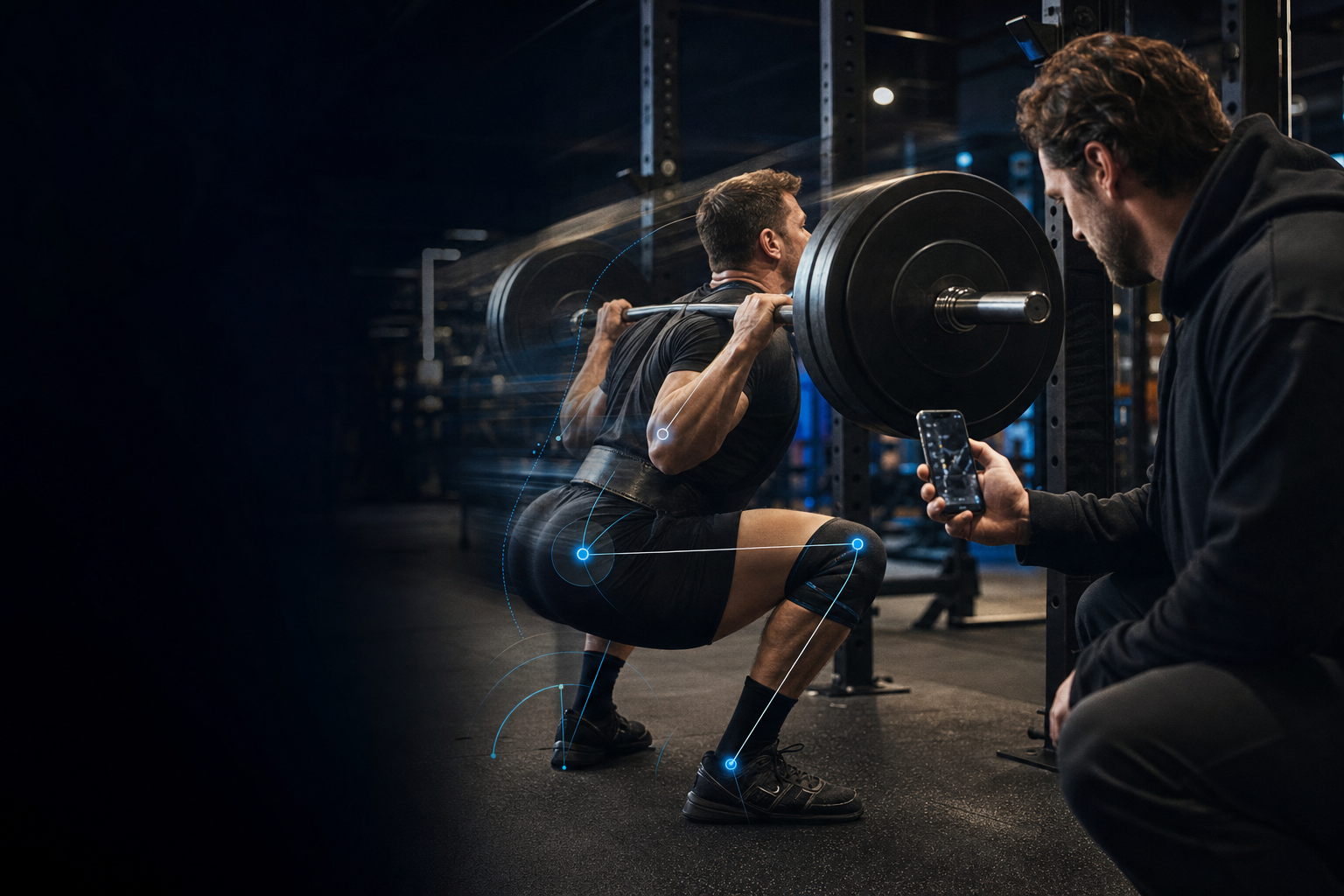
Ask what powerlifting training looks like and most people picture one moment: a heavy single, chalk in the air, spotters standing by. That is only the visible tip of it. The training itself runs on a small set of principles, not a secret program. If you have not started training yet, begin with the basics first; this guide assumes you already have a training habit and explains the method behind it.
Powerlifters train the competition lifts themselves. They keep the intensity high. They train each lift often enough to actually improve it. They adjust the load to how the bar feels that day. And they build the supporting muscle to keep doing all of that without breaking down. Here is how each piece works and why.
Training the lift, not the muscle
A powerlifting meet tests three lifts: the squat, the bench press, and the deadlift. Nothing else counts on competition day. So the training centers on those three lifts rather than on muscle groups.
This is the specificity principle, and it sits underneath everything else in this guide. To get better at a heavy squat, the most direct path is practicing a heavy squat. General strength work still has a place in a powerlifter's week, but it supports the three competition lifts rather than replacing them. Current resistance training guidance calls for athletes to use individualized programs built around their own sport, not generic templates. Powerlifting applies that idea about as literally as a sport can. Train the exact movement that gets judged, under load that increases over time.
This is also why powerlifting training looks different from a workout built for general fitness or muscle size. A program built around variety can rotate exercises freely from week to week. A powerlifting program cannot rotate away from the squat, bench press, and deadlift for long, because time away from the actual lift is time not spent improving at the actual lift.
Specificity also explains why technique work never really stops. A heavy squat, bench press, or deadlift is a complex motor skill, not just a strength test. Bar path, bracing, and timing all shift as the weight on the bar gets heavier. Advanced lifters keep drilling technique for the same reason beginners do. The skill only transfers if it gets practiced under the load it needs to hold up under. That load keeps changing as a lifter gets stronger.
The rep ranges and intensity powerlifters actually use
Powerlifting training leans toward low reps and heavy loads. Most working sets on the competition lifts land somewhere between one and six reps, at a meaningful percentage of a one-rep max. That is specificity again. A meet attempt is one rep, at the heaviest weight a lifter can manage that day. So a large share of training time is spent practicing lifts in a similar zone.
Not every session looks like this. A week built entirely around near-maximal singles would wear down most lifters' joints and nervous systems inside a month. Training typically mixes heavier, lower-rep work on the competition lifts with moderate-rep sets on the same lifts or close variations. Higher-rep accessory work fills in around that, and it does not need to mimic competition conditions. The heavy end of that range is what makes powerlifting training look distinct from a general fitness program built mostly around the 8-to-12-rep range.
A hard set of 3 reps sits at a noticeably higher percentage of a lifter's one-rep max than a hard set of 6, even when both are trained close to the same effort level. The exact percentage on a given day depends on how the lift feels, which is exactly what the autoregulation section below covers.
How often powerlifters train each lift
It is common for a powerlifter to train the squat, bench press, or deadlift, or a close variation of each, more than once a week. Training a lift once every seven days leaves most of the week untouched.
Research comparing different weekly training frequencies found that higher frequency is linked to greater strength gains. That link was clearest for multi-joint, upper-body lifts like the bench press. The evidence was less conclusive for lower-body lifts like the squat and deadlift in the same research. Even so, the broader mechanism still applies to all three lifts: more frequency makes it easier to fit in more total work across the week without any single session becoming excessive. Whether frequency itself, separate from the extra volume it allows, adds any further benefit on its own is still unclear in the research. Either way, the practical takeaway holds. Once a week per lift is usually not enough for a competitive powerlifter, and two or more sessions touching each lift is the more common pattern.
Exactly which day each lift falls on, and how the accessory work gets layered around it, is its own decision worth walking through separately.
Autoregulation: how powerlifters decide how hard is hard enough
A written program can specify sets and reps in advance. It cannot fully predict how a lifter will feel on a given day. How a lifter feels changes how much weight is safe and productive to lift, and autoregulation is how powerlifters close that gap.
The most common tool is RPE, short for rate of perceived exertion, usually scored on a 1-to-10 scale. An RPE of 10 means no more reps were possible. An RPE of 8 means roughly two more reps were left in the tank. Instead of locking every set to a fixed percentage of a max, a lifter or coach picks a target RPE for the day and adjusts the actual weight on the bar to hit it.
A review comparing autoregulated training to fixed-load training in athletes found autoregulation produced larger strength gains overall, with the clearest improvements showing up in squat and bench press specifically. That does not make a written plan pointless. It means the plan works better when the day-to-day loading bends to how the lift actually feels, not just to what a spreadsheet predicted weeks in advance.
Why powerlifters do more than just squat, bench, and deadlift
The three competition lifts are the target, but they are rarely the only exercises in a powerlifter's week. Accessory work, sometimes called assistance work, exists to fix specific weak points in the big three. It also builds the muscle and connective tissue capacity needed to keep training them heavy without breaking down.
A lifter with a squat that collapses forward out of the hole might add extra quad and upper-back work. A bench press that stalls halfway up often gets more tricep and shoulder pressing volume. A deadlift that comes off the floor slowly usually gets more posterior chain work: hamstrings, glutes, and the muscles running along the spine.
None of this accessory work needs to look like the competition lift itself. Its job is narrower: support the lift that actually counts.
Accessory work typically fills the back half of a session, after the main lift for the day is already done. That ordering is deliberate. Fatigue from accessory work costs less once the main lift is already finished. Doing accessory work first means showing up to the main lift already tired.
The training principles, at a glance
The five principles above work together rather than in isolation. Here is the short version of each.
| Principle | What it means | What it looks like in practice |
|---|---|---|
| Specificity | Train the exact lifts that get judged | Squat, bench press, and deadlift anchor most sessions |
| Intensity and rep range | Work mostly in low reps at heavy loads | Many working sets in the 1-6 rep range on the competition lifts |
| Frequency | Train each lift more than once a week | Two or more sessions touching each competition lift weekly |
| Autoregulation | Adjust load to how the lift feels that day | RPE or reps-in-reserve targets instead of a fixed percentage on every set |
| Accessory work | Fix weak points, build supporting capacity | Targeted assistance exercises layered around the big three |
How to tell if the training is actually working
Progress in powerlifting is not just a heavier number every week. Early on, a new lifter can add weight almost every session. Once that phase ends, the better signals are how a given weight feels and looks, not just whether a new max got hit.
Watch for three good signs. The bar moves faster at a weight that used to feel slow. RPE trends down over time at the same load. Technique holds up under the heaviest working sets instead of breaking down.
Watch for three bad signs too. RPE climbing at a weight that used to feel manageable. Technique falling apart before the bar gets heavy. Stalling at the same number for months with no rebound after a lighter week.
Spotting these trends from memory is hard. Recording lifts and reviewing them makes the pattern visible instead of relying on how a set felt in the moment, which is often the least reliable read on a heavy day.
These trends also only mean something over weeks, not within a single session. Everyone has one bad day where a normally manageable weight feels heavy. The signal worth acting on is a pattern that holds across several sessions in a row, not a single rough set.
How this changes as a lifter gets more advanced or gets closer to a meet
These five principles hold at every level, but how they get applied shifts over time. A newer lifter can make progress on a fairly simple structure. A lifter with a few years of training history usually needs more deliberate planning to keep improving.
Arranging these principles into an actual weekly structure is a separate decision from understanding why the principles exist. So is building a multi-week plan that peaks a lifter for a specific date, which layers planned changes in volume and intensity on top of everything covered here. And training changes again once competing becomes a regular part of the picture, with meet-specific practice added on top of the general method.
The common thread is that more experience generally means more deliberate planning and less improvising week to week. The five principles in this guide do not change. How tightly they get managed does.
Want a coach's eye on how you're actually training?
Greater lets you assign your training as a program, record your lifts from your phone, and get an AI first pass on squat, bench, and deadlift technique in under 60 seconds.
See how Greater works for powerliftersSome of the most deliberate lifters use bar speed, not just RPE, to guide these decisions. Our guide to velocity based training explains what that looks like in practice.
Powerlifting and Olympic weightlifting draw on many of the same training principles, and some coaches end up certified in both. Our guide to weightlifting coach certification explains USA Weightlifting's Level 1 and Level 2 pathway.
Frequently asked questions
How many days a week do powerlifters train?
Most competitive powerlifters train 3 to 6 days a week. The right number depends on recovery capacity, schedule, and how much accessory work is layered around the three competition lifts, not a fixed rule.
Do powerlifters train to failure?
Rarely on the competition lifts. Most sets stop a rep or two short of failure, tracked through RPE or reps-in-reserve. Staying just short of failure on heavy lifts still drives progress while leaving more recovery for the next session.
Do powerlifters do cardio?
Many include some light to moderate conditioning work, usually kept short and separate from heavy training days so it does not interfere with recovery for the squat, bench press, and deadlift.
How long is a typical powerlifting training session?
Most sessions run 60 to 90 minutes, though a heavy squat or deadlift day with a full accessory block can run longer, especially with the rest periods heavy sets require.
Do powerlifters only train squat, bench, and deadlift?
No. Those three lifts anchor the training, but accessory exercises that support them make up a real share of most sessions.
Can a beginner train like a competitive powerlifter?
Not exactly. Beginners improve on simpler structures and do not need the same level of autoregulation or peaking a more advanced lifter uses. Starting with the basics first is the better entry point.