

The ACL Injury Prevention Program: A Coach’s Evidence-Based Guide (2026)
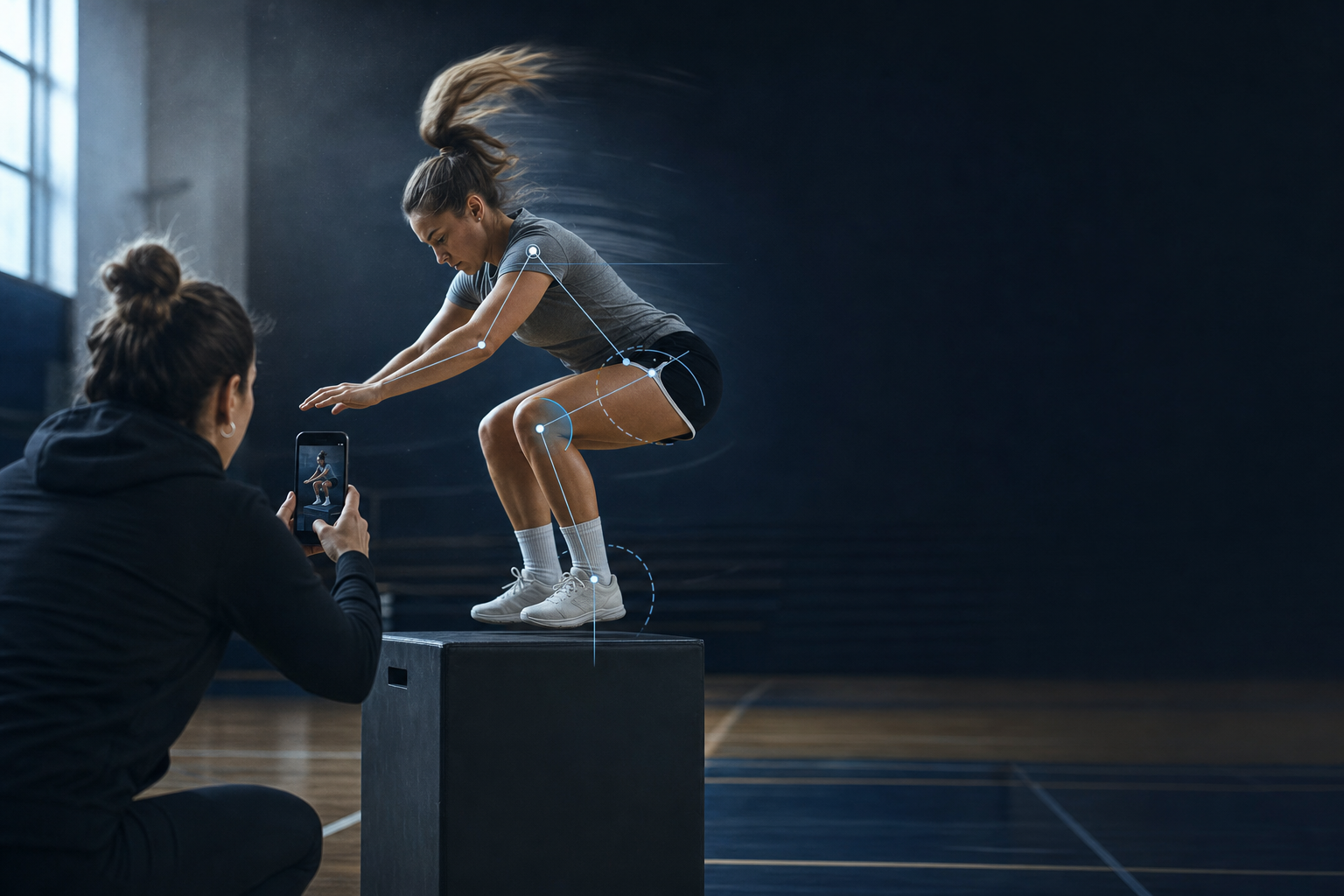
Most ACL tears do not come from a collision. They happen when an athlete lands, cuts, or decelerates and the knee collapses inward under load. That detail matters. It means a large share of ACL injuries are trainable problems. Structured prevention programs reduce non-contact ACL injury risk. They run as a 20-minute warm-up, two or more times a week. In young female athletes, the highest-risk group, a meta-analysis found these programs roughly halved ACL injury rates.
This guide is for coaches, athletic directors, and parents, not clinicians. It explains what an ACL injury prevention program actually is. It compares the proven options side by side: FIFA 11+, PEP, Sportsmetrics, and KIPP. It breaks down the four components every effective program shares. It gives you a ready-to-run 20-minute session with a weekly schedule. And it covers the piece most guides skip entirely: how to check an athlete’s landing mechanics so you know who needs the work most.
One honest note before we start. No program makes an athlete tear-proof. The goal is to reduce risk, not eliminate it. But the evidence says the reduction is large enough that skipping this work leaves athlete health on the table.
ACL tears get the most research attention of any knee injury, but they are not the only one a coach needs to plan around. For a breakdown of prevention evidence across the full range of common knee injuries, not just ACL, see our knee injury prevention guide.
What an ACL injury prevention program is (and why it works)
An ACL injury prevention program is a structured neuromuscular warm-up that replaces a team’s traditional warm-up. It combines lower-body strength, core stability, plyometric landing training, and balance and agility work, performed for at least 20 minutes, at least twice a week.
That is the entire concept. No new practice time, no equipment budget, no specialist on staff. The team swaps jogging two laps and static stretching for a scripted sequence of exercises that trains the exact qualities that protect the knee.
“Neuromuscular” sounds clinical, but the idea is simple. The ACL is most often torn in positions the athlete puts themselves into: a stiff, upright landing, a knee drifting inward during a cut, a hard deceleration on a straight leg. Neuromuscular training rehearses better versions of those movements thousands of times. The safer pattern becomes the default under fatigue and pressure. The strength and plyometric work adds the hip, hamstring, and trunk capacity that keeps the knee aligned when forces spike.
The evidence base here is unusually strong for sports medicine. A meta-analysis of prevention trials in young female athletes found these programs cut ACL injury rates by about half. The proven programs share the same dosage: about 20 minutes, two to three times a week, maintained through the season.
How ACL injuries actually happen (the mechanism you are training against)
Around 70 percent of ACL tears are non-contact. Nobody hits the athlete. The injury comes from the athlete’s own movement in one of a few danger positions: landing from a jump, decelerating hard, cutting or pivoting with the foot planted, or landing with a straight, stiff leg.
The single most important pattern to understand is knee valgus: the knee collapsing inward over a planted foot while the hip and trunk fail to control the load. Watch slow-motion footage of non-contact ACL tears and you see the same shape again and again. The foot is fixed. The knee dives toward the midline. The ligament takes force it was never meant to absorb.
The coaching target is the opposite shape, usually cued as “knee over toe.” Hips back, knees tracking in line with the toes, landing soft and quiet with bent knees and hips. Every proven program in this guide is, at its core, a system for making knee-over-toe automatic. That is also why prevention training works at all. You are not trying to change anatomy. You are changing the positions the athlete habitually loads.
Who is most at risk (female athletes, youth, prior injury)
Female athletes carry the highest risk. In comparable cutting and pivoting sports, they tear their ACLs at two to four times the rate of male athletes. The position statement from the National Athletic Trainers’ Association confirms the pattern. The research points to a mix of factors: landing mechanics, muscle activation patterns, and anatomy. The practical takeaway is not that girls should avoid these sports. It is the opposite. Female teams have the most to gain from prevention training. The research showing roughly halved injury rates was largely built on female athletes.
Age matters too. ACL injury rates climb sharply in the early teens for girls and the late teens for boys. That is exactly when athletes add jump height, sprint speed, and body mass faster than they add control. Starting a program around ages 12 to 14 catches the risk curve before it peaks rather than after.
Injury history is the third flag. In research tracking young athletes after ACL reconstruction, roughly 30 percent sustained a second ACL injury within two years of returning to sport. That count includes both the repaired knee and the opposite one. A returning athlete should never be excused from prevention work. They are the athlete who needs it most.
By sport, the highest rates show up where cutting, pivoting, and landing are constant. Soccer, basketball, and football lead the list, with volleyball, lacrosse, and handball close behind.
The proven programs, compared
Several published programs have real evidence behind them. They share the same DNA. They differ mainly in sport focus, session length, and how they are delivered. Here is the side-by-side comparison that, oddly, almost no guide provides.
| Program | Best for | Time per session | Frequency | Equipment | Evidence | Where to get it |
|---|---|---|---|---|---|---|
| FIFA 11+ | Soccer teams, ages 14 and up | About 20 min | 2-3x per week | None (ball optional) | Randomized trial: 46% fewer injuries in men’s collegiate soccer | Free from FIFA’s medical resources |
| FIFA 11+ Kids | Youth soccer, under 14 | 15-20 min | 2x per week | None | Randomized trials in youth soccer | Free from FIFA’s medical resources |
| Santa Monica PEP | Soccer and multi-sport teams wanting minimal setup | 15-20 min | 2-3x per week | Cones and a ball | 2-year trial in female youth soccer, among the largest ACL reductions reported | Free PDF from the Santa Monica Sports Medicine Foundation |
| Sportsmetrics | Jump-heavy sports (basketball, volleyball), pre-season block | 60-90 min | 3x per week for 6 weeks | Box, mat, open space | Foundational 1999 trial in female high school athletes | Sportsmetrics.org, including certified site training |
| Lurie Children’s KIPP | School and community programs across mixed sports | About 20 min | 2-3x per week as the warm-up | None | Cluster randomized trial in Chicago public high schools | Free from Lurie Children’s Hospital |
FIFA 11+ is the default answer for soccer. It is fully scripted and free from FIFA’s injury prevention resources. It needs nothing but a pitch. A randomized trial in men’s collegiate soccer reported 46 percent fewer injuries for teams that ran it consistently. FIFA 11+ Kids adapts the concept for pre-teens with more games and simpler movements.
The PEP program (Prevent injury and Enhance Performance) comes from the Santa Monica Sports Medicine Foundation. It is the lightest lift. It fits inside a normal warm-up window. It uses only cones and a ball. And its 2005 trial in female youth soccer reported one of the largest ACL risk reductions in the literature.
Sportsmetrics is the outlier in format. It is a dedicated 6-week pre-season block with longer sessions and a heavy plyometric emphasis. The foundational 1999 trial validated it in female high school athletes. That format makes it the strongest choice for basketball and volleyball programs that can schedule it before the season.
KIPP comes from Lurie Children’s Hospital in Chicago. A cluster randomized trial in urban public high schools validated it with regular coaches delivering it. That makes it a realistic pick for athletic directors rolling prevention out across many teams at once.
Choosing between them matters far less than running one of them consistently. Every program in the table beats the traditional warm-up it replaces.
The 4 components every effective program shares
Strip the branding away and every proven program trains the same four things. If you ever need to adapt a program to your context, protect these four pillars and you keep the active ingredients.
- Lower-body strength. Squat and lunge patterns, hamstring work such as Nordic curls, and hip and glute exercises. Strong hips and hamstrings are what physically hold the knee in line during cuts and landings.
- Core stability. Planks, side planks, and anti-rotation work. The trunk is the mass the knee has to manage. An athlete whose torso pitches sideways on landing sends that load straight into knee valgus.
- Plyometrics and landing training. Progressive jumping and landing drills with strict technique standards. This is where the movement pattern is actually rehearsed and where quiet, soft, knee-over-toe landings get built.
- Balance, agility, and proprioception. Single-leg balance, controlled cutting, and reaction drills that transfer the clean pattern into chaotic, sport-like situations.
One coaching detail is worth adopting immediately: external cues outperform internal ones. Research on coaching cues found athletes retain better mechanics with cues about the environment: “land as quietly as you can,” “push the ground away.” Cues about the body (“bend your knees more”) work less well. Say what the movement should accomplish, not which joint should flex.
A step-by-step 20-minute program you can run this week
Below is a coach-ready session. It follows the shared structure of the proven programs above. FIFA 11+, PEP, and KIPP all use this same warm-up architecture. Use it as your standard warm-up. If your sport has a scripted program that fits, run that instead (FIFA 11+ for soccer, for example). The point is the structure and the standards, not the specific menu.
Minutes 0-5: Dynamic warm-up
Light jog, high knees, butt kicks, walking lunges with a torso twist, lateral shuffles, and leg swings. The goal is temperature and range of motion, not fatigue.
Minutes 5-11: Strength and core
Two or three rounds, kept crisp. Bodyweight squats, building to single-leg sit-backs and rear-foot-elevated split squats as athletes progress. Walking lunges. Partner-assisted hamstring lowers, working toward Nordic curls. Front and side planks of 20 to 30 seconds. Single-leg glute bridges. The technique standard: every rep with knees tracking over toes, trunk quiet.
Minutes 11-16: Plyometrics and landing
This is the heart of the session, and it is a progression, not a menu. Level 1: vertical jump, stick the landing for two full seconds, silent feet. Level 2: broad jump and stick, then lateral hops over a line. Level 3: single-leg hops, forward and lateral, stuck and held. Athletes earn the next level by owning the current one. Cue quiet landings and full-foot contact. A landing you can hear is a landing to fix.
Minutes 16-20: Balance and agility
Single-leg balance with a partner tossing a ball or adding light shoves. Then 45 degree cuts at half speed, focusing on the plant leg. Build to game speed only when the shape holds. Finish with two or three short accelerations and controlled decelerations.
Weekly schedule and season timing
Run the session at least twice a week, every week, as the warm-up for practice. Start in pre-season if you can, ideally six or more weeks before competition. That is when the biggest adaptations happen. Keep it going in-season. The trial results above come from programs maintained all season, and the protective effect fades when the training stops. In the off-season, athletes keep a shortened version so the movement patterns do not decay.
How to check an athlete’s landing mechanics (a movement check any coach can run)
Programs reduce risk across a roster, but risk is not evenly distributed. The athletes landing in valgus today are the ones you most need to find. The standard clinical screen is a drop-jump test. A usable version of it needs nothing more than a phone.
Set the phone at hip height, directly front-on. Have the athlete step off a low box, land, and immediately jump vertically. Record it, then watch for three things. First, do the knees dive toward each other on landing? Second, is the landing stiff and loud, with little bend at the hips and knees? Third, is one side doing more work than the other, with the pelvis dropping or the trunk leaning? A clean rep shows knees tracking over toes, a soft and quiet landing, and symmetry between legs.
This is a coaching screen, not a diagnosis. An athlete who shows heavy valgus on every rep, reports knee pain, or is returning from injury belongs with a physical therapist or sports medicine physician. What the screen gives you is triage. Who is moving well. Who needs focused attention inside the warm-up. Who needs a professional set of eyes.
Manually filming and reviewing a roster is exactly the kind of task that quietly stops happening mid-season. This is the problem Greater was built for. Athletes record a short movement video on their phone. Greater’s AI movement analysis flags at-risk landing patterns like inward knee collapse and stiff landings. The coach sees at a glance who needs the work.
Screen every athlete’s landing mechanics
Greater analyzes a phone video of an athlete’s landing and flags at-risk movement patterns, so you know who needs attention before the season starts.
Try Greater freeImplementing a program across a team
The gap between the trial results and most real-world rollouts is adherence. In the studies, teams that ran their program at the prescribed dose got the reductions. Teams that ran it occasionally got a fraction of the benefit. Implementation is therefore not a detail. It is the whole game.
Three tactics do most of the work. First, make the program the warm-up rather than an addition to practice. It should not compete with drill time. It replaces the low-value jogging that was there before. Second, sell it to athletes as performance training, because it is. The same strength, plyometric, and cutting work that protects the knee also improves jump height and change of direction. “This makes you faster” lands better with a 16-year-old than “this lowers your injury risk.” Third, track completion. A program that lives in one coach’s head disappears the week that coach is busy. A simple log of which sessions ran, or a delivery tool that shows who completed what, keeps it honest.
Consistency across coaches is the version of this problem that athletic directors own. When every team runs its own warm-up, prevention happens by luck. Standardizing one program across a school or club turns it into policy instead of preference. That is the approach Greater supports for schools and athletic programs. Camps and clubs can run the same structure in compressed form.
After an ACL injury: prehab and reducing re-injury risk
For an athlete who does tear an ACL, the same training logic applies on both sides of surgery. “Prehab” is structured strength and mechanics work in the weeks before reconstruction. It is commonly prescribed because athletes who enter surgery stronger tend to have smoother early rehab. That plan belongs to the surgeon and physical therapist, not the coach.
Two findings from the return-to-sport research are worth knowing. In a major cohort study of athletes returning after ACL reconstruction, every month of delay up to nine months after surgery cut the re-injury rate substantially. That is where the widely used nine-month guidance comes from. And as noted above, roughly 30 percent of young athletes sustained a second ACL injury after returning. The practical implications for a coach: patience with the timelines set by the physical therapists guiding return to sport, and a permanent spot in prevention training for every returning athlete. Prevention work does not end at return to play. For a previously injured athlete, that is when it matters most.
None of this replaces medical care, and this article is not medical advice. It is the coach’s share of a job that also involves clinicians and parents: run a proven program, watch how your athletes move, and take the risk you can off the table.
Where to start this week
Pick the program that fits your sport from the comparison table and download it. Replace your current warm-up with it at the next practice. Keep it at two or more sessions a week from there. Over the next two weeks, film a front-on drop-jump for each athlete so you know who needs the most attention. That is the whole system. It costs 20 minutes you were already spending. The evidence says it is one of the highest-leverage things a coach can do for athlete availability.
Make movement quality part of every practice
Greater gives coaches AI movement analysis and simple program delivery, so injury-risk reduction work actually gets done all season.
See plans and pricingFrequently asked questions
Do ACL injury prevention programs actually work?
Yes, with a condition. Randomized trials and systematic reviews show exercise-based programs reduce ACL injury risk. A 2019 meta-analysis in young female athletes found injury rates cut by about half. The condition is dosage. Teams that run the program at least twice a week, all season, get the results. Occasional use gets a fraction of the benefit.
How often should athletes do an ACL prevention program?
The standard evidence-backed dose is at least 20 minutes, at least twice a week, maintained through the whole season. Most teams run it as the practice warm-up, so it costs no extra time. Benefits fade when training stops. It continues in-season and in reduced form in the off-season.
Can ACL tears be completely prevented?
No. No program eliminates ACL risk, and contact injuries in particular will always be part of sport. What the evidence supports is a large reduction in non-contact ACL injury risk, which is the majority of ACL tears. Reduce is the honest word, and it is still a big win.
What is the best ACL prevention program for young female athletes?
The best program is the one your team will run consistently. For soccer, FIFA 11+ (or FIFA 11+ Kids under 14) is scripted, free, and well studied. KIPP was validated in high school girls’ soccer and basketball with regular coaches delivering it. Sportsmetrics suits jump-heavy sports that can schedule a 6-week pre-season block. Female athletes are the group most of this research was built on, and the group with the most to gain.
How do you prevent ACL tears in soccer?
Replace the standard warm-up with a soccer-specific prevention program such as FIFA 11+ or PEP. Run it at least twice a week, all season. Coach landing and cutting mechanics with external cues like “land quietly.” And screen athletes’ landing mechanics so the highest-risk movers get focused attention.
At what age should athletes start ACL prevention training?
Around ages 12 to 14 for most athletes, which is just before injury rates climb for girls in particular. Younger children can use age-adapted versions such as FIFA 11+ Kids, where the same movements simply live inside general athletic development and games.