

Knee Injury Prevention: What the Evidence Supports, by Injury Type
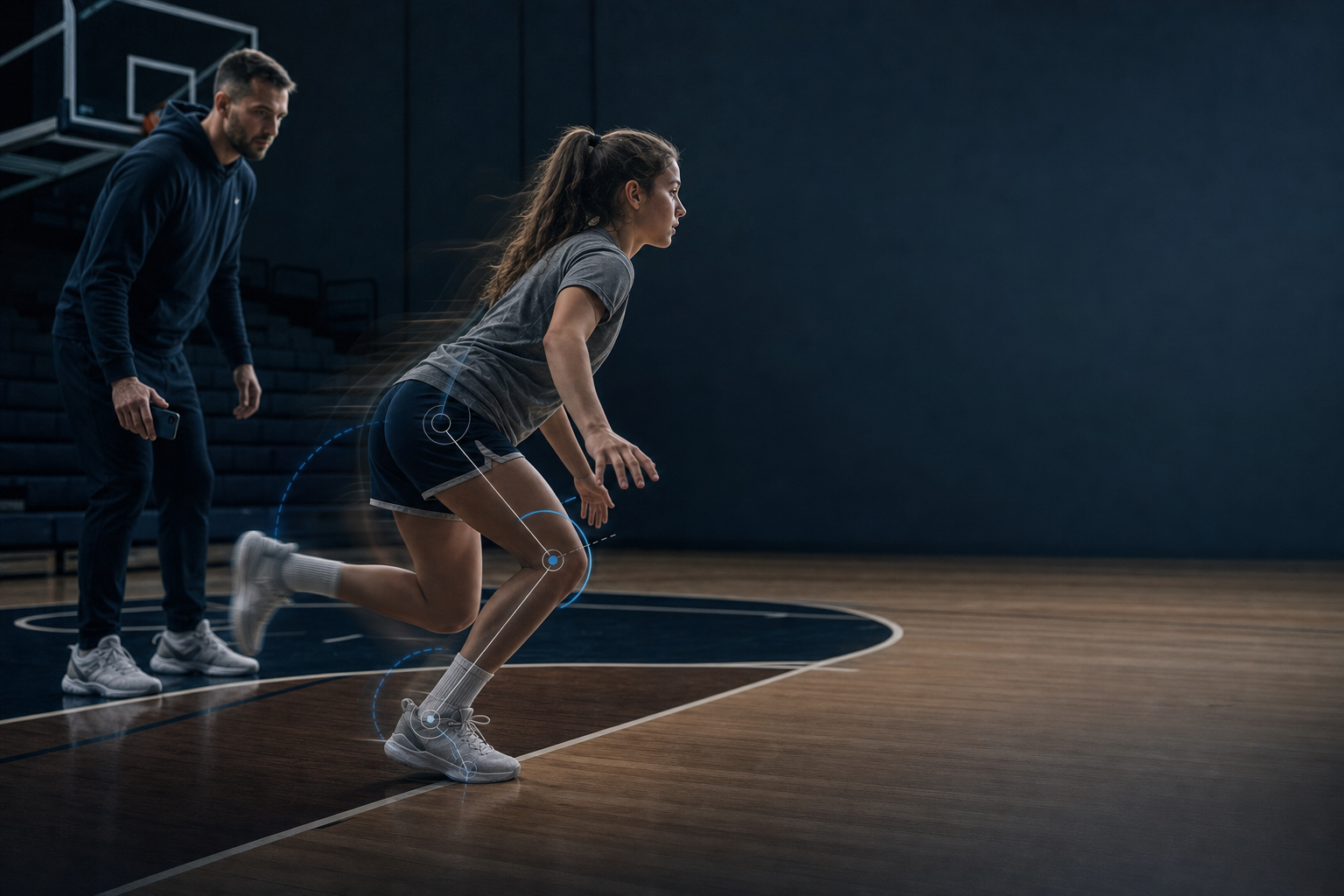
Ask a coach about knee injuries and you will hear one word. ACL. It is the injury everyone fears, and it deserves the attention. It is also about a quarter of the problem.
Six seasons of US high school injury surveillance show that the most commonly involved structure in a knee injury is the MCL, not the ACL. The kneecap and patellar tendon come second. That matters, because the prevention work that has the strongest evidence behind it was built and tested for ACL tears. It does not transfer evenly to the rest of the knee.
This guide separates the four knee problems a coach actually sees. For each one, here is what the research supports, what it does not, and what you can run with a full roster twice a week. One thing up front. Nothing here prevents knee injuries. Programs reduce risk. Any athlete with knee pain, swelling, instability, or a knee that locks or gives way should see a physical therapist or physician.
The short answer
Knee injury prevention is a set of trainable habits, not a single exercise. Build strength through the hips, quadriceps, and hamstrings. Coach landing and deceleration so the knee does not collapse inward. Run the work for 12 to 15 minutes at least twice a week, all season, not just in preseason. Manage sudden jumps in training load.
That formula has good evidence behind it for ACL tears. It has weaker evidence for the rest of the knee. Saying so is the point of this article, because a coach who knows where the evidence runs out makes better decisions than one who assumes the warm-up covers everything.
What is actually injuring knees in school sports
Across six seasons and more than 17 million athlete exposures in US high school sports, there were 2.98 knee injuries per 10,000 athlete exposures, and knee injuries were more than three times more likely in competition than in practice.
The structures involved break down like this. MCL in 36.1% of knee injuries. Patella or patellar tendon in 29.5%. ACL in 25.4%. Meniscus in 23.0%. Those add up to more than 100% because many knee injuries involve more than one structure at once.
Football had the highest knee injury rate, followed by girls' soccer and girls' gymnastics. Girls carried a higher overall knee injury rate than boys in sports played by both, and the gap was widest for ACL tears. About one in five knee injuries ended in surgery.
So the ACL is the most serious common knee injury. It is not the most common one.
The competition and practice gap is worth sitting with. You cannot lower the intensity of games. You can control what the body has been prepared for by the time the game arrives. That is the entire argument for doing this work in practice, every week, rather than treating it as a preseason box to tick.
Four knee injuries, four different evidence pictures
Here is the whole article in one table. The share column comes from the same high school surveillance data. Read down the row that matches what you are seeing on your team.
| Injury | Share of high school knee injuries | What it looks like on your team | What the evidence supports | Refer out when |
|---|---|---|---|---|
| ACL tear | 25.4% | Non-contact, planting or landing, often a pop and immediate swelling. Season over. | Strongest evidence of the four. Neuromuscular training programs lower ACL injury rates, and the effect scales with how often athletes actually do them. | Immediately. Any suspected ACL injury is a physician referral. |
| MCL sprain | 36.1% | Blow to the outside of the knee, or a knee that buckles inward on a cut. Pain along the inner joint line. | Thinner than for ACL. The same landing and cutting quality work is the plausible lever, not a proven one. Contact mechanism limits what training can do. | Pain on the inner knee that does not settle in a few days, or any sense of the knee opening up sideways. |
| Patellar injuries and anterior knee pain | 29.5% involve the patella or patellar tendon, but gradual-onset pain is under-counted here | Aching at or below the kneecap. Worse on stairs, squats, jumping, and after sitting. Builds over weeks, no single moment. | Prevention evidence is weak. Treatment evidence is good. Catch it early, load progressively, do not train through it silently. | Pain lasting more than two weeks, or pain that changes how the athlete moves. |
| Meniscus tear | 23.0% | Twisting injury, often alongside a ligament injury. Catching, clicking, or a knee that locks. | No strong standalone prevention evidence. Rides along with cutting and landing quality and with not playing through a bad knee. | Any locking, catching, or giving way. That is a referral, not a rest day. |
ACL tears
This is the one with real evidence. Structured neuromuscular training programs lower ACL injury rates, and the size of the effect depends heavily on how consistently a team runs them. Female athletes carry the higher burden: at the collegiate level their ACL injury rate is about 2.5 times that of male athletes in comparable sports, and the same study found no comparable sex gap for MCL or meniscal injuries.
Everything else worth saying about ACL programs is already in our full ACL injury prevention guide with a 20-minute session you can run this week, including how the established programs compare. Use that as the deep dive and treat this article as the map around it.
MCL sprains
The MCL is the most commonly involved structure in high school knee injuries and gets the least airtime. It resists the knee collapsing inward. In football that often means a hit to the outside of the knee. In cutting sports it means a plant that goes wrong.
Be honest about the evidence here. There is no MCL-specific prevention program with the trial base that ACL programs have. Contact mechanisms are hard to train away. The reasonable position is that the same hip strength and landing and cutting quality work is the best available lever, and it is a plausible one rather than a proven one.
Anterior knee pain
A note on the number above. The 29.5% figure counts acute patellar and patellar tendon injuries that got reported. Gradual-onset anterior knee pain mostly does not get reported at all, so the real footprint of this problem is larger than any injury-surveillance table will show.
This is the overuse half of the knee problem, and it is bigger than most coaches think. Patellofemoral pain has a point prevalence around 7% in adolescents and about 23% in female adolescent athletes. On the tendon side, about one in three male collegiate basketball players shows either patellar tendinopathy or an abnormal patellar tendon on ultrasound.
Now the uncomfortable finding. A meta-analysis of randomized trials asked whether patellofemoral pain can be prevented. Multicomponent strengthening and neuromuscular programs did not significantly reduce the risk. Patellofemoral braces and running technique retraining showed a signal, but on low-certainty evidence from small trial counts. In short, the standard team warm-up is not the answer for anterior knee pain.
Treatment is on firmer ground than prevention. Once patellofemoral pain is present, exercise therapy has a strong pain-reducing effect. For patellar tendinopathy, a progressive tendon-loading program outperformed eccentric-only exercise over 24 weeks. The practical implication for a coach is simple. You are not going to warm up your way out of anterior knee pain. You catch it early, you manage the load, and you get the athlete in front of a clinician who can build the loading plan.
Meniscus tears
Meniscus injuries often travel with ligament injuries rather than arriving alone. There is no strong standalone prevention program. The honest advice is short: the same cutting and landing quality is the plausible lever here too, and an athlete whose knee catches, clicks, or locks needs assessment rather than another week of playing through it.
What the evidence does not support
Three things get repeated in this space that the research does not back.
A warm-up is not a knee force field. In a meta-analysis of neuromuscular training in youth sport, the programs clearly lowered overall lower-extremity injury rates, but the knee-specific estimate did not reach statistical significance. A separate meta-analysis of training interventions did find a 25% reduction in knee injury risk, with the best results from short sessions run four to five times a week over a long block. Two credible reviews, two different answers. That is what an honest evidence picture looks like, and it argues for doing the work while keeping expectations realistic.
Generic strengthening does not prevent anterior knee pain. That is the specific finding above, and it is worth repeating because so much advice assumes otherwise.
Braces are not a substitute for training. The one place braces showed a preventive signal was patellofemoral pain, on low-certainty evidence. Nothing in the literature supports handing out sleeves instead of running a program.
The dose is the whole story
If you take one number from this article, take this one. Across ACL injury prevention programs, running a program cut ACL injury rates by about 41% on average, and programs run at high adherence, meaning at least three quarters of prescribed sessions completed, showed roughly a 64% reduction. Programs with low or moderate adherence did not reach statistical significance at all.
The same pattern shows up in other injuries. In collegiate men's soccer, teams with high compliance to a structured warm-up program saw far larger reductions in hamstring strains than teams with low compliance. Different injury, same lesson about dose.
Read that again as a coaching decision, not a research finding. A good program run twice a week for a full season beats a better program run in March and abandoned by April. The differences between the well-known programs are small compared to the difference between doing one and not doing one.
A twice-weekly knee block you can run all season
This is a template, not a published protocol. It is built on the dose parameters the research keeps pointing to: short sessions, at least twice a week, maintained across the season rather than front-loaded into preseason. It takes 12 to 15 minutes and needs no equipment beyond a few cones and a box or bench.
| Block | Minutes | What to do | What you are coaching |
|---|---|---|---|
| 1. Hip and posterior chain | 4 | Two sets each of a hip hinge pattern, a glute bridge variation, and a hamstring exercise the athletes can actually do. | Strength behind the knee and around the hip. This is the base everything else sits on. |
| 2. Single-leg control | 3 | Single-leg balance with a reach, then single-leg squats to a box. Slow. Both legs. | Whether the knee tracks over the foot or drifts inward when the athlete has no second leg to help. |
| 3. Landing and deceleration | 4 | Drop landings from a low box, then a jump and stick. Hold each landing for two seconds before the next rep. | Soft, quiet landings. Hips back, knees apart, chest up. If it is loud, it is too stiff. |
| 4. Cutting quality | 3 | Deceleration steps into a planned cut, then progress to a reactive cut off a coach's call. | Getting low before the cut instead of cutting from a tall, stiff position. |
Two notes. First, keep the volume honest. This is a warm-up block, not a workout. If athletes are tired before practice starts, you cut reps, not sessions. Second, this pairs with the rest of the training week rather than replacing it. If you need the surrounding structure, start from a complete weekly strength and conditioning template, and add the hamstring side of the same warm-up if your sport involves sprinting.
Where it goes in the practice plan matters more than most coaches expect. Put it after a general warm-up and before the highest-intensity work, while athletes are warm but not fatigued. Landing and cutting quality is the point of blocks three and four, and tired athletes land badly. If practice is compressed, protect blocks two and three and shorten block one. Never move the whole thing to the end of practice, where it becomes optional and gets coached poorly.
How to tell whether it is working
Knee injuries are rare enough on one team that you cannot judge a program by counting them in a single season. A team with zero ACL tears this year might have had zero anyway. Judge the inputs instead.
Track three things. First, completion: what percentage of prescribed sessions did each athlete actually do? That is the number the research says matters most, and it is the one you can move this month. Greater was built for running one program across a full roster with a small staff, which is where hand-counting stops working. Second, quality: can you look at a drop landing in week eight and see a knee tracking better than it did in week one? Third, availability: how many practice and game days were lost to knee complaints, including the aching kneecap that nobody wrote down as an injury.
The third one usually surprises people. Anterior knee pain rarely gets logged because the athlete keeps playing. Ask about it directly and you will find more of it than your injury report shows.
The athletes who need more than the team warm-up
Three groups need an individual plan, not just the roster block.
Athletes with a previous ACL reconstruction. Roughly one in four athletes under 25 who returns to sport after ACL reconstruction sustains a second ACL injury. Timing matters a great deal: returning to knee-strenuous sport before nine months was associated with about a sevenfold higher rate of a new ACL injury. This is a clinician's call, not a coach's, and it should not be rushed by a playoff schedule. If you have an athlete in this position, our guide to prehab and the period around ACL surgery covers what the months before and after look like.
Female athletes in cutting and landing sports, given the ACL rate difference above. And any athlete reporting anterior knee pain that has lasted more than two weeks. For that last group the action is not more warm-up. It is a conversation, a load adjustment, and a referral.
Making it survive contact with a real season
Every coach reading this already knew most of the exercises. That is not where programs fail. They fail in week six, when two athletes are doing the block properly, six are half doing it, and nobody can tell which is which. The adherence research says that gap is worth more than any refinement to the exercise selection.
The fix is visibility. Assign the block to the roster, see who completed each session, and message the athletes who did not. That is the whole loop, and it is the part a spreadsheet cannot do once you are past one team.
Make the program something you can actually see
Greater lets coaches assign a knee block to the whole roster, see completion per athlete, and message the team in one place. The plan stops living on a clipboard.
Try Greater freeWhere to start this week
Pick two practices. Add the 12 to 15 minute block to both. Keep it there when the season starts, because that is where every program dies.
Then make a short list of the athletes who need more: previous knee surgery, current anterior knee pain, or a knee that has been giving them trouble. Get those athletes in front of a clinician rather than folding them into the team block.
Finally, be honest with your athletes and their parents about what this does. It reduces risk. It does not remove it. That is still one of the better returns available for 25 minutes a week.
Nordic curl work also supports the hamstring side of knee health. Our Nordic curl progression guide breaks the exercise into a regression ladder so athletes can build up safely.
A dynamic warm-up before training is one of the simplest ways to put these exercises to work instead of leaving them as a separate add-on. Our dynamic warm up exercises for volleyball guide shows what a complete 12-minute version looks like.
Frequently asked questions
Can knee injuries be prevented?
No program prevents knee injuries. Structured training reduces the risk of some of them. The evidence is strongest for ACL tears, where neuromuscular training programs lower injury rates and the effect grows with how consistently athletes do the work. The evidence is weaker for MCL sprains and meniscus tears, and weak for preventing anterior knee pain. Any athlete with pain, swelling, instability, or a knee that locks should see a physical therapist or physician.
What is the best exercise to reduce knee injury risk?
There is no single best exercise. The programs with the best evidence combine four things: hip and hamstring strength, single-leg control, landing and deceleration practice, and cutting quality. Doing all four for 12 to 15 minutes twice a week beats doing any one of them well.
How often should a team do knee injury prevention work?
At least twice a week, maintained through the season rather than only in preseason. Adherence is the variable with the largest effect in the research. Programs run at high adherence, meaning at least three quarters of prescribed sessions completed, showed substantially larger reductions in ACL injury rate than programs run at low or moderate adherence.
Do knee braces prevent injuries?
Braces are not a substitute for training. The one place braces showed a preventive signal in randomized trials was patellofemoral pain, and that finding came from low-certainty evidence in a small number of trials. For ligament injuries, the evidence points to training rather than bracing. Bracing after an injury is a clinical decision.
My athlete has knee pain but can still play. What should I do?
Treat pain that has lasted more than two weeks as a reason to act, not a reason to wait. Anterior knee pain responds well to treatment once it is addressed, and it tends to get harder to resolve the longer it runs. Reduce jumping and running load, and get the athlete assessed by a physical therapist or physician. Any locking, catching, giving way, or swelling is a referral regardless of how long it has been going on.