

Ankle Injury Prevention: What Actually Works, and How to Run It
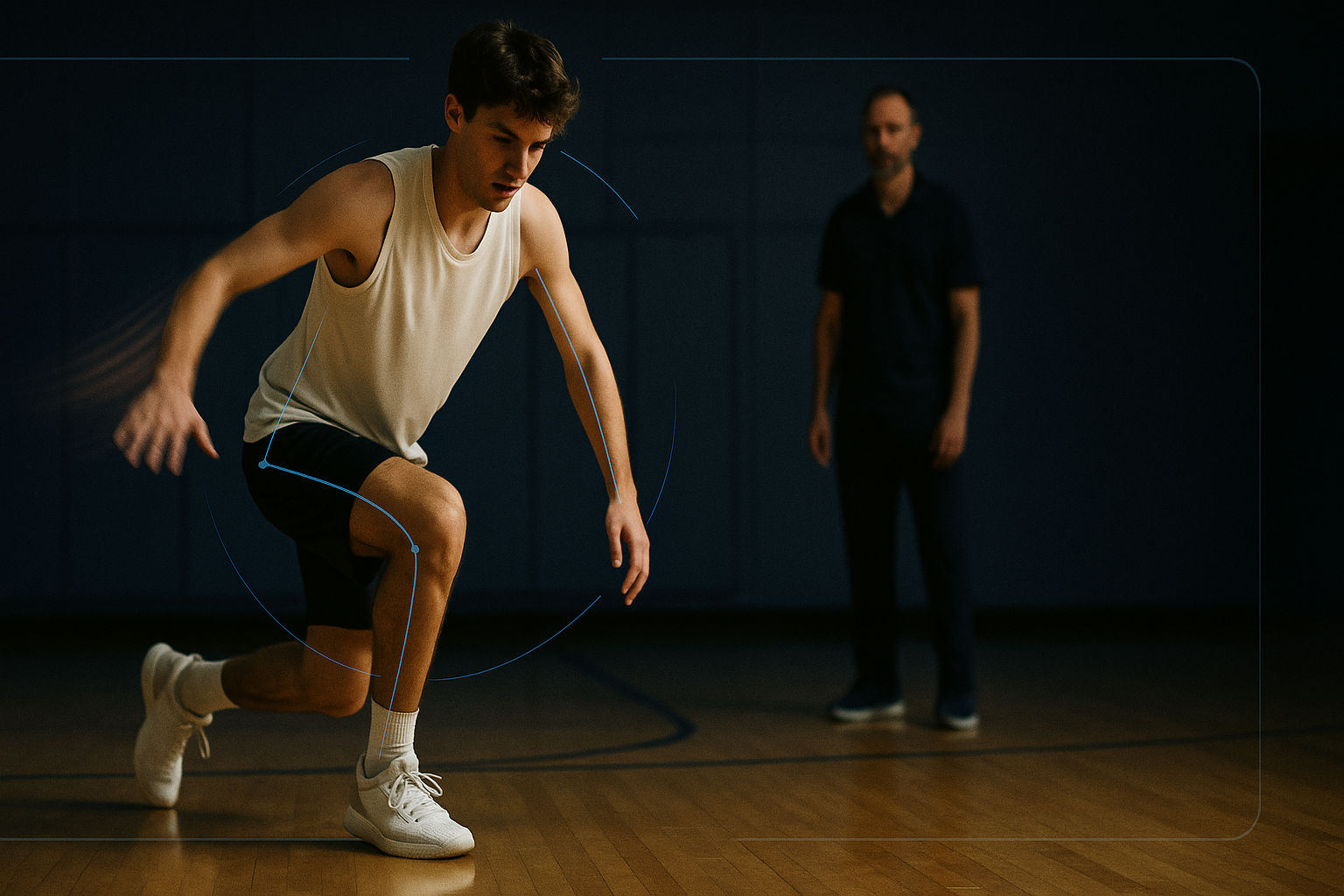
Ankle sprains are the most common musculoskeletal injury in sport. Every coach knows it. What almost no page on this topic will tell you is how much prevention work actually helps, how many minutes a week it takes, or which of your athletes needs the most of it.
This page answers those three questions, for someone who has to deliver this to a squad inside a normal practice.
The short answer
Ankle injury prevention is a small amount of balance, strength and landing work done repeatedly through the season, plus external ankle support for the athletes most likely to roll an ankle again. Pooling ten randomized trials in high school athletes, exercise-based prevention programs reduced ankle injuries by about a quarter, an incidence rate ratio of 0.74. The programs that worked had several components, leaned on strength and agility work, and were actually completed.
That is the honest ceiling. A good program reduces the risk of an ankle injury. It does not remove it, and nothing in the evidence suggests it can.
Who is actually at risk, and why that changes the plan
In a randomized trial of 765 high school soccer and basketball players, an athlete with a history of ankle sprain carried roughly double the risk of spraining again, a risk ratio of 2.14. Previous injury is the strongest single predictor on the list. It beats sport, it beats position, and it is sitting in your injury log already.
The same trial points at the uncomfortable corollary. Athletes who did the balance program cut their risk by about half, a risk ratio of 0.56. But when the researchers looked only at athletes with no previous sprain, the difference was 4.3 percent against 7.7 percent, and it did not reach statistical significance.
So the claim the evidence carries most firmly is about re-injury. Prevention work has the clearest payoff in the athletes who have already been hurt. In athletes who have never sprained an ankle the direction is encouraging and the certainty is lower.
Practically, that means two tiers rather than one program:
- Squad baseline. Everyone gets the balance and landing work inside the warm-up. It is cheap, it costs no extra session, and the pooled evidence supports it.
- Prior-sprain tier. Athletes with a sprain in their history get the baseline plus more volume on the single-leg work, and they are the group where bracing has the clearest case.
You do not need a screening budget to build that list. You need last season's injury notes. If you want a structured baseline on top of it, a movement screen gives you a starting number, with the caveats that come with any screen.
What the evidence supports, by intervention
Five things get recommended for ankle injury prevention. They are not equally well supported, and the time they cost differs by an order of magnitude. Here is the comparison the search results never put in one place.
| Intervention | What the evidence shows | Best for | Time cost | Watch out for |
|---|---|---|---|---|
| Multicomponent neuromuscular warm-up | Pooled across 10 trials in high school athletes, exercise programs cut ankle injury incidence by about 26 percent. The most effective ones had several components and emphasized strength and agility. | The whole squad, every session | 10 to 15 min, 2 to 3 times a week | Effect depends on adherence. A program nobody finishes has no effect size. |
| Balance training alone | In a randomized trial of 765 high school athletes, sprain rate fell to 1.13 from 1.87 per 1000 exposures, a risk ratio of 0.56. The subgroup with no previous sprain did not reach significance. | Athletes with a sprain history | 5 to 10 min, most days early on | Single-component programs did worse than multicomponent ones in the pooled analysis. |
| Lace-up ankle brace | In a randomized trial of 2081 high school football players, acute ankle injury fell to 0.48 from 1.12 per 1000 exposures. Severity did not change. Knee injury rates did not differ. | Prior-sprain athletes, contact and court sports | Seconds per athlete, per session | Does not shorten time lost once an injury happens. Needs the right size and actual compliance. |
| Taping | Same mechanical idea as bracing. No trial on this page tested it, and none of the cited evidence covers taping in this age group. | Short-term cover, in-game situations | 3 to 5 min per ankle, every session | Recurring labor and consumable cost. Loosens during play. Needs a trained person. |
| Footwear and load management | Sensible practice and widely recommended, but not supported by prevention trials at the level of the three above. | Everyone, as background hygiene | No session time | Easy to over-claim. Treat as hygiene, not as your prevention program. |
Two readings of that table matter. Exercise work and bracing are not in competition. They were tested separately, not head to head. And the bottom two rows are worth doing without counting as your prevention program.
The dose: how much, how often, how long
Listing exercises without a dose is the reason most prevention plans die in week three.
A meta-analysis of neuromuscular training dosage in youth athletes found the largest preventive effect for lower limb injuries came from a fairly modest prescription:
- Bouts of 10 to 15 minutes. Not a separate session.
- Two to three times per week.
- 30 to 60 minutes per week in total.
- Effects achievable within 20 to 60 sessions, over a period under six months.
Two caveats, both from the authors of that analysis. It covers lower limb injury broadly rather than ankles specifically. And it rests on a relatively small number of studies of mixed methodological quality, so they advise treating the numbers with caution. Use it as a starting prescription, not a law.
Thirty to sixty minutes a week is a warm-up. It is not a separate session, and it does not need to displace skill work. Programs that demand their own session do not survive a competitive calendar, the same pattern that shows up in ACL prevention programming and in knee injury prevention more broadly.
The 12-minute slot
Here is a block that fits the dose above and needs a mat and a ball. Run it two or three times a week in the warm-up. Progress every two weeks, and only when the athlete owns the current level.
1. Balance progression, 4 minutes
This is the part with the direct trial evidence behind it, so it gets the most time. Work through the ladder. An athlete moves up only when they can hold the current step cleanly.
- Double leg stand, eyes open, 30 seconds.
- Single leg stand, eyes open, knee softly bent, 30 seconds each side.
- Single leg stand, eyes closed, 20 seconds each side.
- Single leg stand on a folded mat or cushion, eyes open, 30 seconds each side.
- Single leg stand with a head turn or a ball toss, 30 seconds each side.
Regression rule: if the athlete is grabbing for support or the foot is scrabbling, drop back one step. Progression rule: two clean sessions at a step earns the next one.
2. Hop and land, 3 minutes
Ankles get hurt on landings and on cuts, so train the landing. Quality over volume throughout. Stop the set when the landings get noisy.
- Double leg hop in place, stick the landing, 2 sets of 8.
- Single leg hop forward and stick, 2 sets of 5 each side.
- Lateral single leg hop and stick, 2 sets of 5 each side.
A stuck landing is quiet, with the knee tracking over the middle of the foot. You can see that from the side with a phone, which is what a landing mechanics check is for.
3. Calf and foot strength, 3 minutes
- Double leg heel raise, 2 sets of 15, slow down on the lowering phase.
- Single leg heel raise, 2 sets of 10 each side, once the double leg version is easy.
- Band work: pull the foot inward against resistance, then push it outward, 2 sets of 12 each direction.
4. Change of direction finisher, 2 minutes
- Deceleration steps: jog five strides, plant, stop under control. 6 reps each side.
- Cone cuts at about three quarters speed, 6 reps. Speed goes up only once the planting foot stays stable.
For the prior-sprain tier, add one extra set to the balance ladder and one extra set to the single leg hops. That is the whole difference. It does not need a separate program.
Braces and tape: the honest version
Bracing has the cleanest single piece of evidence on this page. In a randomized trial of 2081 high school football players across 50 schools, players wearing lace-up ankle braces had an acute ankle injury rate of 0.48 per 1000 exposures against 1.12 in the control group.
That is a large difference, and it is worth knowing exactly what else that trial found, because brace marketing will not tell you and clinic pages do not mention it.
- Braces did not reduce severity. Median time lost to an acute ankle injury was 5 days in both groups. Bracing changed how often injuries happened, not how bad they were.
- Braces did not push injuries up to the knee. This is the standard objection, and the trial addresses it directly. Acute knee injury rates were 0.70 in the braced group and 0.69 in the control group, with no meaningful difference. Other lower extremity injuries were 0.95 against 1.32, also not a significant difference.
The common claim that bracing an ankle just relocates the injury did not hold up in this trial. That is useful to be able to say to a skeptical parent.
Tape works on the same mechanical principle. None of the trials on this page tested it, and the cost structure is completely different. A brace is bought once and put on in seconds. Taping is three to five minutes per ankle, every session, by someone who knows how, plus the tape itself. For a squad of thirty, that is the difference between a trivial cost and a staffing problem.
Bracing is not a substitute for the exercise work. No evidence here suggests a brace removes the need for balance and landing work. Treat it as an addition for the athletes at highest risk.
Why prevention programs fail
The meta-analysis is unusually direct about this. The programs that worked were the ones with high adherence. The authors also name coach and athlete education as a factor in whether a program succeeds.
The 12-minute block above is not hard to design. It is hard to still be running in week nine. The season is compressed by then. Someone else is often taking the warm-up, and the athletes who need the heavier dose are not the ones getting it.
Three things make the difference in practice. Put the block in the warm-up rather than in its own session. Tell athletes why they are doing it, specifically the prior-sprain athletes, who have the most to gain. And know who actually completed it, because a program you assume is happening and a program that is happening look identical on paper.
That last one is the part Greater is built for. You assign the block, athletes see it on their phone, and you can see completions rather than guess at them. You can assign the heavier dose to the prior-sprain athletes as its own program, so the extra volume goes to the right people instead of to whoever remembered.
Run the program you actually designed
Assign the prevention block, see who completed it, and give the prior-sprain athletes the extra volume without tracking it in a spreadsheet.
Try GreaterIf an ankle is already hurt
Everything above is prevention work for healthy ankles.
An ankle that is painful, swollen, or giving way does not belong in a prevention block. That is a clinical situation, and it goes to a physician or a physical therapist. The same applies to deciding when an athlete returns to play after a sprain. Those are clinical decisions made by clinicians, not programming decisions made from a practice plan.
Once an athlete has been cleared, they rejoin the prior-sprain tier, which is where this work matters most.
The bottom line
- Exercise-based prevention programs reduce ankle injuries by roughly a quarter in high school athletes. Real, worthwhile, not a cure.
- A previous ankle sprain roughly doubles the risk of another. That list is your priority list.
- The dose that works is small: 10 to 15 minutes, two to three times a week, inside the warm-up.
- Multicomponent programs beat single-component ones. Balance work alone is good. Balance plus strength plus agility is better.
- Lace-up braces cut injury rates substantially for the highest-risk athletes, without increasing knee injuries, and without shortening recovery when an injury does happen.
- Adherence is the variable that decides whether any of it works.
Frequently asked questions
What is the best way to prevent ankle injuries?
A multicomponent program combining balance work, lower leg strength, landing practice and change-of-direction work, run for 10 to 15 minutes two to three times a week inside the warm-up. Pooled across ten randomized trials in high school athletes, exercise-based prevention programs reduced ankle injury incidence by about 26 percent. Programs with several components outperformed programs built on one component alone. Athletes with a previous ankle sprain should get a heavier dose, and bracing has the clearest case in that group.
Do ankle braces prevent ankle sprains?
They reduce the rate of ankle injury rather than preventing it. In a randomized trial of 2081 high school football players, players wearing lace-up braces had an acute ankle injury rate of 0.48 per 1000 exposures compared with 1.12 in the unbraced group. The same trial found braces did not reduce how long athletes were out, and did not increase knee injury rates.
Is bracing better than balance training?
There is no good head-to-head trial, so the honest answer is that they have not been compared directly at scale. They were tested separately and address different parts of the problem. Bracing adds external mechanical support. Exercise programs change how the athlete moves and are the only part with pooled evidence across many trials. For an athlete with a sprain history, the reasonable approach is both rather than choosing.
How often should athletes do ankle injury prevention work?
Two to three times a week, in bouts of 10 to 15 minutes, totalling 30 to 60 minutes a week. Dosage evidence in youth athletes points to that range producing the largest preventive effect for lower limb injury, with benefits achievable inside 20 to 60 sessions. The authors of that analysis note it rests on a small number of studies of mixed quality, so treat it as a starting prescription.
Does a previous ankle sprain increase the risk of another one?
Yes, and substantially. In a randomized trial of 765 high school soccer and basketball players, athletes with a history of ankle sprain had roughly double the risk of spraining again, a risk ratio of 2.14. It is the strongest single risk factor in that trial, and it is the reason prevention work should be tiered rather than uniform across a squad.
Can you prevent ankle sprains completely?
No. Every intervention with good evidence behind it reduces the rate at which ankle injuries happen. None of them eliminate the risk, and no program should be presented to athletes or parents as a guarantee. Sport involves landings and direction changes, and some of those will go wrong regardless of preparation.