

Movement Screening: What It Is, and What the Score Actually Means
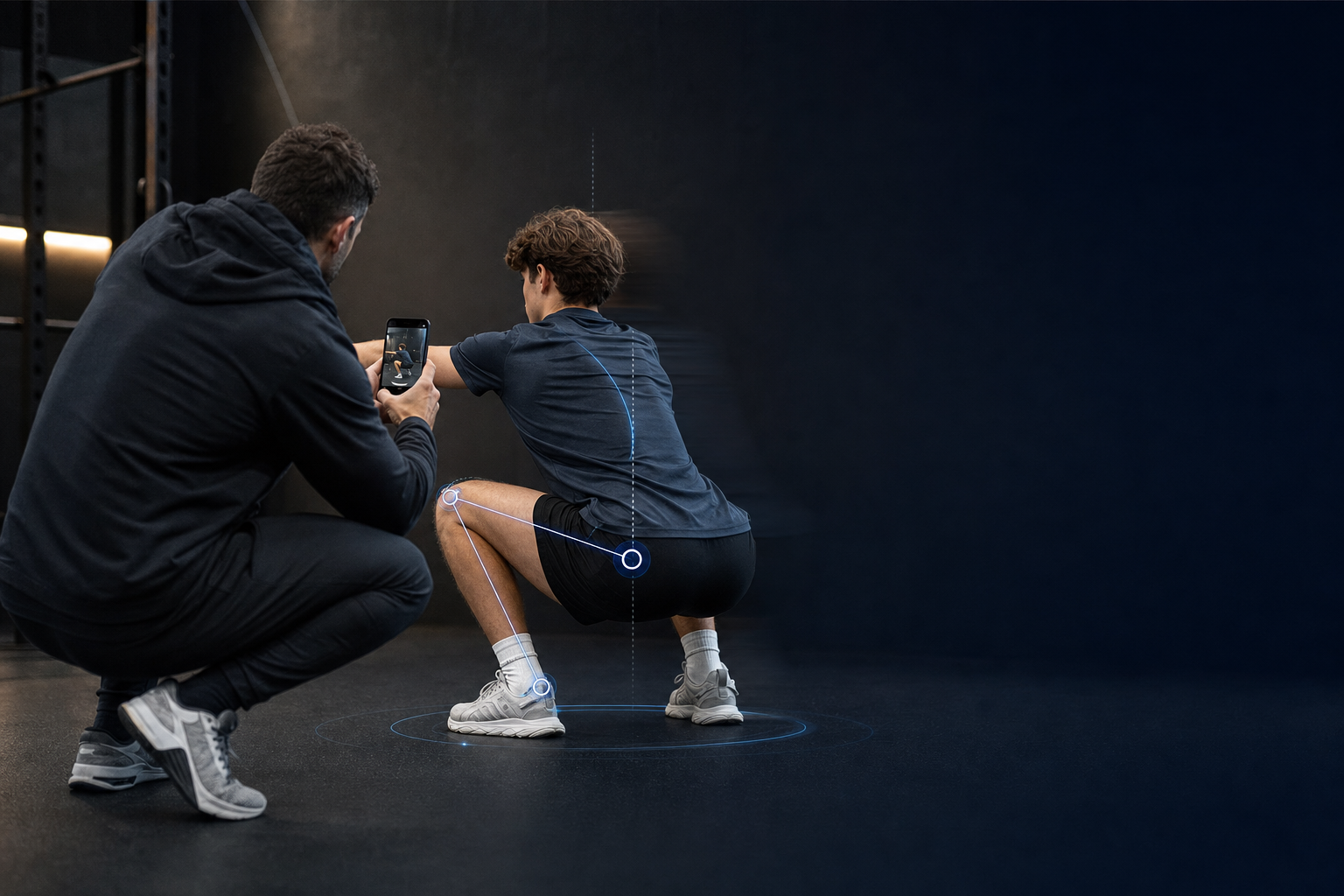
Ask ten strength coaches whether they screen their athletes before a season starts, and most will say yes in some form. What they mean by "screen" varies a lot, and so does what the number they get back actually tells them.
Most of what shows up when you search for movement screening comes from hospitals, physical therapy groups, and academic sports-medicine programs. That material is accurate, but it rarely says what a specific score means in practice, or what to do the Monday after a low one. This is that version.
What movement screening is (and what it isn't)
Movement screening is a short, standardized set of movement patterns. A coach, trainer, or clinician uses it to spot mobility and stability limitations before they turn into an injury or before a training block starts. It is quick. Most screens take 10 to 15 minutes per athlete.
It is not a diagnosis. It is not a fitness test, and a low score does not mean an athlete is broken or unathletic. A screen flags movement patterns worth a closer look. Nothing more, and nothing less.
If someone already has pain, a movement screen is the wrong tool. That calls for an evaluation from a physical therapist or physician, not a clipboard checklist.
The Functional Movement Screen: the 7 tests and how scoring works
The most widely used single system is the Functional Movement Screen, or FMS. It walks an athlete through seven patterns: the deep squat, the hurdle step, the in-line lunge, shoulder mobility, the active straight-leg raise, the trunk stability push-up, and rotary stability. Each pattern gets a score from 0 to 3, and the seven scores add up to a composite out of 21.
A 3 means the pattern looks clean with no compensation. A 0 means pain showed up during that test. A 0 ends the screen for that pattern on the spot. It sends the athlete to a clinician instead of a corrective program, regardless of the composite total.
Running FMS well at scale, picking scoring software, and getting consistent results across a roster is its own topic, and Greater covers that side of it separately in our guide to FMS apps. The rest of this guide is about the bigger picture: what any screen's score actually tells you, and how FMS stacks up against the other tools coaches reach for.
Does a low score actually predict injury?
This is genuinely contested in the research, not settled, whichever specific screen you are using.
The most rigorous answer for the FMS composite comes from a 2017 meta-analysis pooling the available studies. People who scored 14 or below had close to three times the odds of getting injured, compared with people who scored above 14. The same paper is upfront that several of the underlying studies it pooled had real design flaws. Treat that number as a real but modest signal, not a guarantee, and not the last word. Other analyses of the same question have landed less certain.
There is a second catch worth knowing before trusting any screening score too much, and it applies to every tool in this guide, not just the FMS. The score only means something if whoever is running it is scoring it consistently. A 2013 reliability study found that agreement between different raters scoring the same athlete was poor, especially among less experienced raters. Agreement between the same rater scoring the same athlete twice, a week apart, was good. Scoring from live observation versus video came out nearly identical for a given rater. Who is scoring, and how consistently, changes whether any number here is trustworthy at all.
Put together: a low composite score on any of these screens is worth paying attention to and worth building a corrective plan around. It is a real signal. It is not a number you can hang an individual athlete's whole season on. Many of the specific compensations these screens are built to catch, like a collapsing knee on landing, are the same ones covered in our guide to knee injury prevention.
Movement screening tools, compared
The FMS is the most common screen, but it is not the only option, and it is not always the right one. Here is how the main tools compare.
| Tool | Best for | Time | Who typically runs it | What it flags |
|---|---|---|---|---|
| FMS | General screening for athletes without current pain | 10-15 min | Coach or trainer with FMS certification | Asymmetries and compensations across 7 fundamental patterns |
| SFMA | Athletes or clients already reporting pain or a known limitation | 20-30 min | Physical therapist or athletic trainer | Whether a limitation is mobility-based or stability/motor-control-based |
| Y-Balance Test / SEBT | Single-leg reach and dynamic balance, often used around return to sport | 10-15 min | Coach, trainer, or clinician | Side-to-side reach asymmetry linked to lower-extremity injury risk |
| Overhead Squat Assessment | Fast, team-wide check of ankle, knee, hip, and shoulder mobility | 2-5 min per athlete | Coach or trainer | Visible compensations: heels rising, knees caving inward, excessive forward lean |
The practical difference is pain and depth. FMS and the overhead squat assessment are fast, team-friendly tools for athletes without pain. SFMA is slower and clinical, built for someone who already hurts. The Y-Balance Test sits in between: quick enough for a team, but specific enough that it shows up constantly in return-to-sport decisions.
Who should get screened, and how often
A preseason baseline is the most common use case. Screen before the training block starts, so a limitation shows up before volume and intensity ramp up, not after an athlete is already three weeks into a program built on a pattern they cannot actually do cleanly.
Re-screen after a significant injury and before clearing an athlete for full training. A screen is one input into that decision. It is not the whole decision, and it does not replace a clinician's sign-off.
For a general fitness client with no pain and no sport-specific demand, a screen is optional. It is a useful input into programming, not a requirement to start training.
For a full roster, batch the screen. Most coaches run it the same week as other preseason testing. Each athlete takes 10 to 15 minutes. Score everyone first, then build each athlete's corrective and programming decisions around their own result.
Anyone screening with active pain should see a physical therapist or physician first. A movement screen reduces injury risk for healthy movers. It does not diagnose or treat an existing problem.
What a low score should actually trigger
A low score on one pattern is not a reason to bench an athlete or assume the worst. It is a reason to build a short corrective block targeting that specific pattern, then re-test on a set schedule, usually every 4 to 6 weeks.
If the deep squat comes back low, that usually points to ankle or hip mobility, or core control, depending on exactly where the compensation shows up. If shoulder mobility is low, that is a thoracic spine and shoulder capsule conversation, not a shoulder-strength one. If the hurdle step or in-line lunge is low on one side only, that asymmetry, not the raw score, is the thing worth programming around first.
Escalate to a physical therapist in three cases. The pattern does not improve after a full corrective cycle. Pain shows up during re-testing that was not there the first time. Or an asymmetry is large and consistently one-sided, not a general limitation across both sides.
Common mistakes when screening a team
Screening once and never again is the most common mistake. A screen is a baseline, not a one-time certificate. Athletes change across a season as training load, growth, and prior minor injuries shift how they move. A single preseason number that never gets revisited stops being useful by midseason.
Letting scoring consistency slide is the second mistake, and it connects directly back to the reliability research above. If a different, less experienced person scores each athlete, or the same person scores loosely one week and strictly the next, the composite numbers stop being comparable to each other. Pick one rater, or a small trained group, and keep the scoring criteria consistent across the whole roster.
Treating the composite score as pass or fail, while ignoring the individual pattern scores, is the third mistake. Two athletes can both score 15 out of 21 and need completely different corrective work. The composite is a useful roster-level flag. The per-pattern breakdown is what actually tells a coach what to program.
Skipping the screen because preseason is busy is the fourth mistake, and it is the easiest one to avoid. The screen itself takes 10 to 15 minutes per athlete. Building it into the same week as other preseason testing costs little and buys a baseline that pays off the first time a corrective decision needs real data behind it.
Beyond the clipboard: watching movement between screens
A formal screen, whichever tool you use, is a snapshot. It captures how an athlete moves through a handful of controlled patterns on one specific day. It does not capture how that same athlete lands, cuts, or decelerates during an actual practice or game, which is where a lot of real-world injury risk actually shows up.
That is a different question from scoring a screen itself on video. It is about watching real training and game footage in the weeks between formal screens, for the same kinds of compensations a screen is built to catch, the way we cover in landing mechanics.
This is not a replacement for a formal screen, and it does not diagnose anything on its own. It is a way to keep watching movement quality in between screens, instead of only checking once a season and hoping nothing changed.
See what a phone video can tell you about landing mechanics
Greater's AI movement analysis reviews landing mechanics from ordinary training video, so a coach can watch for the same kinds of compensations a screen catches, without waiting for the next screening day.
See how it worksFrequently asked questions
What is movement screening?
Movement screening is a short, standardized check of basic movement patterns, used to flag mobility or stability limitations before they turn into an injury. It takes about 10 to 15 minutes and does not diagnose anything on its own.
What is the FMS and what does it measure?
The FMS, or Functional Movement Screen, is the most widely used movement screening system. It scores seven movement patterns from 0 to 3 each, for a composite score out of 21, and flags asymmetries and compensations across those patterns.
What is a good FMS score?
A composite score above 14 out of 21 is generally considered lower risk. A score of 14 or below has been linked to meaningfully higher odds of injury across several studies, though the research treats that as a real but modest signal rather than a guarantee.
Can movement screening predict injury?
It is associated with injury risk, not a guaranteed predictor. A low composite score raises the odds of injury in the research. It does not mean an injury is certain, and a high score does not mean an athlete is risk-free.
How often should athletes be screened?
A preseason baseline is standard, with a re-screen after a significant injury and before a full return to training. Re-testing every 4 to 6 weeks during a corrective-exercise block is common for anyone who scored low on a specific pattern.
What is the difference between FMS and SFMA?
The FMS is a screening tool for people without current pain. The SFMA, or Selective Functional Movement Assessment, is a clinical tool for people who already have pain or a known limitation, and it is typically run by a physical therapist or athletic trainer rather than a coach.