

ACL Injury Prevention for Female Athletes: Why the Risk Is Higher
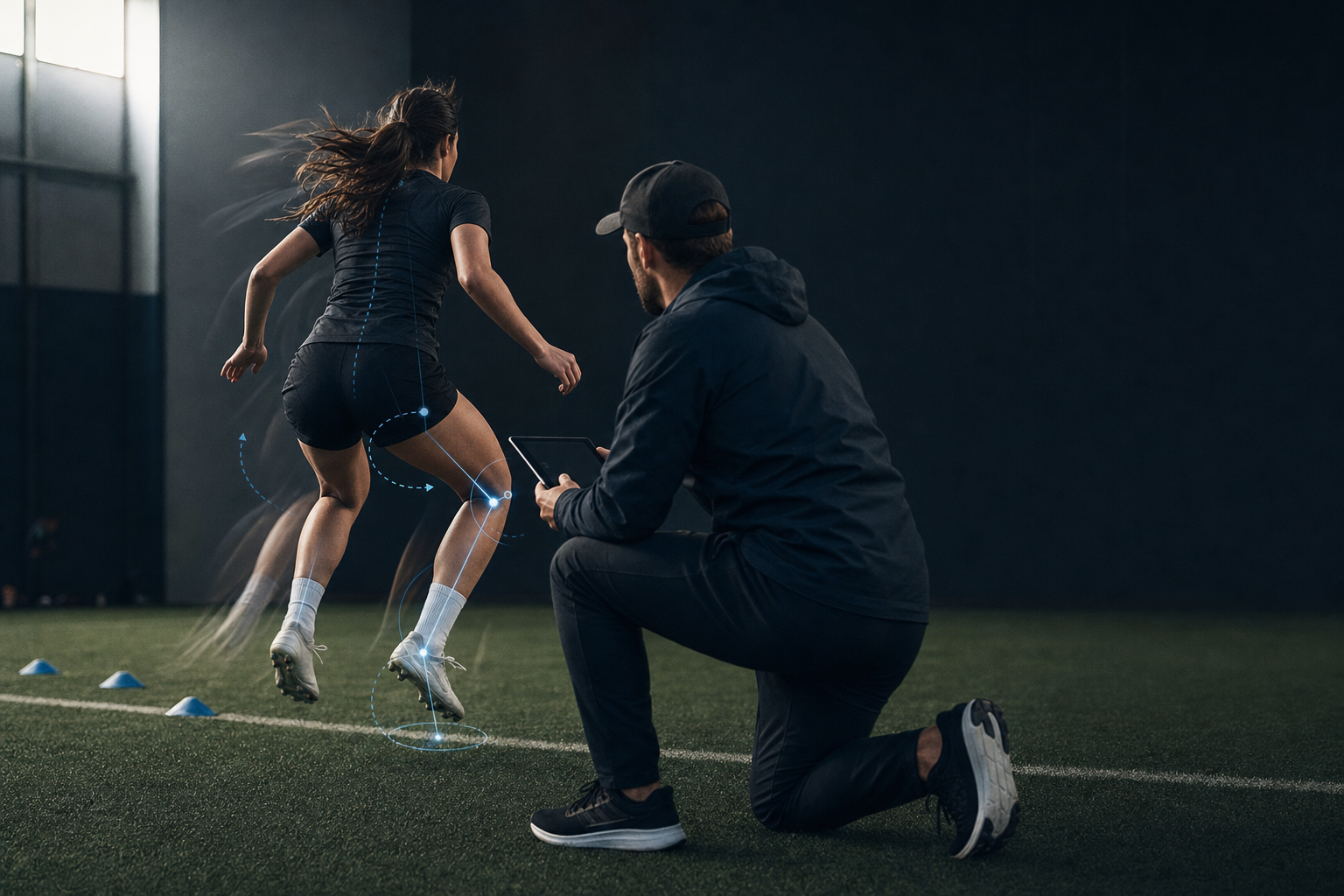
Female athletes tear their ACL far more often than male athletes do in the same sport. The gap is not small, and it is not a myth. It shows up in soccer, basketball, volleyball, and nearly every sport that involves cutting and jumping.
This guide answers the question coaches and parents actually ask: why does this happen, and what actually lowers the risk? It is written for coaches, athletic directors, and parents, not clinicians. It covers the honest size of the risk gap, the research on why it exists, the specific training shown to reduce it, and how to tell which athletes on a roster need the work most.
One honest note before we start. No program removes the risk completely. The goal is to reduce it. The evidence below says the reduction is large enough to matter, especially for the sports that load the knee hardest. Soccer, basketball, and volleyball all show up repeatedly in the research behind this guide.
How much higher is the risk, really
The honest answer is a range, not one headline number. Noncontact ACL tears happen roughly 2 to 9 times more often in female athletes than in male athletes across comparable sports. Most individual studies cluster closer to 3.5 to 4 times, according to a widely cited review of ACL injury prevention research in female athletes.
Most of these injuries are not caused by contact with another player. About 70 to 78 percent happen during an ordinary movement such as a landing, a cut, or a sudden stop. That is according to the same review of ACL injury research in female athletes. This matters for prevention, because a movement pattern is trainable in a way a collision is not.
That also means the injury is not something that only happens to a careless or undertrained athlete. It happens to well-conditioned athletes performing a normal part of their sport. The goal of a prevention program is to change how the landing itself is performed, not to make an athlete more cautious.
Why the risk is higher
Four factors show up again and again in the research. None of them are about effort or toughness, and they are not the whole story either. Some researchers argue that unequal access to structured strength and landing training, not anatomy, explains much of the gap, and that the gap narrows when training opportunity is equal, according to coaching recommendations for women's and girls' programs. The anatomical factors below are real and worth training around, but they are not the only lens, and how early an athlete gets quality training is itself entirely coachable.
Anatomy. Female athletes tend to have a narrower space where the ACL sits, called the femoral notch. Many also have a steeper tibial slope and generally greater joint laxity. A wider pelvis and a greater quadriceps angle show up in the research too, with some studies linking a sharper angle to higher risk. None of this changes with training, according to an instructional review of why ACL injury risk differs by sex.
Landing pattern. Many female athletes land in a quadriceps-dominant, stiff-legged pattern rather than absorbing force through a bent knee and hip. The hamstring, which should help control the knee, often reacts late relative to when the ACL is actually under load. Coaches call this inward knee collapse on landing knee valgus. The same research ties that single pattern to a meaningfully higher injury risk, up to roughly 40 percent higher in some analyses, according to the instructional review on ACL risk factors.
Strength ratio. A lower hamstring-to-quadriceps strength ratio, weaker hip abductors, and less core control all feed the same landing pattern, according to the same review of ACL injury research in female athletes. Coaches do not need a lab to spot it. A slowed-down phone video of a jump landing usually shows the knee collapse clearly. The same video often shows a short stance time and a hard, flat-footed landing, both signs the leg is absorbing force poorly.
Hormones are genuinely unsettled. Some research has looked at whether the menstrual cycle changes ACL injury risk through changes in ligament laxity. The honest answer, according to the same instructional review on ACL risk factors, is that the evidence is not conclusive. The program below does not depend on that question being settled. It targets the three factors above instead.
Does training actually lower the risk, or is this unavoidable
Yes, and the number is specific. A systematic review and meta-analysis of 18 controlled trials, covering more than 27,000 female athletes, found that neuromuscular training cut ACL injury incidence from about 1 in 54 athletes to about 1 in 111 athletes. That is roughly half the risk, per a systematic review and meta-analysis of ACL injury prevention programs.
The effect was larger in middle school and high school athletes than in college or professional athletes. That is a reason to start this work early, not an excuse to skip it once an athlete is older.
The reviewed programs also had one more thing in common. Every one of them used a trained implementer, meaning a coach or staff member who actually understood the cues, rather than a printed handout left for athletes to interpret on their own. The coaching, not just the exercise list, is part of why these programs work.
The two training components that actually move the number
The same review traced the benefit to two specific categories of work, done consistently, rather than a long list of exercises done occasionally, according to the same systematic review and meta-analysis of ACL injury prevention programs.
| Component | Example exercises | Why it matters | Target dose |
|---|---|---|---|
| Lower-body strength | Nordic hamstring curls, lunges, heel-calf raises | Builds the hamstring and posterior-chain strength that helps control the knee on landing | Present in nearly every effective program in the review |
| Landing stabilization | Jump-and-hold, hop-and-hold, single-leg landing holds | Trains the stiff, stop-on-a-dime landing pattern linked to higher risk | About 24 minutes per session, roughly two to three times a week, all season |
Both components fit inside a normal warm-up window. Neither requires special equipment beyond a mat and some open floor space. For the full 20-minute session and weekly schedule built around this evidence, see the complete ACL injury prevention program.
Coaching considerations specific to girls' and women's teams
A few things are specific to coaching female athletes well, separate from the exercises themselves.
Many female athletes reach high-impact, cutting-and-jumping training later than male athletes do, simply because of how youth sports are structured. Do not assume the movement foundation is already there. Treat the warm-up and cool-down as part of training on game days, not only practice days. Make the strength work routine, not optional, so it does not quietly disappear once the season gets busy. An athlete returning from an ACL injury needs full-team reintegration, not just a medical clearance, according to coaching recommendations for women's and girls' programs.
Program structure matters more than person-by-person effort here. Schools and athletic programs that run this across every team, not just the varsity roster, see the benefit compound across a season. Greater supports that approach for schools and athletic programs.
The sport matters too, even though the training stays similar across sports. Noncontact ACL injuries are seen most often in soccer, basketball, team handball, football, and volleyball. These are the sports with the most landing, cutting, and sudden deceleration, according to the same review of ACL injury research in female athletes. A coach running multiple teams across these sports gets the most value from standardizing the same 20-minute protocol across all of them rather than building a separate program per sport.
How to tell which athletes need this work most
The knee-valgus pattern described above is not subtle once you know what to look for, and it is visible on an ordinary phone video. Record a simple drop-jump or single-leg landing, slow it down, and watch whether the knee tracks over the foot or collapses inward.
This article will not re-explain how to read that video frame by frame. A full walkthrough of checking an athlete's landing mechanics with a phone covers that in detail.
Screen a whole roster, not just the athletes who already look at risk
Greater's phone-video analysis is built to make that check fast enough to run on every athlete, not only the ones who already seem at risk.
Try Greater freeAfter an ACL injury
Return-to-sport timelines commonly run 6 to 9 months after an ACL injury, according to the same review of ACL injury research in female athletes. Reinjury risk is real, which is part of why the training above continues after an athlete returns, not just before an injury happens.
A history of ACL injury also raises the risk of chronic knee problems, meniscus tears, and cartilage damage later on, according to the same research on ACL injury consequences. That is another reason return-to-play decisions should not be rushed.
Any return-to-play decision belongs to a physician or physical therapist, not a coach's judgment call. Greater supports the physical therapists guiding return to sport; it does not replace them.
For the full picture of what to do before and after ACL surgery, see the complete ACL prehab guide. For prevention work across other common knee injuries, see knee injury prevention by injury type.
Bringing it together for a season
The research here is unusually specific for sports medicine. It names the two training categories that work, the rough weekly dose, and the age group that benefits most. The part left to a coach is consistency: running the same 20-minute protocol most weeks of the season, for every team, not only the week before a tournament.
Start by checking who needs the work most. Then make the training the same small habit every team repeats. Neither step requires a lab or a specialist to begin.
Frequently asked questions
Why are female athletes more likely to tear their ACL?
Research points to a mix of anatomy, landing mechanics, and strength ratios, mainly a quadriceps-dominant landing pattern and a lower hamstring-to-quadriceps strength ratio than male athletes typically have. The hormonal contribution is still unsettled. Together these factors raise noncontact ACL injury rates roughly 2 to 9 times higher in female athletes, with most studies closer to 3.5 to 4 times.
Can ACL injury prevention training actually work?
Yes. A meta-analysis of 18 controlled trials in more than 27,000 female athletes found neuromuscular training cut ACL injury rates from about 1 in 54 athletes to about 1 in 111, roughly half the risk. The training reduces risk. It does not eliminate it.
What age should girls start ACL injury prevention training?
The evidence shows the biggest effect in middle school and high school athletes, which argues for starting this work early rather than waiting until an athlete reaches a competitive or college level.
What exercises help prevent ACL injuries in female athletes?
The two categories tied to the largest effect in the research are lower-body strength work, such as Nordic hamstring curls, lunges, and heel-calf raises, and landing stabilization work, such as jump-and-hold and single-leg landing holds, done consistently through the season rather than only in preseason.
Does the menstrual cycle affect ACL injury risk?
Some research has examined this question, but the evidence is not conclusive enough to change how a program is built. The training components that do have strong evidence behind them do not depend on that question being settled.
How long is recovery after an ACL tear?
Return-to-sport timelines commonly run 6 to 9 months, and the decision to return belongs to a physician or physical therapist. Reinjury risk is real, which is why prevention training continues after an athlete returns to play, not just before the injury.