

ACL Injuries in Sports: Which Ones Carry the Highest Risk, and Why
What Actually Happens When an ACL Tears
The anterior cruciate ligament, or ACL, is one of four ligaments that hold the knee joint stable. It runs diagonally through the middle of the knee, connecting the thighbone to the shinbone.
An ACL injury is a sprain or a tear of that ligament. It can be a partial stretch or a complete rupture. Most tears happen from a sudden twist, a hard plant-and-pivot, or an awkward landing. A direct hit to the knee causes some tears too, but it is not the most common path.
The signs are usually hard to miss. A pop or snap at the moment of injury. Fast swelling within hours. Pain. A feeling that the knee is loose or about to give out.
The ACL does two main things. It keeps the shinbone from sliding too far forward under the thighbone. It also limits how much the knee twists. When it tears, that control disappears, even if every other structure in the knee stays intact.
A tear does not require a tackle or a fall onto the knee. As the next sections show, most ACL tears happen without anyone touching the injured player at all.
Which Sports Carry the Highest ACL Injury Risk
The clearest numbers come from the NCAA's own injury-surveillance data, tracked across five seasons of competition and practice.
| Setting | ACL tear rate (per 10,000 athlete-exposures) | What it means |
|---|---|---|
| All NCAA sports combined | 0.86 | The baseline every other number below compares against. |
| Men's football | 1.44 | The highest rate among men's sports. |
| Women's soccer | 2.60 | The highest rate among women's sports, about 1.8 times football's rate. |
| Competition vs. practice | 5.5x higher in games | Tears happen far more often in competition than in practice. |
Source: a five-season NCAA injury-surveillance study covering more than 8.4 million athlete-exposures.
Put in plain terms, these rates look small per athlete but add up at scale. A program with 100 athletes across a full season logs thousands of practice and game exposures. The data above says those tears cluster heavily in games rather than practice. A single team's one-season experience is too small a sample to draw conclusions from on its own. That is exactly why rates like these are built from years of league-wide surveillance instead of one program's story.
Contact, collision, and change-of-direction sports cluster at the top of that list for a reason. The next two sections cover why.
Why Women Tear Their ACL More Often Than Men
A large study of collegiate and high school athletes across five seasons found that female college athletes tear their ACL at roughly 2.5 times the rate of male college athletes in the same sports. Female high schoolers tear theirs at roughly 2.3 times the rate of male high schoolers.
A separate look at NCAA surveillance data in basketball and soccer specifically backs this up. Women in those two sports tore their ACL at significantly higher rates than men. No single physical or historical measure the researchers tracked explained the full gap.
Researchers have proposed anatomical, hormonal, and neuromuscular contributors over the years. None of them is settled as the single cause. What is settled is the rate difference itself, found independently in more than one study.
That is a meaningful distinction for a coach to sit with. It would be easy to treat this as a single explanation waiting to be found, something that, once identified, lets a program fix the gap for good. The research does not support that. What it supports is training the factors a coach can actually see and influence, rather than waiting on a single cause to be confirmed.
Coaches working with female athletes should start with the deeper dive into why the risk is higher, which covers the specific program adjustments that address it.
Contact vs. Non-Contact: How Most ACL Tears Actually Happen
A landmark consensus review from a panel of orthopedic and sports-medicine researchers put the split at about 70% non-contact and about 30% direct contact.
The NCAA data above adds a sex-specific wrinkle. The same five-season surveillance study found contact tears are relatively more common in men's sports, while non-contact tears are relatively more common in women's sports.
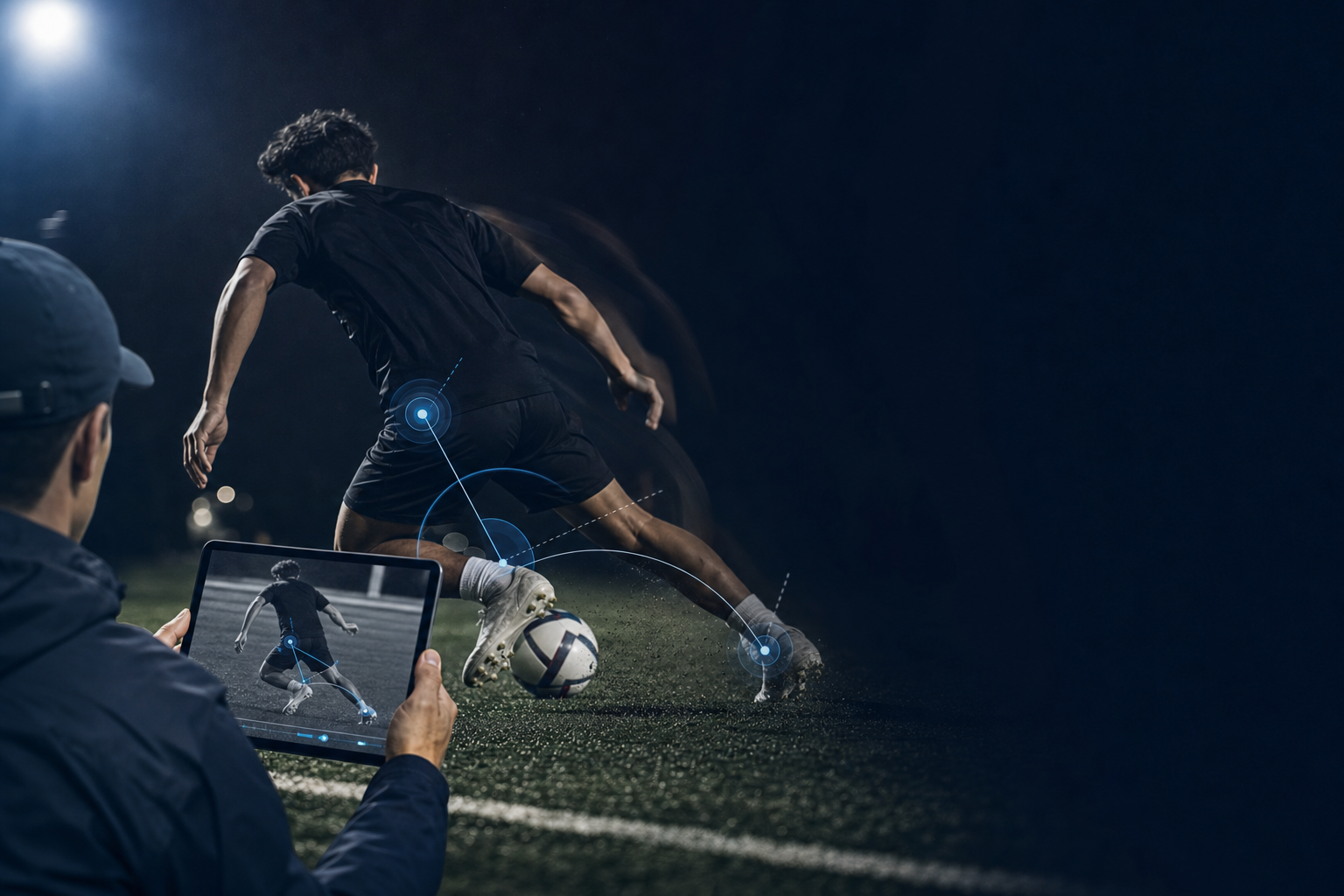
Researchers describe the typical non-contact tear the same way. An athlete plants a foot, cuts hard, decelerates fast, or lands from a jump. The knee collapses inward instead of tracking straight. No one touches them. The ligament gives out anyway.
Picture a soccer player planting to change direction, a basketball player landing off-balance after a jump shot, or a volleyball player coming down from a block. In each case the knee drifts inward while the body's momentum keeps moving forward. That inward collapse is one of the most common mechanisms behind the non-contact tears described above.
That collapse is visible on video, and a phone can tell you more about it than most coaches expect.
What This Means for Programming, Not Just Individual Athletes
A coach running a team of 20 or 60 athletes cannot wait for one athlete's story to decide what to do. The rates above are a planning input, not a prediction for any single player.
That is also why a per-athlete approach runs out of road fast. A coaching staff cannot individually diagnose which of 40 athletes carries which risk factor during a single preseason. What a staff can do is run the same program across the whole roster, every week, for the full season. Consistency is the variable a coach actually controls.
That is the case for running a coach's evidence-based prevention program across a full roster rather than handing it to the two or three athletes who already got hurt once.
The hard part is rarely the exercises. It is knowing who actually did them. Greater lets a coach assign a prevention program to a full roster and see who completed it, instead of tracking it on a clipboard or trusting that it happened.
None of this requires guessing which athlete is at risk. The mechanism described above is something a coach can actually watch for on video or in person: a knee that drifts inward on a landing or a cut. Catching that early, and building a program that trains the opposite pattern, is the practical version of everything the research above adds up to.
Reinjury: Why "Cleared to Play" Is Not the Finish Line
A study of 482 high school athletes who had ACL reconstruction found that about 1 in 20 (5.2%) suffered another tear on the same knee. Female soccer players specifically had a higher reinjury risk than male soccer players after surgery.
That finding is about reinjury after surgery, not about how common ACL injuries are in general. It matters anyway, because it is a direct argument for taking return-to-play timing seriously rather than rushing a cleared athlete back onto the field.
The same study found football and soccer were the two sports most represented among the retears in its sample, at roughly 32% and 27% respectively. That is a share of this one study's retears, not a population reinjury rate for those sports.
For athletes working back from a tear, what to do before and after surgery matters as much as what happens in the operating room.
Recovery: What the Timeline Actually Looks Like
A multidisciplinary consensus guideline built from a systematic review of ACL rehabilitation research recommends rehabilitation continue 9 to 12 months before an athlete returns to competitive cutting-and-pivoting sports.
That timeline is not just a calendar. The guideline gates progress by functional criteria such as strength symmetry and movement quality, not by the number of weeks since surgery. Two athletes with the same surgery date can be ready at different times. An athlete behind on strength or movement quality at month nine should not be cleared just because nine months have passed.
None of this guarantees a safe return. It reduces the odds. The distinction matters, and it is why return-to-play decisions belong with a physician or physical therapist, not a fixed date on a schedule.
What These Numbers Do and Cannot Tell You
Every rate in this article comes from a peer-reviewed surveillance study, cohort study, or expert consensus review, not a small clinic's case notes. That is a strength. It is also a limit.
These are population rates. They describe what has happened across thousands of athlete-seasons, not what will happen to any one athlete. A women's soccer player is not guaranteed to tear her ACL because her sport's rate is the highest in the data. A men's lacrosse player is not guaranteed to avoid it because his sport is not in the table above.
No program in this article or anywhere else "prevents" an ACL tear. The honest claim is "reduces risk." For an actual injury, or for clearance to return to play, the right call is a physician or physical therapist, not a blog post.
That caveat is not a disclaimer to skip past. The sports and sex differences above are real and well documented, but they describe groups, not individuals. The most useful thing a coach can take from this article is not a single number to repeat. It is the shape of the evidence: non-contact mechanisms dominate, and certain sports and certain athletes carry more of the load. What a coach does with that is a decision for the whole roster, not just the athlete who already got hurt.
Run the program. See who actually did it.
Assign a prevention program to your full roster and track completion without a clipboard.
Try GreaterFrequently asked questions
What is the most common sport for ACL injuries?
Among NCAA athletes, men's football has the highest ACL tear rate among men's sports and women's soccer has the highest rate among women's sports, both well above the all-sport average, according to a five-season NCAA injury-surveillance study.
Why do women tear their ACL more than men?
Large studies find female athletes tear their ACL at roughly 2.3 to 2.5 times the rate of male athletes in the same sports. Researchers have proposed anatomical, hormonal, and neuromuscular factors, but no single cause is settled; the rate difference itself is well documented across multiple independent studies.
Are most ACL injuries contact or non-contact?
About 70% of ACL tears are non-contact, typically from planting, cutting, decelerating, or an awkward landing. Roughly 30% result from a direct hit to the knee, per a consensus review from a panel of orthopedic and sports-medicine researchers.
How long is recovery after an ACL tear?
A multidisciplinary consensus guideline recommends rehabilitation continue 9 to 12 months before returning to competitive cutting-and-pivoting sports, with progress gated by functional criteria like strength and movement quality rather than a fixed calendar date.
Can ACL injuries be prevented?
No program prevents an ACL tear outright. The honest framing is reducing risk, not preventing it. Reinjury after surgery is also a real risk: one study of high school athletes found a 5.2% retear rate after ACL reconstruction, which is part of why return-to-play timing matters.