

Which Sport Training Program Do You Actually Need? Five Routes Compared
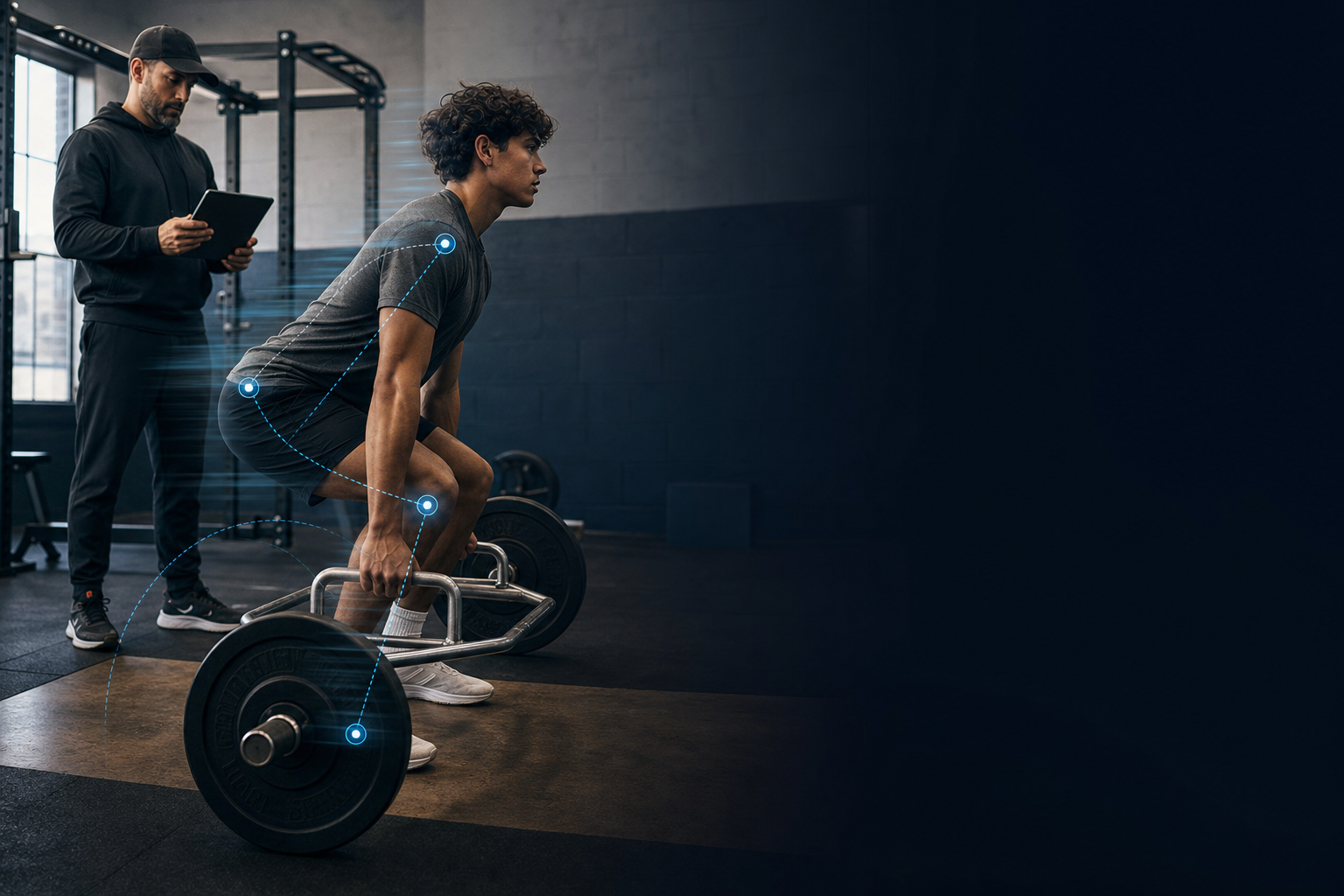
A sport training program is a structured plan that develops the physical qualities a sport demands. Strength, speed, power, change of direction, and work capacity. It progresses week to week, and it is organized around the competitive calendar.
That part is simple. The confusing part is that the phrase covers five very different products at five very different prices. A $250 per month membership at a performance facility and a $25 downloadable program are both sold as sport training programs. They are not the same purchase.
So this page does the step most pages skip. It compares the five routes on cost, customization, supervision, and equipment. Then it gives you a checklist for judging any program before you commit, and a straight answer for four common situations.
The short version
- Five routes exist: facility, marketplace, remote coach, school or team program, free template. Price ranges from $0 to about $400 a month.
- Supervision is what you are really paying for. Young and inexperienced athletes need it. Experienced adults mostly do not.
- Check the school or team program first. It is free, and it already fits the season.
- For youth athletes, total weekly hours matter more than program choice. The screen to apply is total weekly hours above the athlete's age in years.
- Sport-specific means training the qualities the sport loads, not imitating the sport with weights.
- Any program should name its target qualities, progress week to week, match your equipment, and tell you how you will know it worked.
The five kinds of sport training program
Almost every option on the market is one of these five.
- In-person performance facility. A gym or franchise where athletes train in groups under a coach, usually on a membership.
- Online program marketplace. You buy a pre-written program from a coach or brand and run it yourself.
- Remote coach. A coach writes a plan for your athlete specifically, reviews progress, and adjusts it.
- School or team program. The strength and conditioning plan run by a coach for a whole roster, usually at no cost to the athlete.
- Free published template. A program published openly, like the ones on this site, that you adapt and run yourself.
None of these is the right answer in general. Each is the right answer for a specific combination of budget, access, and how much supervision the athlete needs.
The five routes compared
The costs below are the ranges these routes commonly advertise in the US market. Treat them as a starting point. Check the current price with any provider before you commit.
| Route | Typical cost | Customization | Supervision | Equipment you need | Best for |
|---|---|---|---|---|---|
| In-person performance facility | $100 to $300 per month | Low to medium. Group programming, some individual adjustment. | High. A coach watches every session. | None. The facility has it. | Youth and high school athletes who need eyes on them, and families with a facility nearby. |
| Online program marketplace | $15 to $60 one time, or $20 to $40 per month | None. You get what was written. | None. | Whatever the program assumes. Check before buying. | Experienced adult athletes who can self-coach and want structure cheaply. |
| Remote coach | $100 to $400 per month | High. Written for one athlete and revised. | Medium. Review happens through video and messaging, not in person. | Negotiable. A good coach writes to your equipment. | Committed athletes with no local facility, and athletes with one specific goal. |
| School or team program | Usually free to the athlete | Low. Built for a roster, not a person. | Varies widely with staffing. | Whatever the school has. | Any athlete whose school runs one well. It should be the default starting point. |
| Free published template | $0 | You customize it yourself. | None. | Usually scalable to a home gym. | Coaches building a program from a proven starting point, and self-directed adult athletes. |
Two trade-offs decide most of these choices.
The first is supervision against cost. Supervision is the most expensive input in training. It is also the one that matters most for young or inexperienced athletes. A fourteen year old learning to squat needs someone watching. An adult who has lifted for ten years mostly does not. If you are paying facility prices for an athlete who does not need the supervision, you are paying for the wrong thing. If you are saving money on a beginner by handing them a PDF, you are saving in the wrong place.
The second is customization against immediacy. A written-for-you plan is better, and it takes a week or two and a conversation to get. A template is less tailored, and you can start tonight. For an athlete who has never followed a structured program, starting tonight on a decent template usually beats waiting for a perfect one.
How to judge a program before you commit
Most programs fail the same few tests. Run any candidate through this list, whether it is a $300 membership or a free download.
- It names the qualities it targets. Strength, power, speed, change of direction, work capacity. If the sales page only promises to make the athlete better, there is no plan underneath it.
- It progresses. Week four should not look like week one. Look for changing load, volume, or complexity, written down.
- It specifies equipment, and you have that equipment. A program built on a trap bar and a sled is useless in a gym without them.
- It accounts for the season. Offseason, preseason, in-season, and postseason load different amounts. A program with one setting is not a sport program.
- A named person is accountable for it. For a facility or a remote coach, ask who writes the programs and what they are certified in.
- The weekly load passes the age check below, if the athlete is young.
- It tells you how you will know it worked. A test, a number, a video comparison. Something measurable.
The age check for youth athletes
There is one concrete screen worth applying to any program aimed at a young athlete. Research comparing injured and healthy young athletes found that training more hours per week than the athlete's age in years, and spending more than twice as much time in organized sport as in free play, were both associated with higher odds of a serious overuse injury. The same work found single-sport specialization to be an independent risk factor for injury and for serious overuse injury.
So add up the hours. Practices, games, and training sessions together. If a twelve year old is at sixteen hours a week across everything, adding a training program is not the next move. Reducing the total is.
This is a screening question, not a diagnosis. It tells you to look harder, not what is wrong.
What the credential question actually means
Asking what a coach is certified in sounds like a formality. It is not, because certifications differ a lot in what they require. The Certified Strength and Conditioning Specialist credential is described by the organization behind it as the first accredited strength and conditioning coach certification, and candidates need a bachelor's degree and a current CPR/AED certification before they can sit the exam.
You do not need a credentialed coach for every program. You do need to know whether there is one, so you can judge what you are buying.
What sport-specific should and should not mean
Sport-specific is the most oversold phrase in this market. It usually gets illustrated with an athlete swinging a weighted bat, or pressing a cable in a throwing stance.
That is not what it means. The sport is where sport-specific skill gets built. The gym is where the qualities underneath it get built, because the gym is the only place you can load them heavily, progress them, and measure them.
Sport-specific, done properly, is three decisions. Which qualities the sport actually taxes. Which directions and joint positions it loads. What the energy demands look like in a real game. Then you train those qualities with exercises you can progress, not with mimicry.
A volleyball program should be built around repeated jumping and landing, and short repeat-effort rallies. A soccer program should be built around high-speed running, deceleration, and change of direction. Neither needs an exercise that looks like the sport. To work through that process for your own team, the full needs analysis is in the guide on how to build an athletic strength and conditioning program from scratch.
Youth athletes: the two questions that come first
For anyone shopping on behalf of a young athlete, two questions come before the program choice.
The first is whether the athlete is specializing too early. A pediatric clinical report on specialization and intensive training in young athletes concludes that when specialization happens too early, detrimental effects may occur both physically and psychologically. It also notes that young athletes who train intensively can be at risk of adverse effects whether they are specialized or not. That argues for watching the whole load, not just picking a better program.
The second is whether resistance training belongs in the plan at all. It generally does, and that is not a fringe position. An international consensus statement on youth resistance training was adapted from the United Kingdom Strength and Conditioning Association's official position statement, then reviewed and endorsed by leading professional organisations in sports medicine, exercise science, and paediatrics. The practical point for a parent is simple. Appropriately designed strength work for young athletes is a mainstream recommendation, not a risk you are taking on alone.
Two limits on all of this. A training program can reduce injury risk. It cannot prevent injuries or guarantee an outcome, and any program that says otherwise is selling. And if an athlete has current pain, swelling, or a recent injury, that goes to a physician or a physical therapist before any program starts.
Where to start, by situation
You are a parent of a youth or high school athlete
Start with the school or club program if there is one. It is free, and it is already matched to the season. Add an outside option only if the school program is thin or absent. If you do add one, a facility is usually the better buy at this age, because supervision is the thing you are short of. Run the age check on total weekly hours first.
You are a coach at a school with more teams than staff
You are not shopping. You are building. Start from a proven template and adapt it rather than writing from a blank page. An offseason block for one sport is a good model for the structure, and a complete 8-week offseason block shows what week-to-week progression should look like. To see how better-resourced programs sequence a year, how college programs are actually staffed and phased is a useful reference point, including which parts a one-coach program can copy and which it cannot.
The hard part at this scale is not the programming. It is delivering one plan to a hundred athletes and knowing who actually did the work. That is a tooling problem, and it is the job Greater does for schools and athletic programs running one plan across a full roster with a small staff.
You are an adult recreational athlete
A marketplace program or a free template is almost always the right call. You can self-coach, you know your equipment, and the supervision premium is not worth it. Spend the money you saved on a single session with a coach to check your technique on the two or three lifts the program leans on.
You are a remote athlete with no facility nearby
A remote coach is the only route that gives you real customization without a drive. The cost sits near facility prices, so the question is whether written-for-you programming matters more to you than in-person supervision. If the budget is not there, a free template built around one sport's demands is a solid floor. A year-round conditioning plan built around one sport's demands is an example of what that looks like done properly.
Run one program across your whole roster
Greater lets you build a program once, assign it to every athlete, see who completed it, and get AI movement analysis from a phone video. Built for coaches with more teams than staff.
Try Greater freeFrequently asked questions
What is a sport training program?
A sport training program is a structured plan that develops the physical qualities a sport demands, such as strength, speed, power, change of direction, and work capacity. It progresses week to week and is organized around the competitive season. In practice the term covers five different products: facility memberships, marketplace programs you buy and run yourself, remote coaching, school or team programs, and free published templates.
What are the best sport training programs?
There is no single best one, because the routes differ in what they provide rather than in quality. Match the route to the athlete. Youth and inexperienced athletes benefit most from supervised in-person training. Experienced adults do well on marketplace programs or free templates. Athletes with no facility nearby and one specific goal get the most from a remote coach. Check any school or team program first, because it is free and already fits the season.
Are free sport training programs any good?
Many are, and a good free template beats an expensive program the athlete does not follow. The limits are real though. A free program gives you no supervision and no customization, so the athlete has to be able to self-coach or have someone checking technique. Judge a free program the same way you would judge a paid one. Does it name the qualities it targets, does it progress week to week, and does it match the equipment you actually have.
How many days a week should an athlete train?
It depends on the sport's practice and competition load, not on the training program alone. The number that matters is total weekly hours across practices, games, and training. For young athletes, apply the age check described above: total weekly hours above the athlete's age in years is the number to watch, so add up the whole load before deciding how many training sessions to add.
Can you run a sport training program without a gym?
Yes, but the program has to be written for the equipment you have. The common failure is buying a program built around a trap bar, a sled, and specialty bars, then trying to run it with dumbbells. Check the equipment list before you commit. A remote coach can write to your setup, and many free templates scale down to a home gym without losing the structure.
At what point does a young athlete need a written program?
Once training is regular enough that someone needs to track whether it is progressing, a written plan beats memory. Before that, broad athletic play and sport practice do most of the work. Two things matter more than the written plan for young athletes. Keeping total weekly hours reasonable relative to age, and avoiding single-sport specialization too early. Any current pain or injury should be assessed by a physician or physical therapist before a program starts.