

Powerlifting Federations: How to Choose the Right One for Your Goals
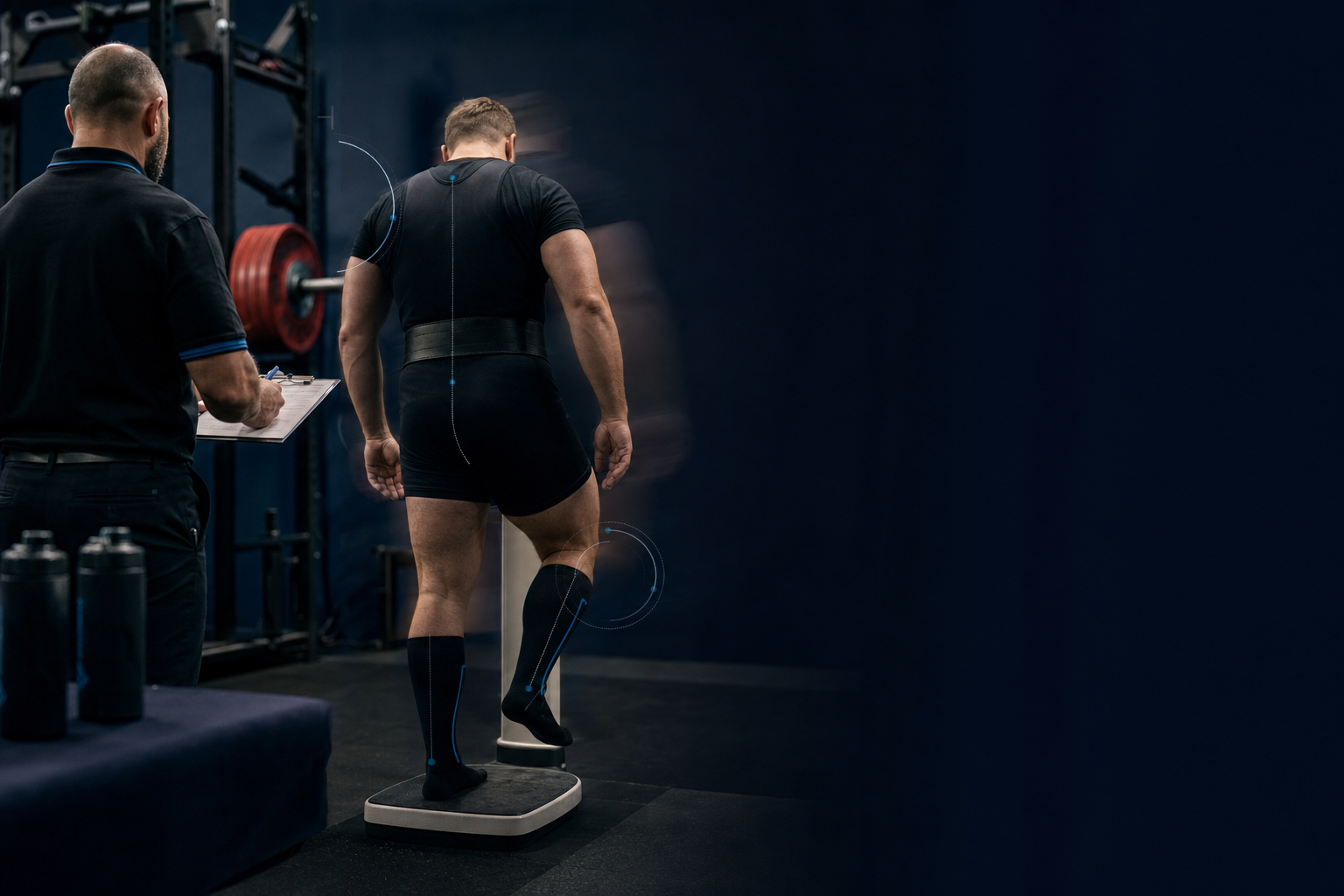
A powerlifting federation is not just a logo on a singlet. It decides whether you get drug tested. It decides what equipment you can wear on the platform. It decides whether your total counts toward a bigger ranking somewhere. Pick one that does not fit your goals and you will spend a year training around rules you never meant to sign up for.
This is a coach's walk through the federations most US lifters actually choose between: USA Powerlifting, USPA, the IPF, 365 Strong, and APA. It is not a rules dump. It is a framework for matching a federation to what you actually want out of the sport. If you are still deciding whether to compete at all, start with how to become a powerlifter instead, then come back here once you are ready to choose.
What a powerlifting federation actually decides for you
A powerlifting federation is the organization that sanctions your meet, writes the rulebook you lift under, and keeps the records. Picking one changes four things: whether you get tested for banned substances, what equipment you can wear, how your weight class and age division are defined, and whether your total counts toward that federation's own rankings or an international body's rankings. Everything else stays the same no matter which one you choose. Your training block, your bar speed, and your nerves on the platform do not care which federation you picked.
The major US federations, compared
These five show up most often when US lifters start researching where to compete. Equipment categories and testing rules change over time. Treat this as a starting comparison, and confirm current rules on each federation's own site before you register.
| Federation | Tested? | Equipment categories | Best for |
|---|---|---|---|
| USA Powerlifting (USAPL) | Tested at every sanctioned meet, no untested option | Classic (raw) and single-ply equipped | Lifters who want every meet drug-tested under one national rulebook |
| USPA | Tested and untested divisions at the same meet | Classic raw, single-ply, and multi-ply | Lifters who want equipment flexibility and a choice on testing |
| IPF (reached through a national affiliate) | WADA-standard testing | Classic (raw) and single-ply equipped only | Lifters chasing an internationally ranked path |
| 365 Strong (365 SWPF) | Tested and untested divisions, lifter's choice per meet | Raw and equipped categories | Lifters who want a tested option without one mandatory testing policy |
| APA | Runs separate tested and untested divisions at most meets | Raw through single-ply and multi-ply, plus its international arm WPA | Lifters who want a long-running circuit with an international arm |
USA Powerlifting and USPA are the two most lifters run into first, since they have the deepest meet calendars in most of the country. The IPF sits above all of this as the international governing body. You do not join the IPF directly. You reach it through your country's current IPF member federation once you are already competing seriously. In the US, that is not USA Powerlifting. 365 Strong and APA are smaller but genuinely national, and both fit lifters who want more flexibility than a single mandatory ruleset gives them.
A closer look at each federation
USA Powerlifting (USAPL) runs meets in nearly every state, feeding into regional and national championships. Its appeal is consistency: one rulebook, one testing standard, applied the same way whether you are lifting in a small-town gym meet or at nationals.
USPA gives lifters the most flexibility on this list: a choice of tested or untested, and a choice of raw, single-ply, or multi-ply at the same event. That flexibility is part of why many gyms that run their own in-house meets choose USPA rules.
The IPF is not a federation you register with directly. It is the international body that governs Classic (raw) and single-ply equipped lifting at the international level, with WADA-standard testing. You reach it by competing well enough through your country's current IPF member federation to qualify for international teams. In the US, that federation is Powerlifting America, a separate organization from USA Powerlifting.
365 Strong runs a tested-or-untested model similar to USPA's. It operates at a smaller, more regional scale than USA Powerlifting or USPA. It is a reasonable middle option for lifters who want a tested division available without taking on USA Powerlifting's all-tested, no-exceptions standard.
APA was formed in 1987 alongside its international arm, the World Powerlifting Alliance (WPA), and offers both drug-tested and untested categories in most of its competitions. It also runs raw, equipped, and unlimited-gear divisions, which makes it a common home for lifters who want to try equipped lifting without leaving the federation they already compete in.
Weight classes, age divisions, and records
Every federation on this list sets its own weight classes and age divisions. Most federations' open-division classes are close to each other, but not identical. A lifter sitting right at a class cutoff in one federation might fall just inside or outside the equivalent class in another. If you are chasing a specific weight class, check the exact numbers for the federation you plan to compete in rather than assuming they match what you have seen elsewhere.
Age divisions exist in some form across all five federations. These include sub-junior, junior, open, and masters tiers at various age bands. The exact age bands, and how masters records are tracked, differ by organization. If you compete as a masters lifter specifically for the masters records and rankings, confirm how your target federation defines and tracks that division before you commit a training cycle to chasing a number in it.
Records themselves are federation-specific too, which matters more than it sounds. A federation record, a state record, and an all-time world record inside one organization's own history are not the same claim as an all-time record across every federation that has ever run a meet. Be precise about which record you are chasing, and expect anyone comparing numbers across federations to ask the same question.
Tested vs. untested: the first decision that matters
Neither model is a judgment on any individual lifter. Picking tested is about wanting a specific competitive environment, not about assuming anything about lifters in an untested division. If being tested matters to you personally, pick a federation, or a division inside one, that tests every meet. Confirm the exact policy before you register. Terms change.
Practically, this decision also affects what you need to track before meet day. A tested lifter needs to know what is on the current banned-substances list, including common prescriptions and supplements. They also need to file any required paperwork well before the deadline, not the week of the meet. An untested lifter skips that step entirely, which is one real reason some lifters choose untested divisions even with no intent to use a banned substance: less administrative overhead around meet prep.
Raw, classic, single-ply, multi-ply: equipment categories explained
Raw, sometimes called Classic, is the entry category almost everywhere: a belt, knee sleeves or wraps, and wrist wraps, nothing that changes how the bar actually moves. It is what most new lifters compete in and what most federations treat as the default.
USA Powerlifting and the IPF stop at single-ply. USPA and APA also run multi-ply divisions, which is part of why total numbers in those divisions can look larger. The gear itself carries some of the weight.
Most lifters never need an equipped category. It exists for lifters chasing a specific numbers game, more total, more carryover out of the bottom of a lift, not for general strength or sport performance. If your goal is raw strength and a straightforward meet experience, stay in the raw or classic category regardless of which federation you pick.
Local meet vs. the national and international pathway
If an internationally ranked path through the IPF matters to you, know this up front: USA Powerlifting is not the organization that leads there. Powerlifting America holds that role, as the IPF's current US member federation, a separate organization from USA Powerlifting. Local meets inside Powerlifting America feed into state and national meets, with a small number of top finishers pursuing international competition from there.
USPA, 365 Strong, and APA each run their own independent national and world championship events, separate from the IPF structure. They are not a lesser version of that path. They are a different one. Most run more meets per year, with more accessible qualifying totals. That is why lifters chasing frequent competition, rather than an international ranking, often prefer them.
Neither path is more legitimate than the other. They answer different questions. Do you want the international ladder, or do you want to compete often, locally, and chase your own federation's records? Decide that before you pick.
Once you have picked a federation and registered for a meet, the next planning problem is logistics, not rules. A coach's meet-day checklist covers the week before, weigh-in, and the day itself.
How to actually choose: a coach's framework
Ask yourself these five questions in order. By the time you finish, the federation usually picks itself.
1. Tested or untested? If you want every meet you enter drug-tested with no opt-out, USA Powerlifting is the only federation here that guarantees that at every meet. If you want the choice, USPA, 365 Strong, and APA all let you pick a division.
2. Raw forever, or equipped eventually? If you know you will stay raw, every federation here works. If equipped lifting interests you down the line, USPA or APA keep single-ply and multi-ply inside the same federation as you progress, so you are not switching organizations to try it.
3. Is there an active meet near you? A federation's rulebook does not matter if there is no sanctioned meet within driving distance. Check each federation's event calendar for your state before you decide anything else on this list.
4. Do you want an internationally ranked path, or your own federation's records? The IPF structure points toward the international ladder, reached in the US through Powerlifting America, not USA Powerlifting. USPA, 365 Strong, and APA each give you a full national competitive structure of their own, and APA's international arm (WPA) adds a separate international option outside the IPF.
5. What does your gym or training group already compete in? If your training partners and coach already compete in one federation, that is usually the practical answer. You get a shared warm-up room, a coach who already knows the rulebook, and training partners who understand your meet-day nerves.
No federation on this list is objectively the best one. Each is the right answer to a different question. Answer the five questions above honestly and you will already know where to register.
Programming around your federation's rules
Once you know your testing status and equipment category, your programming should reflect it. An untested raw lifter does not need to plan around testing windows or declared substances. An equipped lifter needs dedicated practice in their gear. A single-ply or multi-ply suit changes bar path and timing enough that raw-only training will not prepare you for meet day.
Whichever federation and category you pick, the training principle stays the same: build the program around the meet date you actually have, not a generic template. A 12-week periodized plan shows how to structure that block once your federation and meet are locked in.
Build the program once you've picked your federation
Assign the training block, track completion, and review technique on video between sessions, all from one place.
Try Greater freeWhen it's worth revisiting your choice
Picking a federation is not permanent. But switching mid-cycle has real costs. Your goals can genuinely change. Maybe you are chasing an internationally ranked path and realize your current federation does not lead there. Maybe you have plateaued raw and want to try equipped lifting. Either one is a legitimate reason to switch. Switching because one meet had a judge you disagreed with, or because a training partner's federation seems more exciting this month, usually is not. Give a federation at least a full training cycle and a couple of meets before deciding it is not for you.
One more practical note: if you are coaching athletes rather than only competing yourself, consider standardizing your roster on one federation's rulebook. Do this where it is realistic given your athletes' goals and local meet access. It makes programming and meet-day logistics far simpler than tracking several rulebooks at once. If you are building out a coaching practice around this, what a powerlifting coaching credential actually covers is worth reading next.
FAQ
Frequently asked questions
Can I switch powerlifting federations later?
Yes. Nothing locks you into one federation. Many lifters start in whichever federation has a nearby meet and switch later if their goals change, for example moving toward the IPF's international path or trying an equipped category elsewhere.
Is USAPL or USPA better for a beginner?
Neither is objectively better. It depends on whether you want every meet drug-tested with no opt-out (USAPL) or want the choice between a tested and untested division at the same meet (USPA). For the full first-meet decision, including weigh-in and gear logistics, see how to become a powerlifter.
Do all federations recognize each other's records?
No. Each federation keeps its own record books and rankings. A total set in one federation does not automatically count as a record in another, even for the same lifts and the same lifter.
What is the difference between raw and equipped powerlifting?
Raw, or Classic, uses only a belt, knee sleeves or wraps, and wrist wraps, gear that supports the lifter without changing how the bar moves. Equipped lifting adds a squat suit, bench shirt, or deadlift suit that changes the mechanics of the lift. Single-ply uses one layer of material, multi-ply uses several.
Do I have to pick one federation and stick with it?
No. Some lifters compete across more than one federation, for example lifting raw in one for local meets and trying equipped lifting in another. Confirm each federation's own rules on cross-federation records and qualifying totals before you plan a season around it.
Does a federation's size matter?
Mostly in how many meets you can realistically get to. A federation with more state-level meets near you usually means less travel and a more predictable competition schedule, which matters more for most lifters than which federation has the biggest finals.