

Top Personal Training Apps: What They Can and Cannot Replace
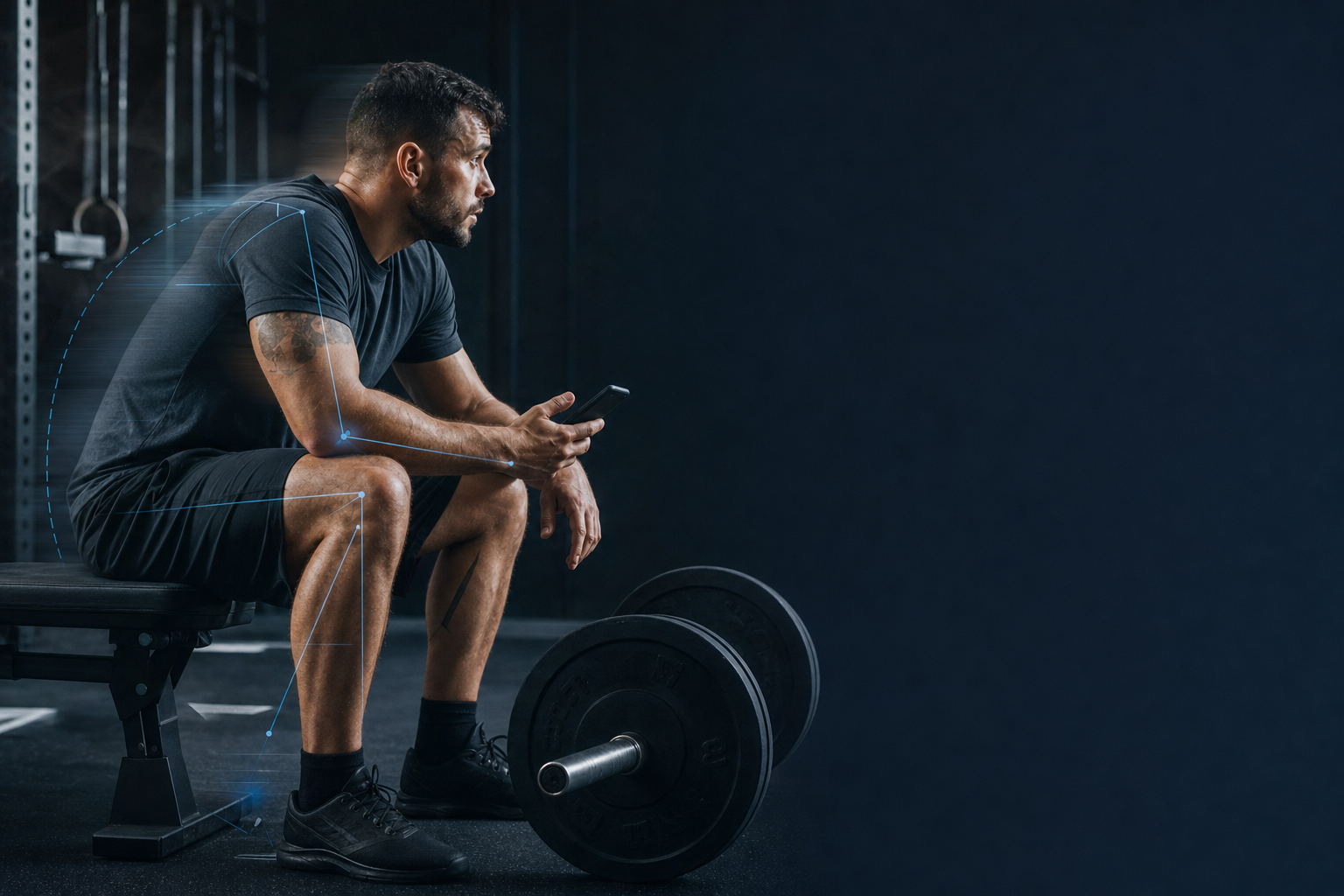
Search for the top personal training apps and you get two different products on one page. Some results are apps that train you. Others are apps that trainers use to train other people. They share a category name and very little else.
That is the first problem with every list you will find. The second is that none of them answer the question underneath the search. Does training from an app actually work, and for how long?
This guide sorts the category by what each product actually does, puts the research on the table, and gives you a ten-point check to run during a free trial. No ranked list of brand names, because the brand you pick matters less than the three or four things you are about to learn to look for.
One search, two completely different products
A personal training app delivers workouts to the person doing them. Personal training software delivers workouts to a trainer's clients. The first is something you buy for yourself. The second is a tool a professional buys to run a service.
There is a one-question test. Ask who is supposed to open the app. If the answer is you, and nobody is waiting on the other end, you want a training app. If the answer is your client, and you are the one building the plan, you want software.
Getting this wrong is the most common way people waste a month. Consumer apps cannot hold a client roster. Coaching platforms are not designed for you to follow your own program in. Sort yourself first, then compare inside one column.
What you are actually choosing between
Almost every product in this market is one of five things. Costs below are written as pricing models rather than figures, because published prices on this category change constantly and are best checked on the vendor's own page the day you buy.
| Kind of app | Who it is for | What it actually does | Where it falls short | How it is priced |
|---|---|---|---|---|
| Guided workout library | Someone who wants structure and does not want to plan | Serves prebuilt sessions and classes, usually with demonstration video | Does not respond to what you did last week | Consumer subscription, often with a free tier |
| Adaptive algorithmic trainer | Someone training alone who wants progression handled for them | Adjusts load, volume or exercise selection from what you log | The rules are hidden, and it cannot see how you actually moved | Consumer subscription, usually monthly |
| Human coach delivered through an app | Someone who wants a real plan and real answers | A person writes the program and reviews your training inside the app | Costs several times what a software subscription costs | Monthly coaching fee |
| Trainer delivery platform | A trainer or coach with a client roster | Build programs once, assign per client, track completion, review video, message | Not built for you to train yourself in | Per-trainer or per-client business pricing |
| Logging and tracking app | Someone who already knows what to do | Records sets, loads and history, and shows trends over time | No programming and no feedback | Free or low cost, often ad supported |
Most roundups mix the first, second and fifth kinds and never mention the fourth. That is why a trainer reading one of those lists comes away confused. The products that would actually run their business are not on the page.
The third kind is the one people underestimate. An app with a human coach behind it is a different product from an app with an algorithm behind it, even when the two look identical in screenshots. The next two sections are mostly about that difference.
Does training from an app actually work?
The honest answer is that the measured effects are small, inconsistent between reviews, and tend to fade. Most of the published research studies apps that promote general physical activity or help people manage a chronic condition, not apps that run strength programs, so read it as a direction rather than a verdict on your specific app.
A systematic review and meta-analysis of randomized app trials found the pooled difference in daily step count between app users and controls was not statistically significant. The authors describe the overall evidence as modest, and note that apps have been most effective in the short term, up to about three months. A separate sensitivity analysis in the same review found programs shorter than three months outperformed longer ones.
A review covering wearables alongside apps was more positive. It reported a small to moderate increase in daily active minutes and a moderate increase in daily step count. Variation between the included studies was very high, which is the usual caveat in this field.
Then there is the number that reframes the whole decision. A meta-analysis of app-based interventions for chronic disease put the pooled dropout rate at 43 percent. Dropout was higher in real-world observational settings, at 49 percent, than in controlled trials, at 40 percent. Those were disease-management apps rather than training apps, and the studies varied enormously, so read it as an order of magnitude rather than a precise rate.
Put those together and the picture is clear enough. An app can move the needle. It usually moves it for a few months. And in the closest literature there is, something like four in ten people who start do not finish. Nobody has measured that for strength apps specifically. Choosing for month one is still the mistake. Choose for month four.
The one trial that compared a coach, an app, and a PDF
A randomized controlled trial of three delivery formats ran the experiment the app lists never run. Seventy-nine trained adults, men and women, followed the same ten-week full-body program three times a week. Only the delivery changed.
- A coach in the room, giving live feedback on technique and load.
- The same program through an app, with demonstration videos, automated reminders, progress tracking, and technique feedback from a coach by video after the session.
- The same program as a static PDF, with written progression rules and nothing else.
Every group got stronger. The differences are where it gets interesting.
| Measure | Coach in the room | App with remote coach | PDF only |
|---|---|---|---|
| Squat one-rep max gain | +26.6 kg | +19.2 kg | +19.4 kg |
| Bench press one-rep max gain | +9.1 kg | +8.2 kg | +7.7 kg |
| Met the 85 percent session adherence threshold | 88.2% | 81.2% | 52.2% |
The supervised group's squat advantage over both the app group and the PDF group was statistically significant. On the bench press there was no significant difference between groups at all.
Three things worth taking from that.
- The app's clearest win was not strength. It was finishing. On squat gains the app and the PDF were a dead heat. On adherence the app group was 29 percentage points ahead. Delivery changed whether people kept training, more than it changed what each session produced.
- The remaining gap was on the technically harder lift. The squat is the lift that needs eyes on it. The bench press, for people who already know how to bench, apparently does not.
- These were experienced lifters. Everyone in the trial had at least a year of training behind them, including the exercises used. Nothing here tells you how a complete beginner would fare without supervision, and the gap would plausibly be wider.
Two limits are worth holding onto. The trial enrolled 112 people. The adherence row counts all of them, which is why it is the one number in the table the exclusions cannot flatter. The two strength rows count only the 79 who cleared the 85 percent threshold, so the kilogram gains come from the people in each group who kept showing up. And the supervised arm was 15 of those 79, and was significantly younger than the other two groups. One trial is not the last word. It is, however, the closest thing available to a direct test of the thing you are actually deciding.
Why the feature list will not help you choose
A systematic review of health behavior apps catalogued which techniques the apps actually contain. These were activity, diet, substance use and mental health apps studied in trials, not strength apps. Only four techniques appeared in more than half of them. Self-monitoring of behavior in 72 percent. Feedback on behavior in 54 percent. Instructions on how to perform the behavior in 54 percent. Goal setting in 52 percent.
Read that again as a buyer. Tracking, goals and instructional content are the common floor of the category, not what separates one product from another. They are table stakes. The feature grid on a pricing page tells you close to nothing about which product you will still be using in March.
A review of engagement and retention in health apps looked at what kept people using an app through a study. These were health research apps rather than training apps, but the pattern is hard to ignore. The factors that promoted retention were feedback, appropriate reminders, and in-app support from peers or coaches. The factors that obstructed it were lack of support features, technical difficulties, and apps that simply were not useful.
So the differentiator is the support layer, not the exercise library. Who answers when you are stuck. What arrives when you go quiet. Whether anything in the product notices you at all.
The 10-point check to run before you subscribe
Run this during the free trial. Every item is answerable inside seven days, and the answers predict month four better than any feature comparison will.
The program
- Does it ask what equipment you have before it writes anything?
- Does the plan change when you log a brutal session, or a missed one?
- Can you see the week ahead, or only today's workout?
The support layer
- What happens when you miss three days in a row? Find out by missing three days.
- Can you ask a question, and does a human or a useful system answer it?
- Can you send a video of a lift and get a response that is specific to your lift?
The honesty checks
- Can you export your training history, or does leaving mean starting over?
- Find the cancel path before you pay. If it takes more than two minutes to find, that is information.
- What does the app do on a bad week? Some products shame you. Some adjust. Some do nothing.
- Does a human ever look at your training, or is every message generated?
If you cannot answer all ten before the trial ends, that is an answer too.
If you are a trainer, this is a different question
Everything above is about an app training a person. If you are the one writing the programs, the question changes shape. You are not shopping for workouts. You are shopping for delivery, accountability, and a way to see what happened between sessions.
That market has its own shortlist and its own traps. We compared seven coaching platforms on pricing, client limits and form review separately, and mapped the four jobs a CRM is asked to do for the business side. If you are coaching a team rather than individual clients, the job that breaks is usually a different one.
The short version for trainers: a consumer app cannot run your roster, and a roster tool will not feel good to train in yourself. Buy for the job that is currently breaking.
What no app does well yet
Go back to the trial result for a second. The gap that supervision closed was on the squat, not the bench. That is the clearest statement in the literature of what an app is missing. Not programming. Not reminders. Eyes on a complicated movement.
An app cannot correct a bar path it never saw. Most of the category never asks to see one. The apps that do ask are the ones worth paying attention to, because video is the only channel through which an app gets access to the thing a coach in the room is actually using.
This is the part Greater is built around. Clients follow their program in the app and record key movements from their phone. AI flags form issues in under 60 seconds, so the trainer spends review time on coaching the fix instead of hunting for it. The program, the recorded set, the flag and the conversation all stay on one client record. That is Greater for personal trainers.
Worth being precise about what that does and does not do. Faster technique feedback is not a substitute for a qualified professional assessing an injury, and no training program removes injury risk. If something hurts, that is a question for a physical therapist or physician, not an app.
How to get a real result out of whichever app you pick
Start with the dose. US federal guidance is that adults need muscle-strengthening activity at least two days each week, on top of weekly aerobic activity. Any app that cannot get you to two sessions a week is not failing on features. It is failing on the only thing that matters.
Commit in short blocks. The activity-app review found programs shorter than three months outperformed longer ones, which matches what most people experience. Treat eight to twelve weeks as the unit of commitment, not a vague intention to use the app forever.
Log everything. Self-monitoring is the single most common feature in these apps, and the research on this field treats it as one of the techniques worth building around, particularly when it is paired with specific goals and feedback on performance. The tracking screen is not busywork. It is most of the mechanism.
Then put one human in the loop. The clearest reading of the trial is not that apps do not work. It is that the app plus a person beat the app alone, and the PDF group proves how much of the benefit is simply still being there in week ten. A monthly check-in with a coach, a training partner who sees your log, or a trainer reviewing your video. Any of those counts. If you are the trainer building those programs, the bottleneck is usually process rather than knowledge, which is what a repeatable programming system is for.
See what AI form review actually looks like
Build a program, assign it, and get form flags on recorded lifts in under 60 seconds. Start free, or check current plans and pricing first.
Start freeFrequently asked questions
Can a personal training app replace a personal trainer?
Partly, and it depends on the lift. In a randomized trial that ran the same ten-week program three ways, the supervised group gained significantly more squat strength than either the app group or the PDF group, while bench press gains did not differ between groups. The app's clearest advantage was adherence: 81.2 percent of the app group met the session threshold against 52.2 percent of the PDF group. An app is very good at keeping you training. A coach is still better on technically demanding lifts.
Are free personal training apps good enough?
For logging and for following a prebuilt plan, often yes. The gap shows up in the support layer. Reviews of health research apps find that feedback, appropriate reminders and in-app support from peers or coaches are what keep people using an app through a study. Those were not fitness products, but the pattern is worth testing. Check during the free trial whether the plan you would actually pay nothing for includes any of the three. Start free, then pay only for the thing you found yourself missing.
What is the difference between a personal training app and personal training software?
The audience. A personal training app delivers workouts to the person doing them. Personal training software is a professional tool that delivers programs to a trainer's clients and gives the trainer completion tracking, video review and messaging. If nobody is waiting on the other end of the app, you want the first one.
How long before a training app stops working?
Sooner than most people expect. A meta-analysis of app-based interventions for chronic disease found a pooled dropout rate of 43 percent, which is the closest comparable figure the literature offers, and a review of activity apps found programs shorter than three months were more effective than longer ones. That is an argument for committing in eight to twelve week blocks and for choosing on the support features rather than the exercise library.
What should a beginner look for in a personal training app?
Equipment-aware programming, a visible week rather than a daily surprise, and some route to a human answer. Beginners are also the group the research says the least about: the trial comparing coaching formats used lifters with at least a year of experience, so it cannot tell you how a complete beginner fares unsupervised. If you are new to barbell lifts specifically, budget for some in-person coaching early rather than later.